

EVALUATION: XIAOMI 15S PRO
Our editorial rating based on product testing.
- XRING O1 chip with excellent performance and energy efficiency (in everyday, non-demanding tasks)
- Top-tier 6.73" LTPO AMOLED display with up to 3200 nits and very high-quality visuals
- Above-average battery life and fast charging (90 W wired, 50 W wireless)
- Excellent cameras, especially the main sensor and the periscope with 5× optical zoom
- Stereo speakers with very good sound
- Premium design, quality materials, IP68 protection
- Complete connectivity package (5G with B20, Wi-Fi 7, Bluetooth 5.4, UWB, NFC, USB 3.2 Gen 2)
- Chinese version of the system: only English/Chinese, with some elements not translated
- Annoying notification issues from multiple apps (e.g. Messenger, Slack)
- No eSIM support—which may be a drawback for some people
- With heavy use (benchmarks, longer gaming sessions) it overheats and performance drops
- Leica camera modes can’t be fully disabled—some style is always applied, like a “filter”
Xiaomi 15S Pro is such a revolutionary smartphone that we had it imported directly from China. Outside of China, it’s simply not sold. It includes the first generation of the company’s own chip developed by Xiaomi – XRING O1. We were very curious to see what this new processor is like in real life.
The biggest Xiaomi community on Facebook
Was its years-long development worth it? Is this new device also good in other key areas? You’ll find out soon. This is the review of the smartphone Xiaomi 15S Pro.
Where to buy Xiaomi 15S Pro?
Our partner seller TradingShenzhen has become the first international e-shop offering the latest smartphone Xiaomi 15S Pro. This model is currently available for sale in the Chinese version, which also supports the B20 LTE band. That means the signal will work fully not only in cities, but also outside them in Slovakia and across all of Europe.

It’s important to note that, just like its previous generations, this model will not be available on the global market, so waiting for a global version is basically pointless. If you truly want this smartphone, the only option is to order from China.
The smartphone comes with a Chinese firmware version that includes only Chinese and English. However, the seller will install all the necessary Google services on the device, which will be fully functional—except for Android Auto, which unfortunately doesn’t work in Chinese versions. Google Pay payments work without any issues.

The new model is available in a luxury black and blue colorway. You can order the device from China with the trusted duty-free shipping service Global Priority, which we tested with many parcels and found to work reliably.
Xiaomi 15S Pro Chinese Version (with B20 LTE)

TIPWith Global Priority shipping, you don’t pay any extra fees.
We recommend choosing Global Priority shipping, where you won’t pay anything extra. Customs fees and any VAT are handled by the seller directly for you. Shipping can be selected in the cart only, after you enter the delivery address. Delivery with Global Priority usually takes about 15 days, but it may also take longer.
TIPWith Global Priority shipping, you don’t pay any extra fees.
We recommend choosing Global Priority shipping, where you won’t pay anything extra. Customs fees and any VAT are handled by the seller directly for you. Shipping can be selected in the cart only, after you enter the delivery address. Delivery with Global Priority usually takes about 15 days, but it may also take longer.
Technical specifications of Xiaomi 15S Pro
| Model | Xiaomi 15S Pro |
|---|---|
| Dimensions | 161.3 x 75.3 x 8.3 mm |
| Weight | 216 g |
| SIM | Nano-SIM + Nano-SIM |
| Durability | IP68 dustproof and water-resistant (immersion up to 1.5 m for 30 minutes) |
| Display | LTPO AMOLED / 6.73 inches |
| 1440 x 3200 px / 20:9 aspect ratio / ~521 ppi | |
| 120 Hz refresh rate / 1920 Hz PWM / 3200 nits (peak) | |
| Dolby Vision / HDR10+ / HDR Vivid | |
| Shatterproof glass (2024 gen) | |
| Chipset | Xring O1 (3 nm) |
| CPU | 10-core (2×3.9GHz Cortex-X925 & 4×3.4GHz Cortex-A725 & 2×1.9GHz Cortex-A725 & 2×1.8GHz Cortex-A520) |
| Graphics | Immortalis-G925 MP16 |
| RAM | 16 GB |
| Internal storage | 512 GB / 1 TB (UFS 4.1) |
| Cameras | 50 MPx main camera | f/1.4 aperture | 23 mm | 1/1.31" | 1.2µm | dual pixel PDAF | OIS |
| 50 MPx periscope telephoto camera | f/2.5 aperture | 120 mm | PDAF (30 cm – ∞) | OIS | 5x optical zoom | |
| 50 MPx ultra-wide camera | f/2.2 aperture | 14 mm | 115˚ field of view | AF | |
| Front camera | 32 MPx | f/2.0 aperture | 22 mm | 0.7µm |
| Operating system | Android 15 | HyperOS 2 |
| SD card | No |
| 3.5 mm jack | No |
| Infraport | Yes |
| NFC | Yes |
| Radio | No |
| Battery | 6100 mAh |
| Fast wired charging 90 W | |
| Wireless charging 50 W | |
| Reverse wireless charging 10 W | |
| Unlock | In-display fingerprint scanner (ultrasonic) |
| Colors | Black | Blue |
What drawbacks does the Chinese version of the phone come with?
As we mentioned earlier, you can use the phone in Slovakia and other European countries without any major issues. It also supports the important B20 LTE band, so you’ll have mobile data connectivity even outside towns. As for eSIM—unfortunately, forget it. It doesn’t work in China. If you don’t mind using the device in English (and you may occasionally see some Chinese…), that’s the first good sign.

However, problematic are the very delayed—or even non-functional—notifications from the vast majority of apps. For example, from Facebook Messenger we sometimes only received a message alert after a few hours, but most of the time it didn’t come at all. The only app we could somewhat rely on was WhatsApp. To get it working properly, we tried pretty much everything—nothing helped.
It was also difficult to use a different camera app than the one preinstalled by Xiaomi. When someone called us, the lift-to-answer display didn’t show up over the locked screen. On the other hand, using the built-in app has its benefits, such as supporting call recording. And the last thing—we couldn’t sign into Slack through a Google account. With other apps, though, it worked fine.

In the box
Xiaomi 15S Pro arrived in a premium, elongated box. Besides the phone, the package includes a very nice, expertly crafted case with a highlighted red power button, a red cord that works well, for example, during active photography, a 90 W silver charging adapter (with EU reduction from the seller), and a USB-A to USB-C cable in the same color.

Also included is the essential technical documentation, a tool for picking the slot for two nanoSIM cards, and a red key charm that is reminiscent of the 15th anniversary since Xiaomi was founded. The manufacturer applied a protective film to the display, which really made us happy. We always consider this basic form of protection a big plus, and it definitely doesn’t cost the manufacturer much in terms of money.

Design
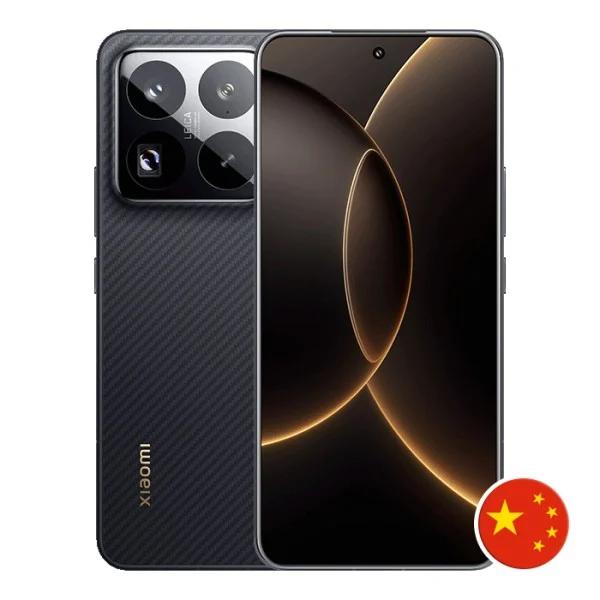
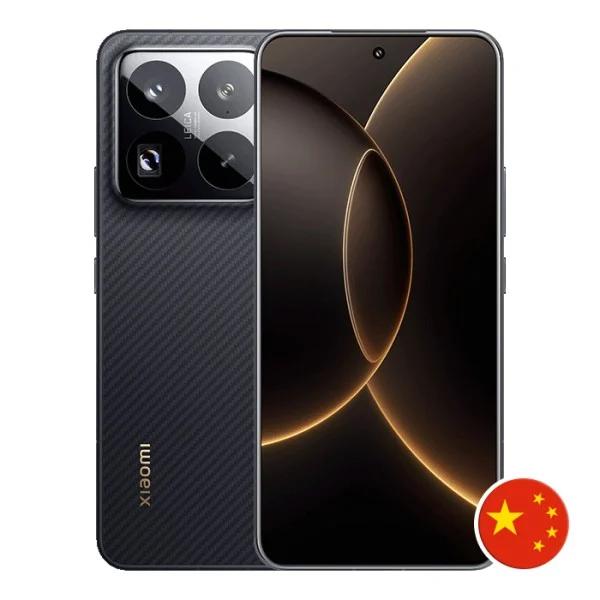
We have to praise the look of this smartphone right away. Even though it’s subjective, in our view it’s one of the nicest Xiaomi devices in its history—especially in this black colorway with a carbon-fiber style back. The surface is smooth with subtle ridges you can feel. It looks pleasant and unusual.

We’ve had experience with carbon-fiber cases that had a similar feel, but when this texture is present directly on the back of the smartphone, it delivers a more premium impression thanks to the maintained slim thickness. The dimensions of the Xiaomi 15S Pro are 161.3 x 75.3 x 8.3 millimeters, and its weight comes in at 216 grams.


The square triple-camera module is glossy and also looks very premium. It bears the LEICA inscription. Next to it is an element with a tri-tone LED flash and the XRING inscription, suggesting the presence of a self-developed chipset inside the device.

The microphone used, for example, when recording videos is not on the top edge of the device, as is usually the case, but is placed directly below the sensor (specifically the ultra-wide one). The slightly curved edges of the display on all four sides also add to the premium feel.

The bezels are symmetrical, so the phone looks exceptionally nice from the front too. In the middle of the top part of the screen, there is a tiny “selfie” camera. The sides of the smartphone are metal, and visually they are disrupted only by the buttons, microphone, speaker, USB-C port, and the slot for two nanoSIM cards, plus the plastic antenna breaks. Those are found on virtually every phone that uses metal materials in its design.

The phone’s construction is water- and dust-resistant according to the IP68 certification. It’s worth noting that the competition today also features the higher IP69 certification, which is missing here. In our opinion, though, you’re not missing anything essential. Xiaomi 15S Pro feels very comfortable in the hand, and despite its relatively larger dimensions, it remains great to use.
Display, fingerprint scanner and speakers
The display is not only nice to look at, it’s also genuinely high-quality and can be compared with other top-tier panels on the market. Xiaomi 15S Pro boasts a 6.73-inch LTPO AMOLED screen with a high Quad HD+ resolution and a resulting pixel density of about 521 pixels per inch.

It also offers a 120 Hz refresh rate, support for displaying 68 billion colors, 1920 Hz PWM dimming at low brightness, Dolby Vision, HDR10+, HDR Vivid, and a peak brightness of 3200 nits. On top of that, the protective glass should be highly resistant to cracking.

As we already mentioned, it’s protected against scratches by a pre-installed factory film. We find it better quality than the films the manufacturer applies to lower-end or mid-range models. However, after some time, a small air bubble appeared on it.

The screen is rounded on all four edges, and in use it doesn’t get in the way at all; on the contrary, in our opinion, it adds to the premium feel. The fingerprint scanner is ultrasonic, so you can expect very reliable and almost instant unlocking.

We probably didn’t even once have the phone fail to unlock on the first try – and we’re not exaggerating. The speakers are more than loud enough, and they also deliver excellent audio quality that can compete with the rest of the premium segment.

The main speaker is located on the bottom edge, and stereo output is handled by the second speaker above the display, which also serves as the earpiece for calls.
Performance: How does Xiaomi’s first in-house flagship chip fare?
The performance of this device is absolutely stunning even without looking at benchmark results. You never have to wait for anything, and the phone is always maximally smooth no matter what task you throw at it. You can count on great speeds both in demanding pro apps and on very high frame rates in the most demanding games.

The so-called “user experience” is top-notch and matches, or even beats, most of the competition. Considering the implementation of a first-generation in-house chipset, that’s more than satisfying, and the XRING O1 processor really comes as a very pleasant surprise.


It’s also energy-efficient – mostly. For demanding tasks, especially when running benchmarks, it consumes a significant amount of power, and you can feel it in your hands – Xiaomi 15S Pro gets so hot during tough benchmark runs that it’s uncomfortable to keep holding. Thankfully, during gaming it wasn’t that bad by a long shot, but just like with other current or older flagship models from Xiaomi, this Chinese model also struggles under long-term load where heat has to be dissipated.


For example, the 3DMark Wild Life Extreme Stress Test simply couldn’t handle it and the app crashed. The display refresh rate dropped to 60 Hz, and the system tried to cool the device as quickly as possible. A noticeable temperature spike was also observed in the AnTuTu Benchmark, where the manufacturer, by the way, claimed scores exceeding the magic threshold of 3 000 000 points. At best, we got about half a million points less…

The phone has 16 GB of RAM and 512 GB of fast UFS 4.1 storage. There’s also a version with a full 1 TB of internal memory. Multitasking is extremely smooth, but aggressive settings from Chinese HyperOS will automatically shut down apps running in the background unless you change it manually. Delayed notification delivery won’t be fixed by that, though.
| Xiaomi 15S Pro – benchmark scores | |
|---|---|
AnTuTu Benchmark | 2 466 740 points |
Geekbench 6 (Single-Core) | 2 935 points |
Geekbench 6 (Multi-Core) | 9 150 points |
Geekbench 6 (GPU) | 14 488 points |
Wild Life Extreme | 6 034 points |

Well, in practice it doesn’t mean much, and the smartphone, as we already mentioned, is exceptionally fast. Great software optimization is also to thank. The strong computing performance is noticeable even in the photo app, which features virtually minimal shutter lag. Everything is so smooth that any cheaper model, or even some pieces in a similar price range, will simply feel slow to you.
Leica cameras: How are they tuned?
The main 50 MPx sensor has a size of 1/1.31 inch and also doesn’t miss optical image stabilization (OIS). The result is extremely detailed shots with very fast focusing and very low shutter lag. Switching between the individual lenses, on the other hand, isn’t the fastest, and you can see “movement” in the image.

A periscope telephoto lens, also with a resolution of 50 MPx and OIS. It handles 5× optical zoom, and surprisingly it keeps very good sharpness even at 10× zoom. The ultra-wide lens with a 14 mm focal length falls a bit short — image quality is still “within the norm”, but it won’t impress. In this price range, we’d expect a little more.

When it comes to video, Xiaomi 15S Pro supports recording in Dolby Vision and HDR10+. You can record up to 8K at 30 fps, or in 4K UHD up to 60 fps, which will definitely be appreciated by more demanding content creators. We rate the results very positively.


When taking photos, you can choose between two Leica modes: Authentic and Vibrant. During testing, we shot most of our pictures in Vibrant mode, because although the colors are fairly saturated, it paradoxically looks more realistic than Authentic. For example, the sky is often overly vivid blue, but overall the photos are compelling.

On the other hand, Authentic mode has its own character – fewer colors, higher contrast, and typical edge vignetting. It’s suited to specific scenes and evokes the look of professional cameras.

We’d, however, like to see some kind of third mode or the option to completely disable these Leica filters. At the moment, it’s not possible to take photos “purely” — every photo has a Leica look, which may not suit everyone. The sample photos in this review are taken in Vibrant mode unless their description says otherwise.
Night photos from the main sensor are very good, but the other lenses lag a bit and also show slightly different color rendering. With the telephoto lens, you sometimes manage to get a nice shot, but keep the phone steady in your hands, otherwise you’ll end up with a blurry result. If the photos aren’t taken in complete darkness, but only in twilight, they look really great. However, post-processing brightens them, and sometimes they can even look almost like daylight. Overall, we rate the quality of the night shots positively.
By the way, some sources claim that the XRING O1 image-processing chip has a worse processor than competing chips, which is worth mentioning. This certainly has an impact on the quality of the resulting photos, but without a direct comparison it’s hard to judge.
Test photos


Test videos
Operating system: This is what the Chinese HyperOS looks like
Xiaomi 15S Pro comes with the second-generation HyperOS, which runs on Android 15. The phone does have Play Protect certification, but since this is the Chinese version, don’t expect Google services here. That means, for example, Google Play Store isn’t preinstalled— but don’t worry.

Because the basic Google frameworks are already present in the system, you only need to download the Play Store itself and you’re good to go. If you order it through our partner shops, such as Trading Shenzhen, the seller will pre-install the Google Play services and set up the system so you don’t have to deal with Chinese language stuff.


The phone is mainly meant for the Chinese market, so language options are limited—you can choose only English or Chinese. If you’re not very confident with languages, that could be a deal-breaker. Some parts of the system, even though there aren’t many, won’t be translated into English, which isn’t exactly very intuitive. Still, there are more than enough features and customization options. In terms of sheer number, it definitely goes beyond the global HyperOS version.

When it comes to updates, Xiaomi hasn’t said much about long-term software support for this model. The unit we tested had security patches from May 2025, which isn’t bad, but nothing is guaranteed yet.

Battery and charging
Xiaomi 15S Pro is also excellent when it comes to battery life. The manufacturer combined a relatively efficient chipset (depending on activity) with great system tuning, powered by a 6 100 mAh Si/C battery. On average, we got almost two days of use with 8 hours of screen-on time.

If you decide to watch movies on the phone, for example for the whole day, we think it can also handle 12 hours with the display on for this kind of less demanding activity. We reached those 8 hours of SOT (Screen On Time) during testing, when we were also taking photos.

With benchmark apps, we definitely wouldn’t have gotten such a good result by a long shot – back then the device was overheating badly and battery consumption was enormous.

Even when gaming, it’ll be a bit worse compared to traditional phone use like browsing the internet, social media, or occasional photo taking. On average, you should expect 1.5-day battery life, which matches today’s better average you see on flagship models.
Charging from 0% to 100%:
- 5 min – 21%
- 10 min – 32%
- 15 min – 43%
- 20 min – 54%
- 25 min – 61%
- 30 min – 71%
- 35 min – 81%
- 40 min – 90%
- 45 min – 94 %
- 50 min – 97 %
- 56 min – 100 %
Charging is quite fast and takes about an hour. Given the high battery capacity, it’s an acceptable result. We obviously used the included 90 W adapter, to which the seller will add a reducer from the Chinese plug to the European one.
If you want to charge as fast as possible, you need to additionally tap the system to enable maximum power usage, since it’s slightly limited by default to reduce heating and the faster battery aging that comes with it.
Connectivity
The built-in XRING O1 chipset basically covers all your connectivity needs. There’s 5G, 4G LTE with full support for our bands – including B20, Wi-Fi 7, and Bluetooth 5.4.

When it comes to the Bluetooth connection, it felt much more stable for us, with a longer range while streaming music to wireless earbuds, even at greater distances / through obstacles like walls. It also worked great with Wi-Fi connectivity.

There’s also NFC for contactless payments, and the Google Wallet service worked reliably for us. For wired data transfer, there’s a USB-C connector in 3.2 Gen 2, so you can expect high transfer speeds via OTG.
A nice extra is the infrared port and support for UWB technology (Ultra Wideband). Naturally, it also supports globally used location services. We never had any issues with signal reception – on the contrary. It was received with excellent intensity.
Final assessment
Xiaomi 15S Pro is an impressive piece of technology that shows how Chinese brands can not only keep up with the world’s top tier, but also surpass it in some areas. The biggest draw of this model is definitely its own chip XRING O1, developed by Xiaomi after years of research and development. Even though it’s the first generation, the performance is truly excellent — in practice, the system is extremely smooth, fast, and reliable.

Another big plus is the display, which is among the best on the market — high resolution, excellent color rendering, huge brightness, and LTPO technology. Battery life with a 6100 mAh capacity is above average; everyday use easily lasts two days. Charging is fast, and wireless as well as reverse charging are supported. The cameras are powerful — especially the main sensor and the periscope zoom, which deliver great detail and image stabilization.

The sound from the stereo speakers is good and loud, and the ultrasonic fingerprint scanner works perfectly. IP68 water/dust resistance is not missing, plus NFC, an IR port, and also modern connectivity like Wi‑Fi 7 or Bluetooth 5.4. The build quality is luxurious — the carbon-fiber surface on the back looks premium and the phone feels very comfortable in your hand.

Xiaomi 15S Pro might not be for everyone, but if you’re a tech enthusiast who isn’t afraid of the Chinese system and can handle some limitations, you’ll get a unique phone with excellent performance, battery life, and a premium design. It’s a smartphone that wants to be self-sufficient and different — and in many ways, it simply manages to do so.
Don’t miss the best coupons 📩
Subscribe and we’ll email you new coupons before they expire. We only send it once a month — no spam.