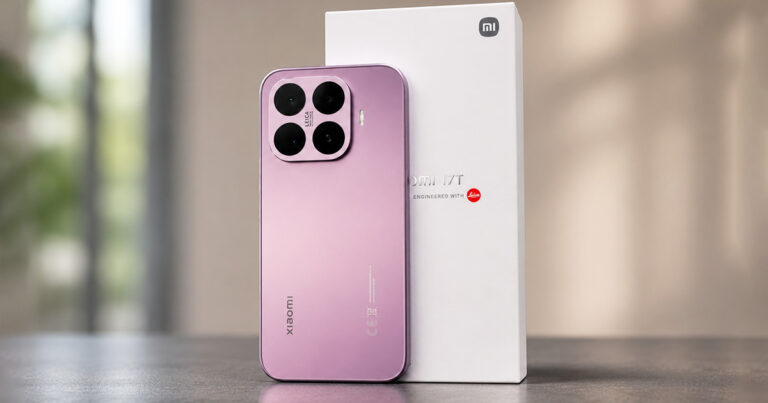



Just a few days separate us from what is likely to be Xiaomi’s most significant event of the year 2020. On 13 February / February, the brand will present its flagship for this year in the form of the Xiaomi Mi 10 and Xiaomi Mi 10 Pro smartphones via a live stream from China.
New details about the equipment keep popping up
At the moment, it’s extremely challenging to keep track of the world of social media in the niche of people interested in the Xiaomi brand. Every so often, new information about the upcoming flagship phone arrives, from various sources—including official ones.

Where else could a new promotional poster show up? Thanks to it, we already have an idea of what the new product will look like. When we take a closer look at one of the official posters, we can see that both of the upcoming Mi 10 and Mi 10 Pro smartphones are shown there.
The difference between the smartphones is clearly visible between the second and third rear camera sensors. The Pro version has something extra there.

But that’s not the topic of today’s article. We’d like to share a few details about the key pillars of the equipment that Xiaomi Mi 10 / Pro will include. A few days before the launch, we already know the new device will come with the Snapdragon 865 processor, a new type of RAM LPDDR5, storage of the UFS 3.0 type, and a new WiFi 6 technology. Let’s take a look at what these specs mean and what benefits they bring to users.
Qualcomm Snapdragon 865 processor
Already on December 4, 2019, when Qualcomm unveiled its new flagship processor, we learned that the Mi 10 will be one of the first smartphones in the world to be equipped with this chip.

Now, just a few days ahead of the official unveiling, it seems it will even be the first smartphone with this processor. In addition to supporting 5G mobile networks, the new chipset brings unbelievable performance. We’ve already shared more details about the Snapdragon 865 specifications in a recent article, and now we know that it’s the best foundation for a top-tier smartphone.
LPDDR5 RAM
In February / February 2019, JEDEC (Solid State Technology Association) released a low-power standard for LPDDR5. A year later, LPDDR5 memory is finally successfully commercialized. After the flagship processor, LPDDR5 RAM will also debut in Xiaomi Mi 10. So what does this upgrade bring?
First of all, it’s a major increase in data transfer speed. Thanks to the multi-bank group mode, LPDDR5 adds additional parallel data paths, which increases data bandwidth and boosts performance.
Compared to the previous LPDDR4 generation, the LPDDR5 data transfer speed has increased significantly. The transfer rate jumped from 3200 Mbps to 5500 Mbps — a spec with the highest speed among memory currently available.

The most powerful mobile platforms today use LPDDR4x RAM with a maximum data transfer of 4266 Mbps. With the next LPDDR5 module upgrade, a performance increase of up to 30-percent is expected, reaching up to 6400 Mbps.
The second key feature of LPDDR5 is power saving. Compared to LPDDR4X, the VDD2 power source in LPDDR5 is split into VDD2H and VDD2L. The voltage at VDD2H was reduced from 1.1 V to 1.05 V, and at VDDQ from 0.6 V to 0.5 V.
At the same time, the newly added features called DVSFS and DVFSQ dynamically adjust the operating voltage according to the operating frequency, and at low speeds switch VDD2H and VDDQ to lower 0,9V (VDD2L) and 0,3V, which is another form of reducing power consumption.
In addition, in high-speed LPDDR4x computations, this runs at a frequency of 2 133 MHz, which needs to be maintained continuously, practically increasing power consumption. The innovative WCK write cycle in LPDDR5 reduces the frequency when a read or write operation stops, saving power.
Support for 5G mobile networks, larger image sensors, better photos, high-resolution videos, and graphically demanding games and apps practically require high-speed data transfers. LPDDR5 is therefore not only the desired standard for Xiaomi Mi 10’s new flagship, but it will soon become the standard of the times as well.
UFS 3.0 storage
The entire Mi 10 series comes standard with UFS 3.0 flash memory storage. UFS 3.0 is the latest generation and currently the fastest flash memory. It doubles the speed of the previous UFS 2.1 generation while reducing power consumption, meeting the basic needs of high-end smartphones in the 5G era.


Data processing inside a mobile phone is basically a transfer process. It’s like transporting goods. If you use a rocket to transport things in the first part of the trip, using a handcart in the second part would completely cancel out the advantage of fast transport.
The Mi 10 series is equipped with UFS 3.0 flash memory, which matches the performance of the Snapdragon 865 and LPDDR5 RAM. The UFS 3.0 interface reaches data transfer speeds of up to 2900 MB/s, doubling performance compared with the 1,450 MB/s speed of UFS 2.1.

Xiaomi Mi 10, equipped with UFS 3.0 as standard, also supports Write Turbo write enhancement technology, which delivers stable high-speed write performance. The fastest sequential write speed can reach up to 730 MB/s.
From the measured data, it is clear that Xiaomi Mi 10 equipped with UFS 3.0 flash memory has a significant boost in read and write performance compared with the previous Xiaomi Mi 9 model.
The sequential read speed is twice as high as on Xiaomi 9, and the sequential write speed is up to 3,9 times higher than on the predecessor. The random read and random write speeds are 1,7 times higher than on Mi 9.
In a compressed file copy test of 11,17 GB on the Xiaomi Mi 10 Pro, the time achieved was 23 seconds, and the overall speed basically stayed at a stable 500 MB/s. On Mi 9, it took about 60 seconds and the speed ranged between 145 MB/s and 335 MB/s.


Besides the difference in interface speed, there is also a difference in power savings. The VCC power supply for the flash memory particles was reduced from 2,9 V to 2,5 V, and the main control VCCQ power supply was directly reduced from 1,8 V to 1,2 V.
The test results show that the power consumption per GB/s of sequential read on UFS 3.0 is 60% lower than UFS 2.1, and the power consumption per GB/s of sequential write is 48% lower than UFS 2.1.
New WiFi 6 wireless networking technology
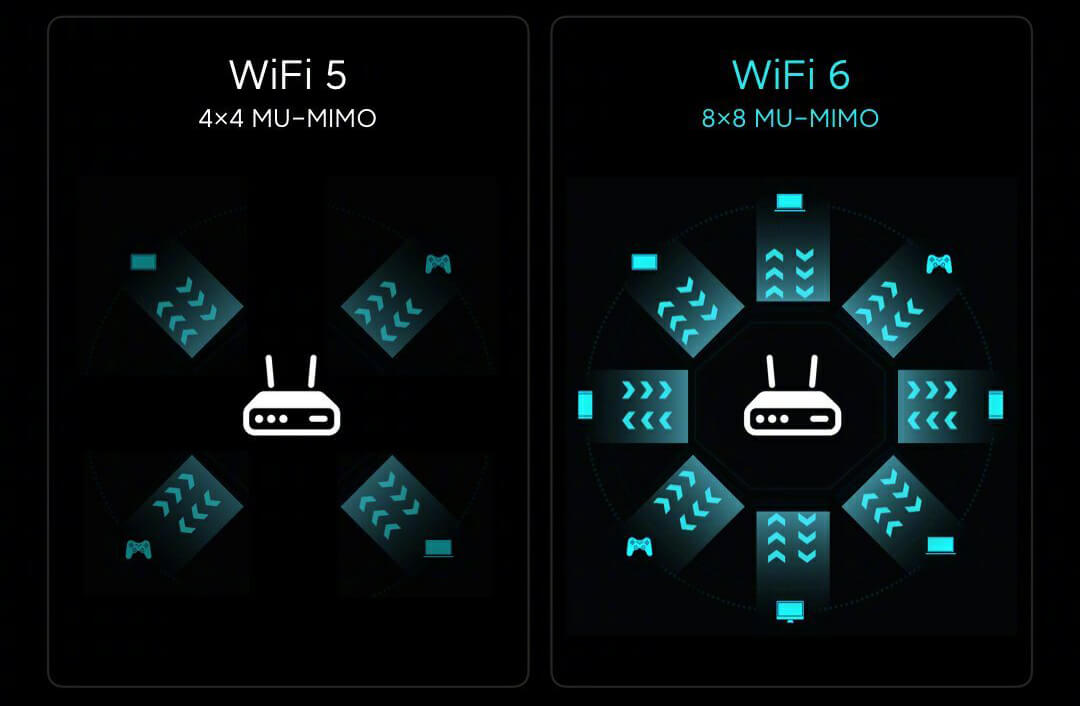
The 802.11 standards released by IEEE can be divided into six generations. The latest 802.11ax network is called WiFi 6, and its maximum transfer speed can reach 9.6 Gbps. That is 2.7 times WiFi 5 – 802.11ac, introduced in 2012, and 16 times WiFi 4 – 802.11n, introduced in 2009.

Just like the new memory or storage technology, the sixth generation of WiFi can save energy. The integrated TWT technology fine-tunes the sleep mode on the device when communication isn’t needed, significantly helping to reduce power consumption.
TWT also ensures the device stays on standby, so you won’t miss any received email or an important message—even while saving energy.
Thanks to new technologies like 8×8 MU-MIMO and OFDMA, WiFi 6 smart phones and other WiFi-enabled devices can achieve efficient speed boosts even in congested areas with public access such as airports, shopping malls, and similar places.

Xiaomi Mi 10 will be a premium smartphone
As you can see, the manufacturer Xiaomi is packing its new flagship with the best equipment features available today. Some components may seem over-sized or unnecessary, and it looks like they’re just unnecessarily overpricing the whole smartphone.
We were trying to show that without a high-performance RAM and a new type of storage, even a powerful processor wouldn’t reach its even average performance level.

When developers wanted to equip a smartphone with an above-standard camera system with functions that go beyond the average, the device also had to include additional high-performance, top-tier equipment. Without it, using the smartphone’s individual features would be more of a tragedy than a pleasure.
These innovations of course make us happy, and we also like the fact that this year the new Xiaomi flagship will set the bar for devices from other manufacturers too.
We also send you the latest news about Xiaomi Mi 10 by email. ?
Don’t miss the best coupons 📩
Subscribe and we’ll email you new coupons before they expire. We only send it once a month — no spam.