

- Xiaomi had its first big keynote in Europe at IFA 2026 in Berlin — a booth spanning over 3,300 m² and more than 380 products.
- It unveiled three proprietary chips — XRING O3, XRING O100 and XRING D100 for autonomous driving.
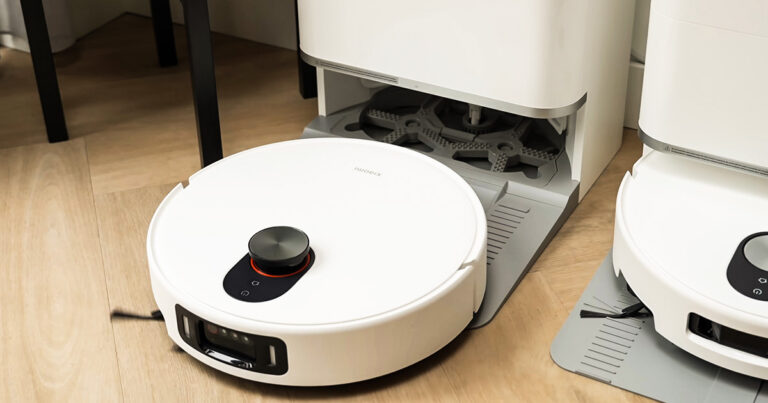
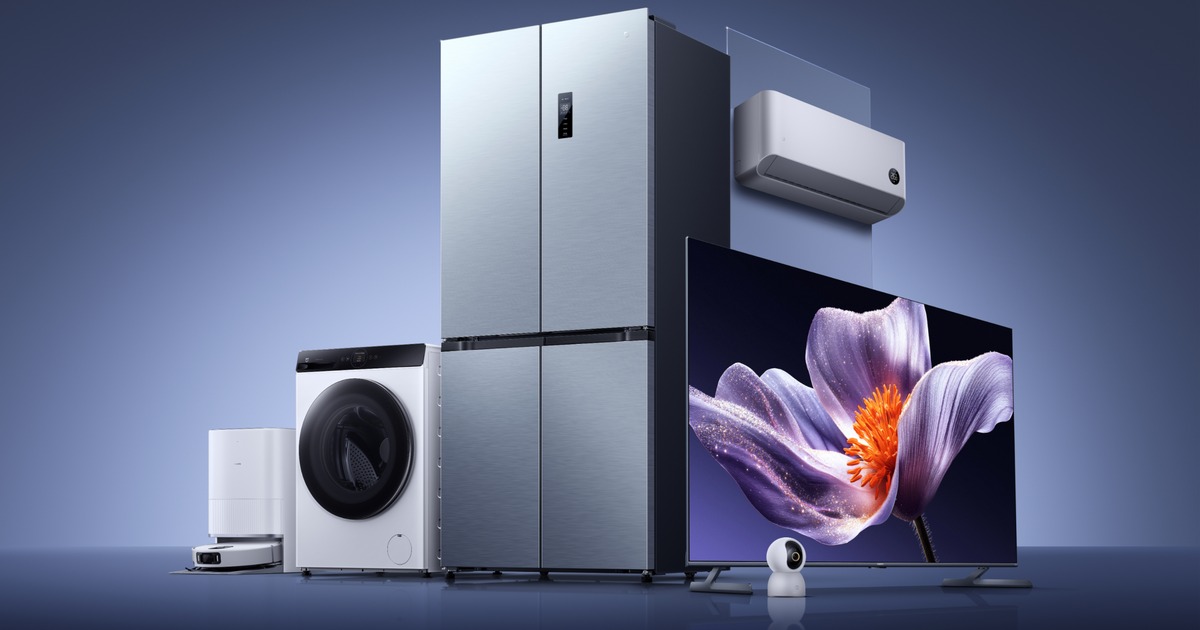
- The Mijia brand is fully heading to Europe: a fridge that keeps meat below zero without freezing it, a washer with three independent drums, and an air conditioner with two radar arrays.
- The humanoid robot CyberOne had its first presentation on the stand outside China.
- Xiaomi electric vehicles will come to Europe in 2027, with Germany as the first market.
Xiaomi delivered a presentation that got lost among the thousands of trade-show updates worldwide — and yet it’s probably the most important thing a company has done for Europe so far. It was its very first appearance at Berlin’s IFA, and at the same time the first chance to lay out its entire strategy in front of a European audience at once: phones, home, cars, its own chips, and its own artificial intelligence. We watched the full official stream, Xiaomi’s press release and the new Human × Car × Home page, and we’re pulling out everything that matters most.
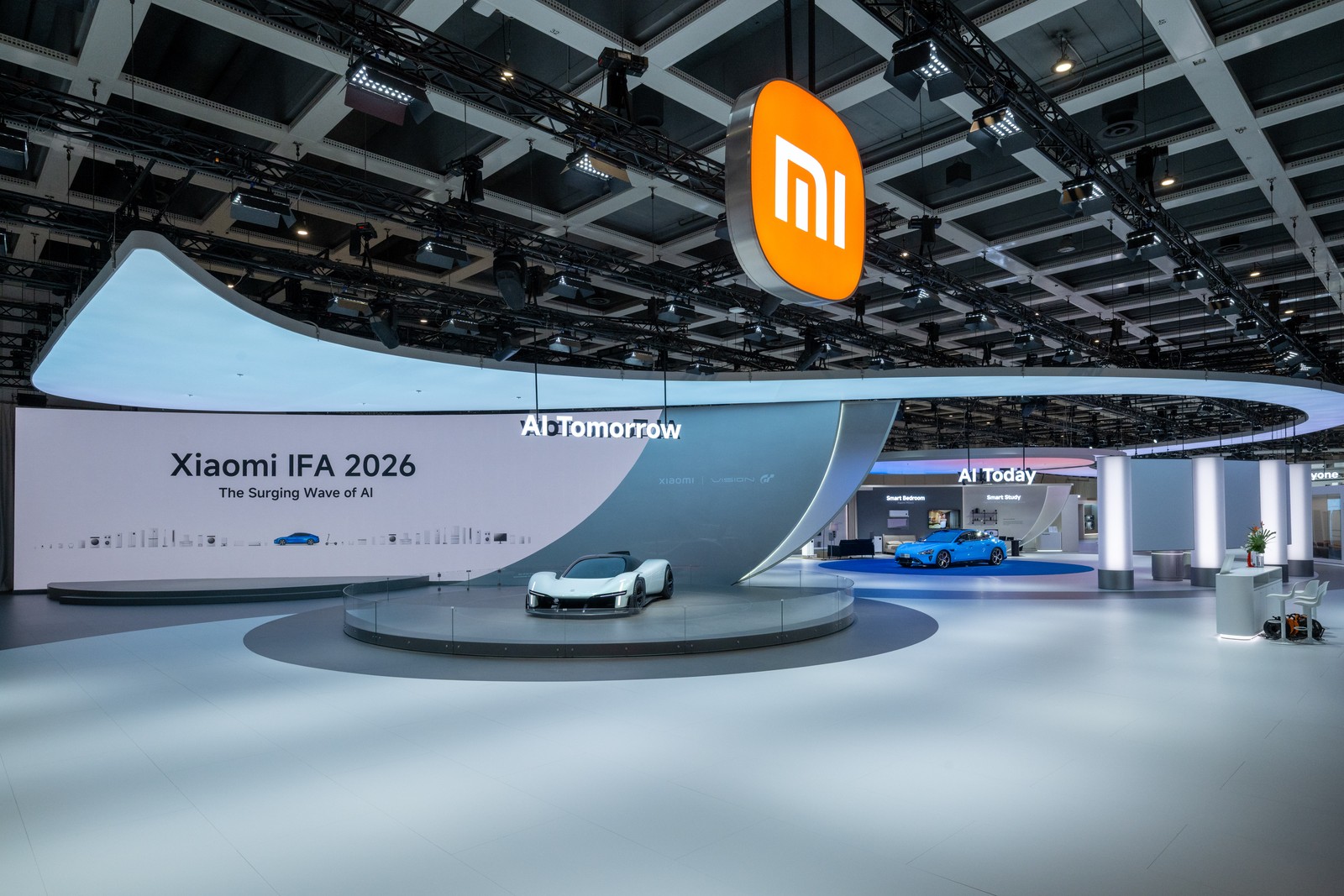
The stand covered over 3,300 m² — Xiaomi’s largest standalone exhibition ever built outside China — and it was split into three sections. AI Tomorrow focused on the future concept, AI Today showed what already works today, and the third part was a portfolio showcase with 380 products divided into seven categories: cooking & food storage, cleaning, air, entertainment, security, personal devices, and transportation.
A company you’ll probably still place in the wrong category
First on stage was Lu Weibing, partner and president of Xiaomi Group, and he started with numbers. Xiaomi is in the Fortune Global 500 for its eighth year and currently ranks 232nd. In the Forbes Global 2000 list, it’s at 205. And among the world’s most valuable brands according to Kantar BrandZ, it’s 81st. It’s held its place among the world’s top three smartphone manufacturers for 24 quarters in a row, meaning six straight years. For tablets it holds the fourth spot, and for wearables and watches it’s even second.
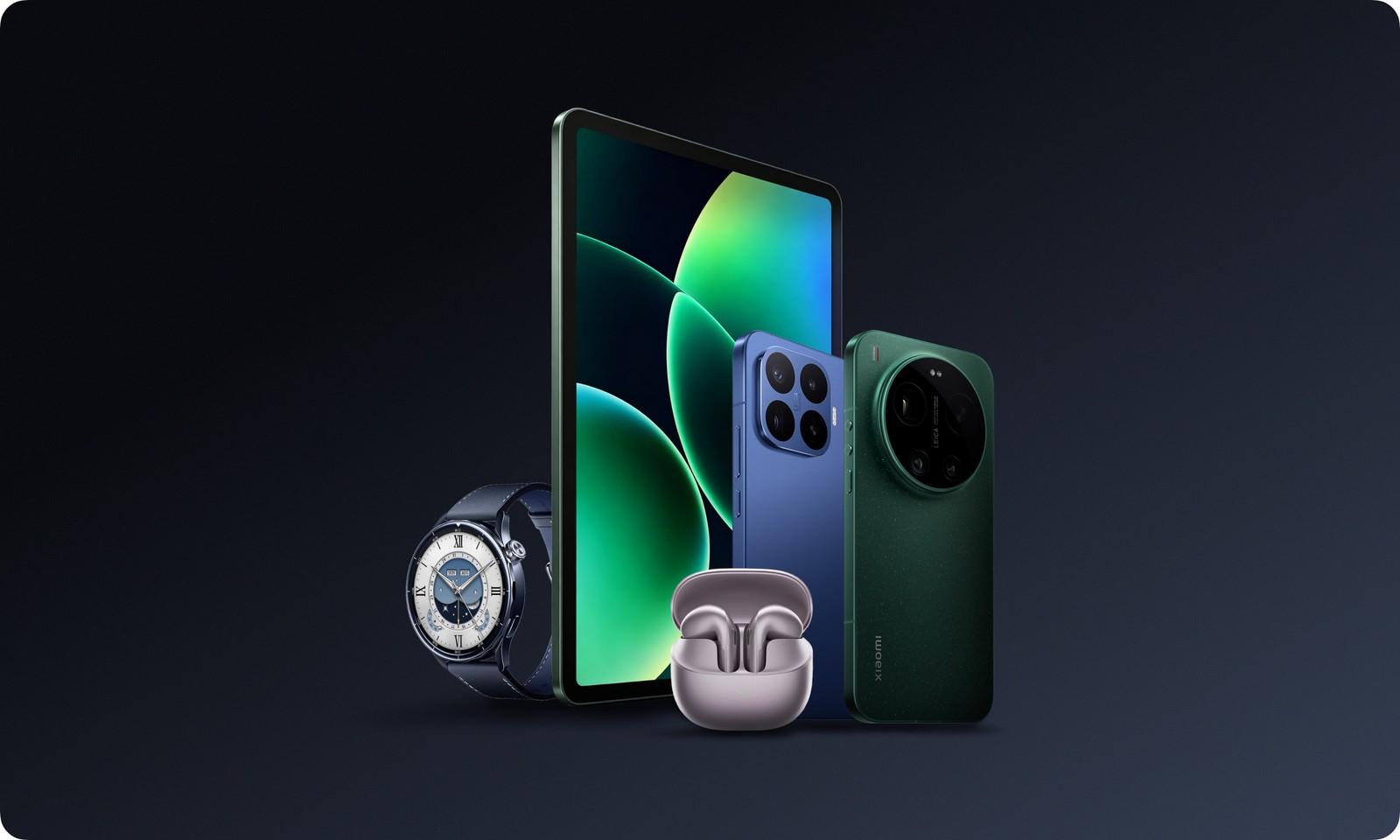
More important than rankings, though, are other figures. Today, Xiaomi has over 1.1 billion connected devices — and that’s without counting phones, tablets, or laptops. It serves more than 175 million users and households, making it the world’s largest consumer AIoT platform.
In cars, it’s even more intense: since its first delivered unit in March 2024, it sold over 700,000 vehicles in mainland China, and the YU7 model racked up 240,000 binding orders in a single day.
But that’s not all — the company plans to send more than €24 billion into research and development between 2026 and 2030. The money will go into artificial intelligence, operating systems, proprietary chips, cars, robotics, and manufacturing — in other words, exactly the areas you’ll then see across all its products.
Three in-house chips at once — and one of them is for cars
The strongest part of the keynote was about silicon. Just a week before the fair, Xiaomi introduced three new proprietary chips, and it showed them together in Berlin. XRING O3 is a flagship SoC that delivers a performance jump across CPU, GPU, NPU and AI. XRING O100 is a specialized AI accelerator with sixteen times higher throughput than typical flagship phone chips. And XRING D100 is a 3-nanometer chip designed specifically for autonomous driving.
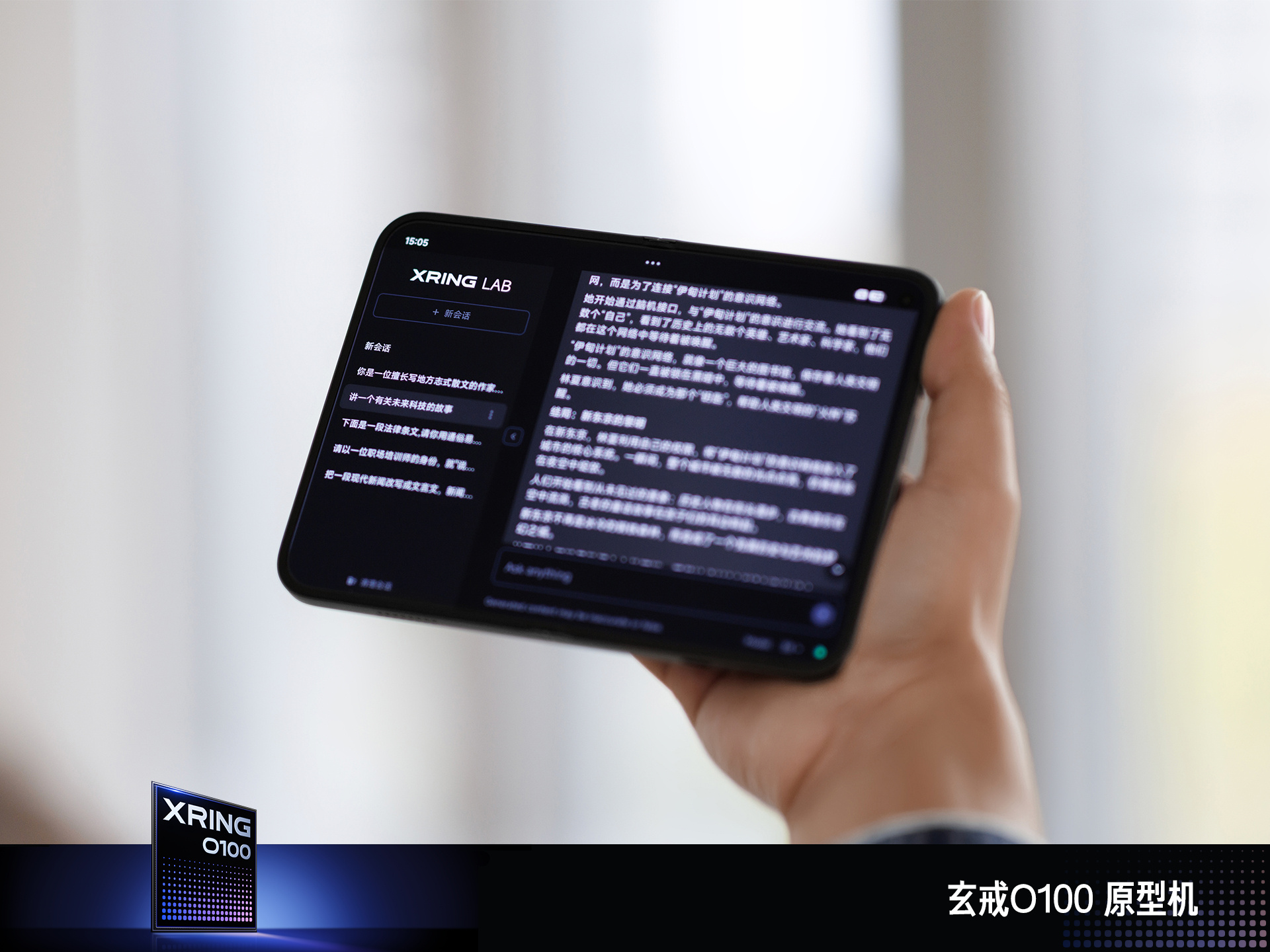
The first flagship phone with the XRING O3 chip will be the Xiaomi 18 Fold, which the company had on display at its booth and will unveil in China soon. The other two chips will find their way into real devices starting next year. That’s exactly where you can see why Xiaomi is pouring so much money into its own chipset—there are three pieces of the same puzzle: a phone chip, an AI chip, and an auto chip.
Xiaomi’s own AI—one it doesn’t sell, but uses everywhere
Xiaomi also has its own large language models, and their numbers are surprising. The model MiMo was, in July, according to the company the most-used model in the world on the OpenRouter platform based on monthly token consumption—and it was the only one to cross the 10 trillion tokens threshold within a single week. Currently, the company is building three new releases on top of it: MiMo-V2.5-Pro, Xiaomi Miloco, and Xiaomi Miclaw, which are meant to improve understanding, reasoning, and especially the ability to truly carry out the requested task.

Artificial intelligence is already working in production, too. The humanoid robots deployed at Xiaomi’s auto plant are finishing matrices, and their success rate for this operation rose in four months from about 90% to 98%. The company’s own factories can produce around ten million flagship phones per year, and at peak output one air conditioner leaves the line every 6.5 seconds. The plant in Wuhan, which combines R&D, manufacturing, and testing, has 46 in-house laboratories.
Mijia is now a full-fledged European brand
The second half of the keynote was taken by Xu Fei, the marketing director, and belonged to Mijia, a brand that was created back in 2016, but in Europe we’ve only seen a small portion of it so far. Its new slogan reads “the art of intelligent living” and it rests on three pillars: intelligence built around people, verified quality, and restrained design. Today, the portfolio has over 2,000 products in 130 categories, and it also boasts more than 500 international design awards, which Xiaomi collects under its design philosophy called Alive.
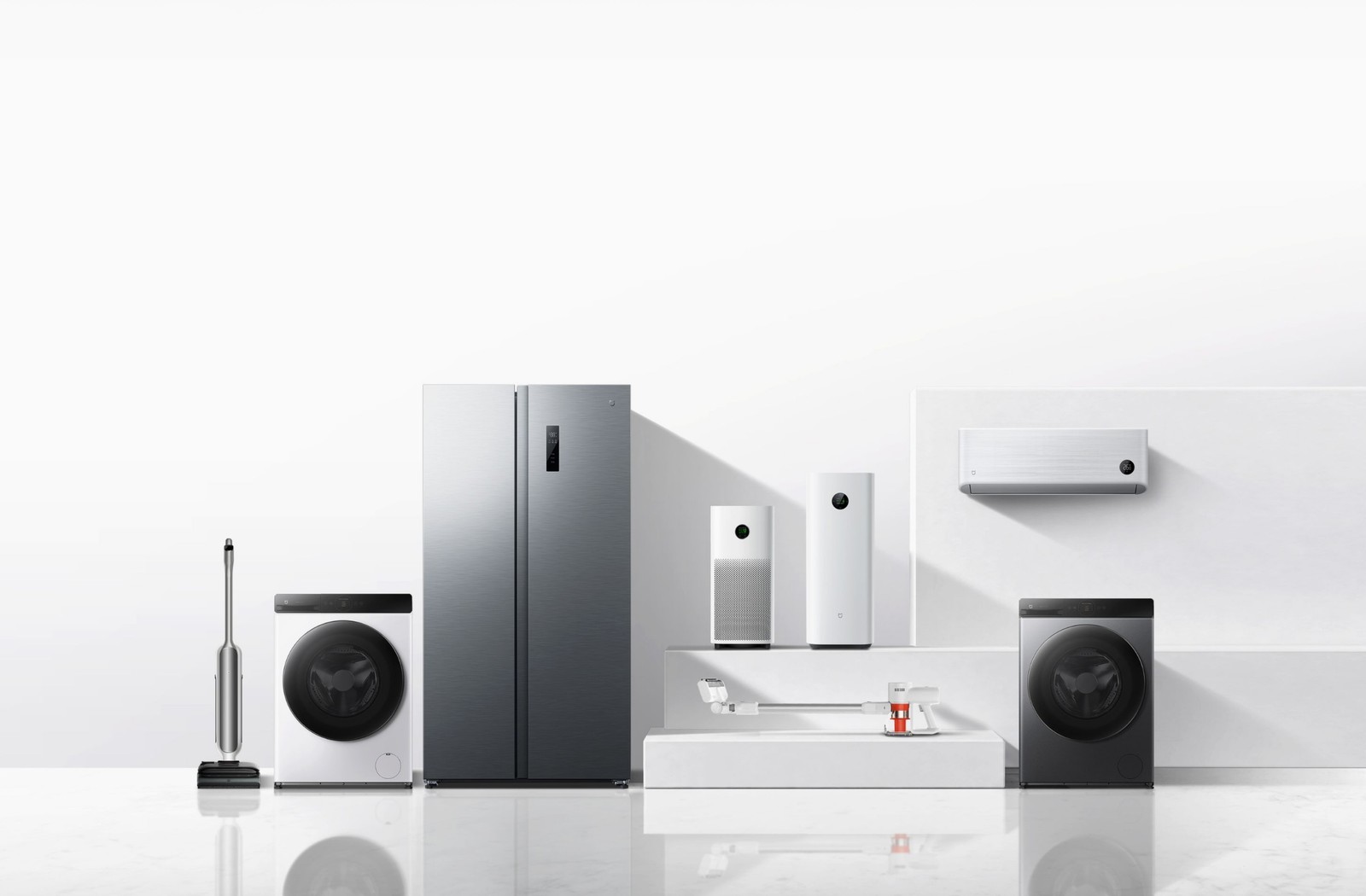
“Europe is an important market in Xiaomi’s global strategy,” Xu Fei said, adding that with the expansion of Mijia and the arrival of cars in 2027, all three parts of the ecosystem will meet right here. It’s also interesting how Mijia approaches development—supposedly, for every product it asks two questions: what people really need from it, and how it should actually work. About Mijia’s European entry we wrote before the trade fair; now we also know the specific models.
A refrigerator that keeps meat at zero and won’t freeze it
The first of these is the Mijia Refrigerator Pro Cryofresh with multiple doors. Its main feature is called Cryofresh, and it tackles the annoying part—defrosting. A special compartment keeps food just under zero, but prevents it from freezing solid. That way, meat and fish maintain their natural juiciness, and when you decide to cook, you take them out and head straight to the pan.
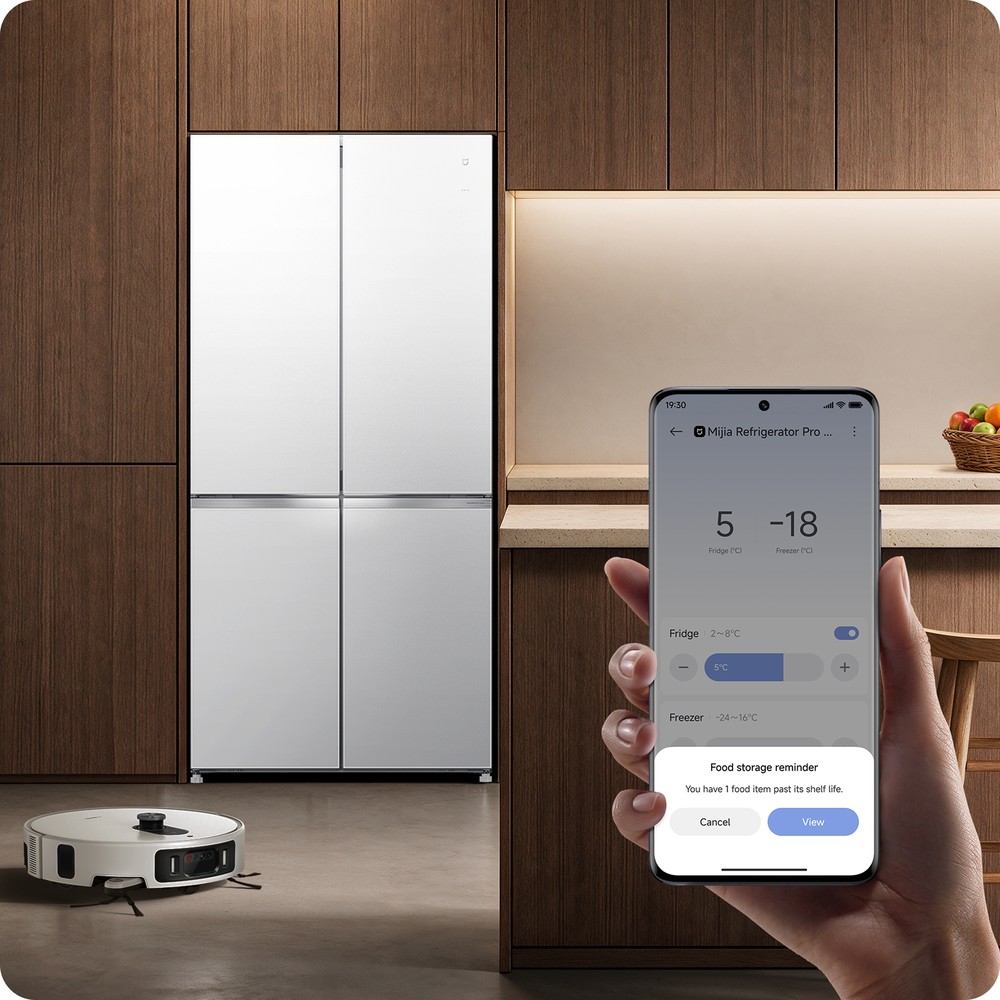

It works thanks to a combination of multi-directional airflow, reinforced insulation, and extremely sensitive sensors. At the booth, Xiaomi demonstrated it elegantly: they pulled a regular bottle of water out of the compartment, and it was still liquid—yet after shaking, it immediately turned into icy mash. It’s hard to imagine an even more precise example of how close to zero the compartment keeps things.
A washing machine with three drums sounds like nonsense—until you hear the reason
The new Mijia Tri-Drum Washer Dryer Pro has three separate drums stacked on top of each other, and the first reaction is often that it’s unnecessary. But the reason is practical: you normally sort laundry — whites separately, colors separately, plus sportswear, underwear, or silk. Until now, that meant running one washer, waiting, running the second, and getting through the whole day. With three drums, you can handle three different loads at once.

And it’s not just a divided space. Each drum has its own water inlet and outlet, plus its own detergent dispenser, so each load uses different chemistry. The whole unit is held together by an integrated steel frame that dampens vibrations from three drums spinning simultaneously. On top of that, Xiaomi adds its Oxygen Care technology — electrolysis through diamond electrodes doped with boron, releasing cleaning agents into the water without letting colors bleed. At the fair, the washing machine won the IFA Innovation Award.
An air conditioner that finds you by radar
The third appliance is the Mijia air conditioner, and it comes with two interesting technologies right away. The first is the award-winning dynamic refrigerant flow control: the outdoor unit has a refrigerant balancing tank, and the indoor unit has its own AI chip. When you need to cool down a overheated room fast, the system circulates more refrigerant; once it’s cool enough, it sends it back into the tank. It cools faster and saves electricity too — for some Xiaomi models, it claims efficiency improvements of up to 27%, although it’s the manufacturer’s figure, not an independent test.
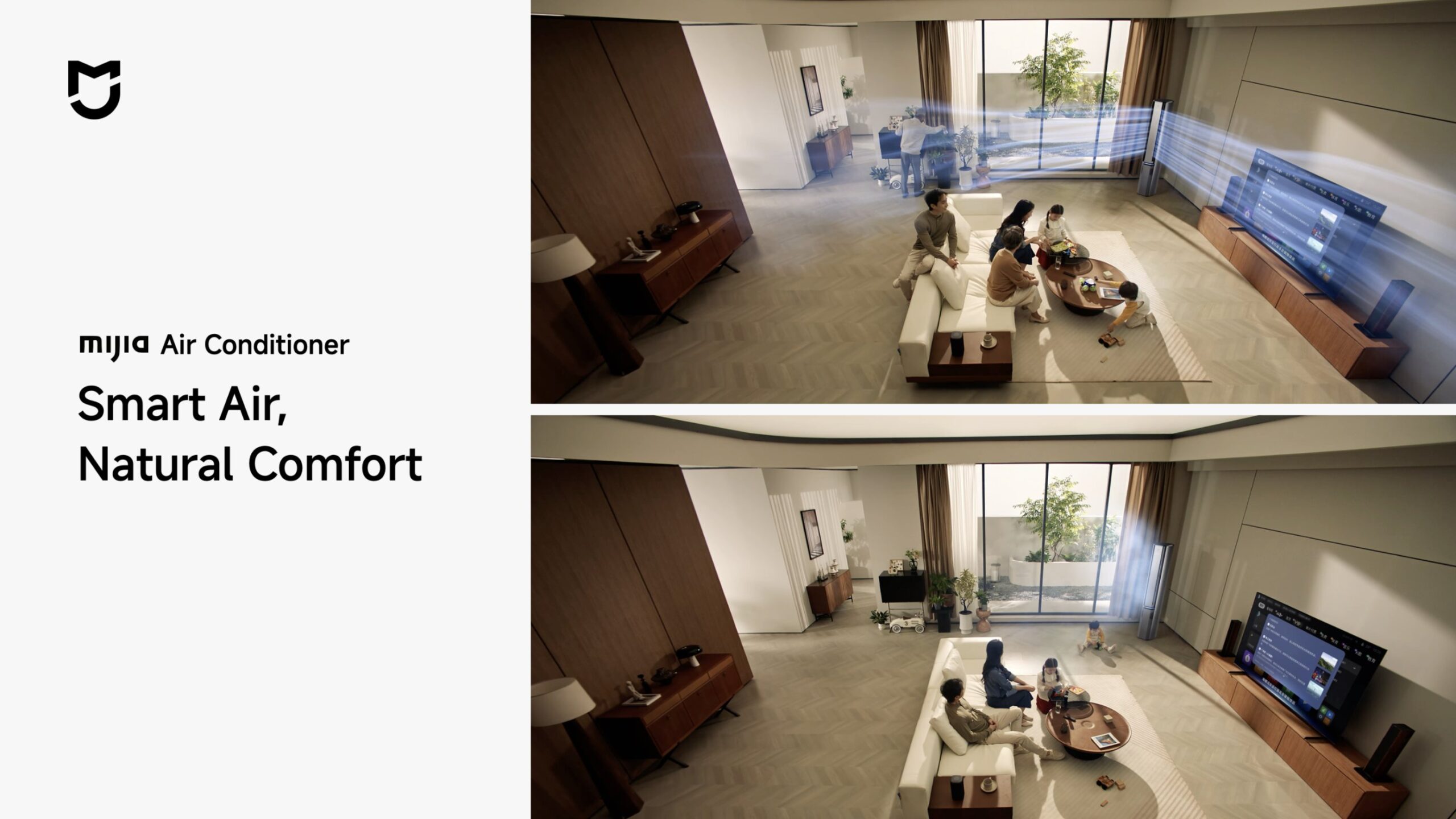
The second is AirGuide, which uses two millimeter-wave radars to track where you are standing in the room. Either it blows directly at your body, or it directs the airflow around you if you don’t like drafts. When you move, the airflow moves with you, and when you leave the room, the air conditioner simply turns off. On the booth, the moderators demonstrated it with a feather in hand, and it really worked.
You get into the car, and the house turns off on its own
The strongest part of the booth tour wasn’t the individual appliances, but what they do together. Xiaomi calls it Human × Car × Home — a person, a car, and a household as one system — and they showed it live with three scenes. When the moderator got into his SU7, at home the TV turned off by itself, along with the air conditioner, air purifier, and the camera — and the blinds opened. He didn’t say a word, and he didn’t tap on his phone.
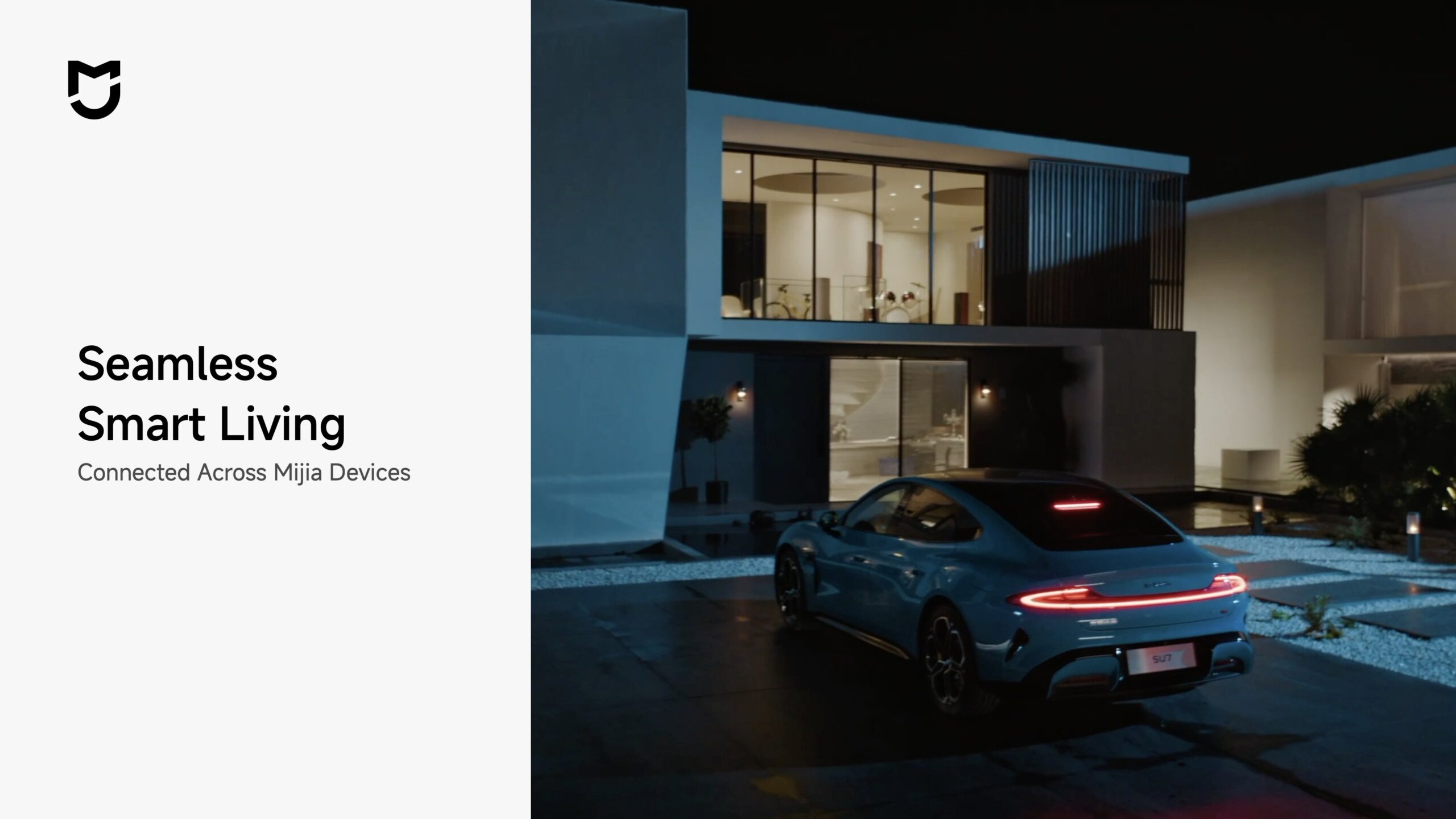
The second scene was in the kitchen: after turning on the cooktop, the range hood started on its own, and after the cooking was done, it folded back again, even though it’s two completely separate devices. And the third was the best — after starting the dishwasher, a robot vacuum shot out of the dock, because the system understood that you had finished eating and it was time to clean up.
Xiaomi adds even more scenarios. On the way home, the system sets your lights and the air conditioning automatically before you arrive, based on time, location, and the weather. The line “I just printed a photo I took” triggers a collaboration between your phone and the printer, and while you read, the lights, blinds, and temperature are synchronized. The Xiaomi Home app can also remind you about food items before their best-before date. The company emphasizes that everything runs only with your permission and under your control. And one more thing that will interest owners of other brands too: Xiaomi promises integration with Apple and Windows devices.
CyberOne for the first time outside China
At the very end of the tour, there was Xiaomi’s humanoid robot CyberOne — and it was its first presentation outside China. It’s about 1.7 meters tall; its shape and movement are designed to look as natural as possible, and during interactions it isn’t driven by pre-scripted animation, but by a model. In Berlin, it showed visitors a thumbs-up and also Korean heart shapes made with its fingers, while for the TV host in the live broadcast it gave a fist bump.
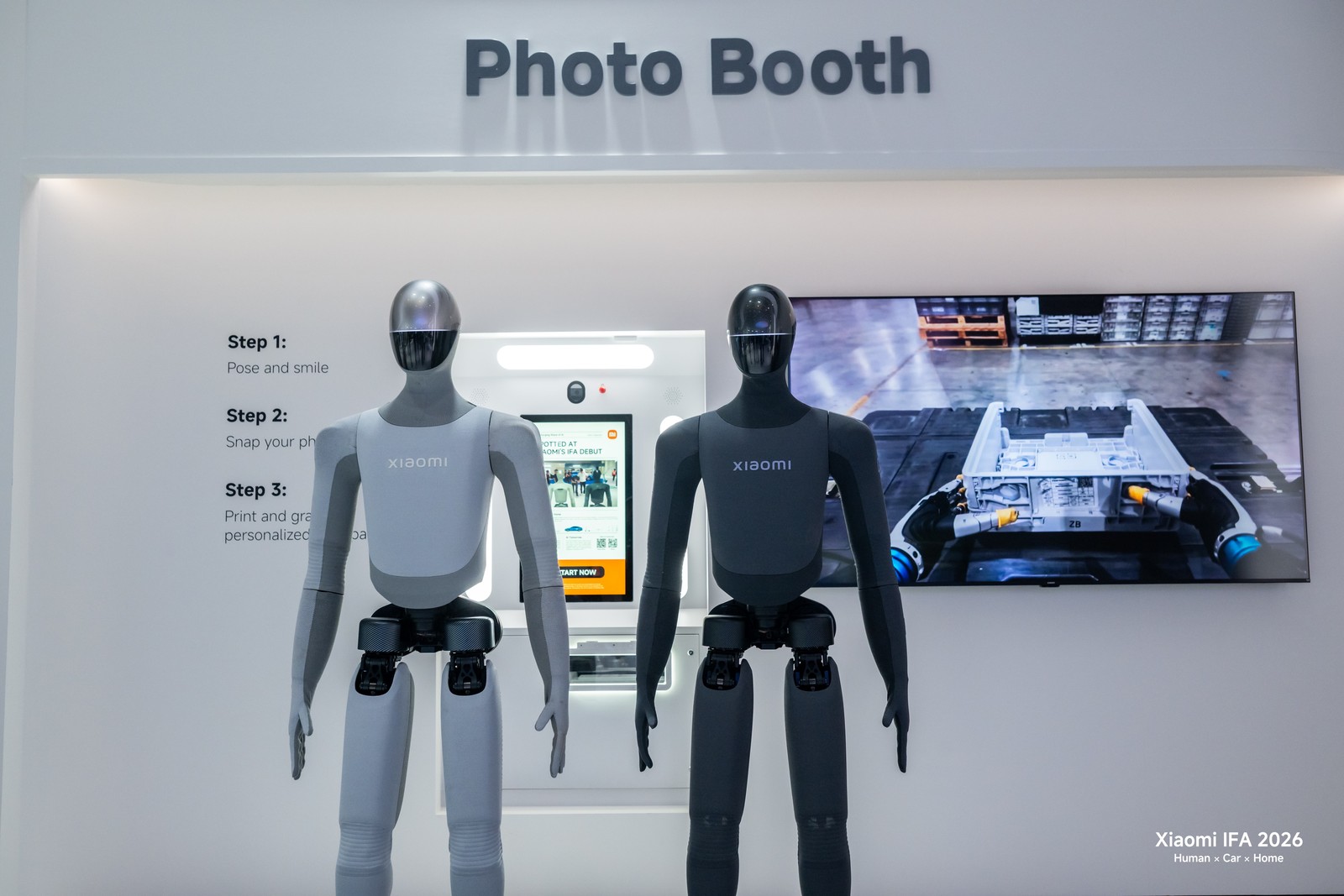
This isn’t a toy for the display window. Xiaomi’s same robots have been deployed for testing right inside its own car factory, where the company verifies their perception, control, and accuracy using real production tasks — and those are what drove the reported jump in success from 90 to 98 percent. The fact that the company brought the robot to Berlin is a clear signal of where it’s headed.
Vision Gran Turismo: a hypercar that exists only in the game
The AI Tomorrow zone was led by the concept Xiaomi Vision Gran Turismo — an electric hypercar designed for the legendary Gran Turismo gaming series. Xiaomi is the first technology company to ever enter the Vision Gran Turismo program, and since the car doesn’t have to respect the physical limits of mass production, designers could go wild. Three studios worked on it — in Beijing, Munich, and Shanghai.
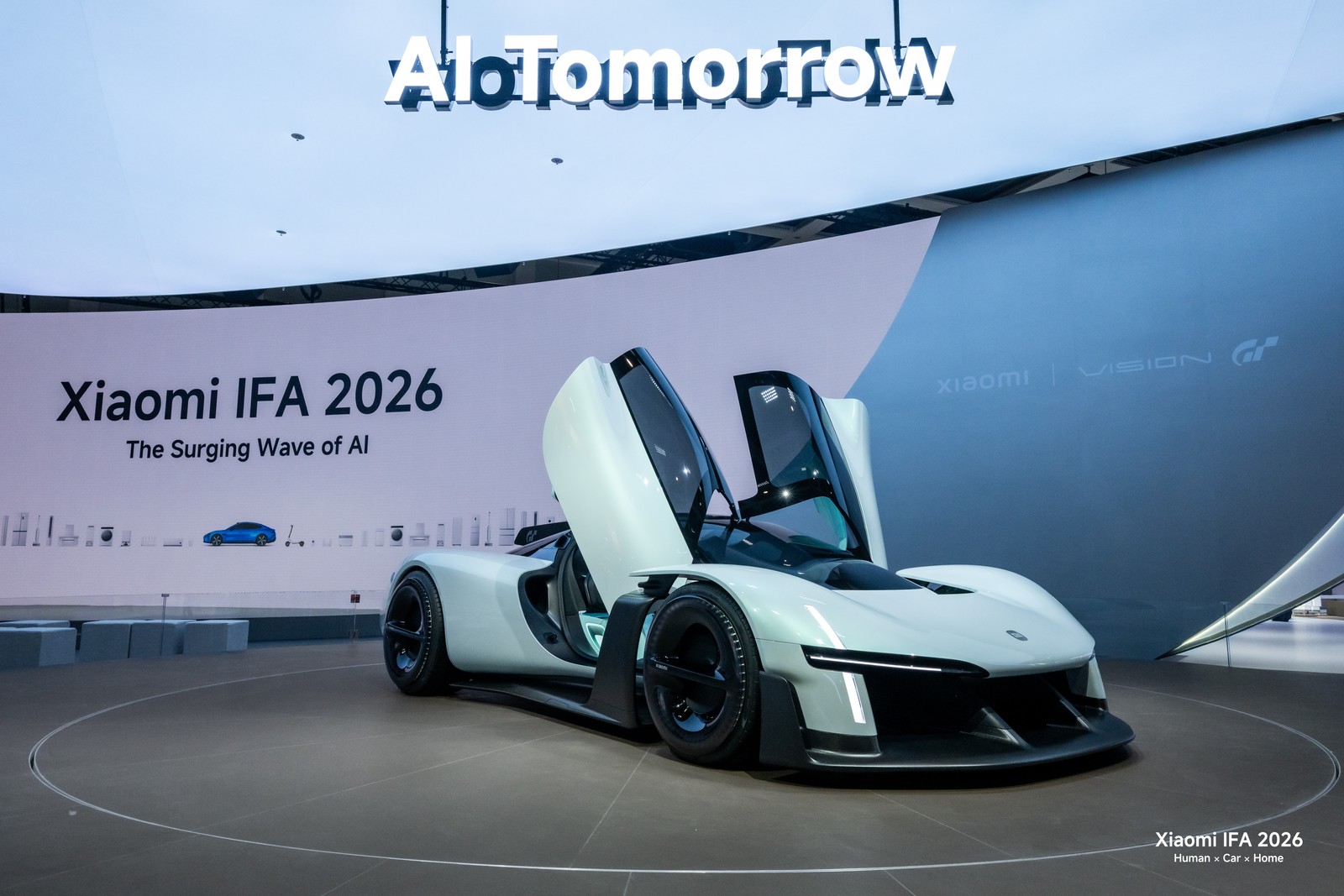
The bodywork, called “Shaped by the Wind”, is shaped exclusively by the flow of air, has a droplet-like cockpit, and active air-control steering on the move. The interior, meanwhile, Xiaomi calls “Racing on a Sofa” and complements it with a ring-shaped assistant, Xiaomi Pulse. In the accompanying video, the designers talked about a car meant to be in symbiosis with the driver and to respond even to their heartbeat.
And the cars? Year 2027 is the deal.
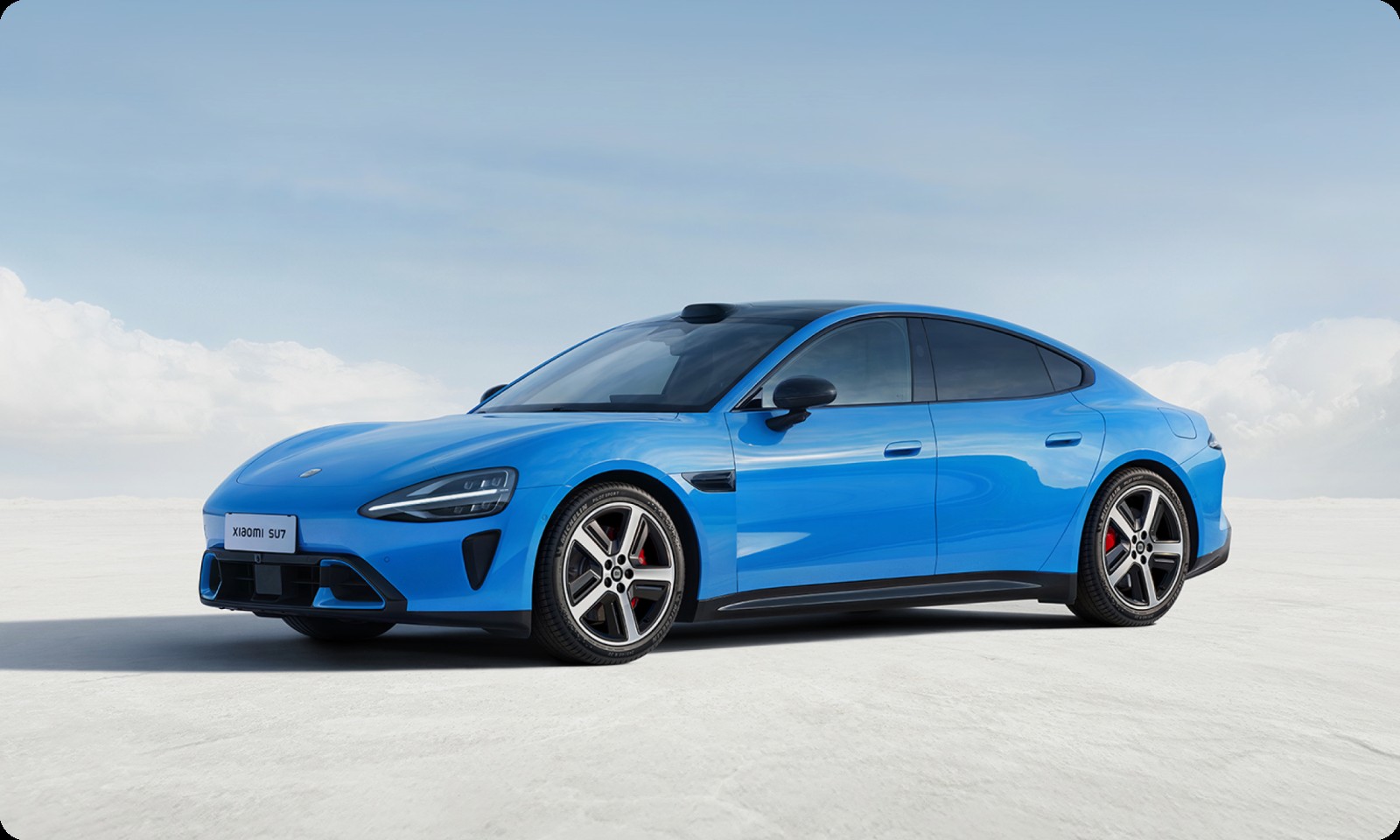
The automotive section was the biggest Xiaomi has ever built outside of China, and it featured three vehicles. Besides the concept, it included a new generation of SU7 in Coastal Blue and the flagship SU7 Ultra, which in April 2025 set the official Nürburgring record in the electric limousine category. Lu Weibing reiterated that Xiaomi’s electric vehicles will enter Europe in 2027, and the company has already signed memoranda with eight German retailers — we discussed the details in a separate article.
One sober note is worth adding. On its own website, Xiaomi points out that part of the shown scenarios are illustrative and may not be available on international markets — meaning not here right away, and not in full. Still, what’s clear is that in Berlin the full picture came together for the first time: its own chip, its own AI, its own operating system, a home packed with appliances, and a car meant to be just another device in the same ecosystem. That’s exactly what only Apple has managed to assemble in Europe so far — and Xiaomi adds a washing machine, a fridge, and an electric car to the mix.
| - | Xiaomi at IFA 2026 in numbers |
|---|---|
| Booth area | over 3 300 m² / hall 6.2 |
| Displayed products | more than 380 across seven categories |
| New chips | XRING O3 / XRING O100 / XRING D100 |
| Connected devices | over 1.1 billion / without phones and tablets |
| Users and households | over 175 million |
| Cars delivered | more than 700 000 since March 2024 |
| Mijia portfolio | over 2 000 products in 130 categories |
| R&D investments | over 24 billion € in the years 2026 to 2030 |
| Cars entering Europe | year 2027 / first Germany |
To get more updates from the world of Xiaomi, keep following our Xiaomi Planet website. Join our Facebook group, where we build an active community and help each other out. Subscribe to our Telegram as well, where we add the best deals and coupons from China every day.
Don’t miss the best coupons 📩
Subscribe and we’ll email you new coupons before they expire. We only send it once a month — no spam.