
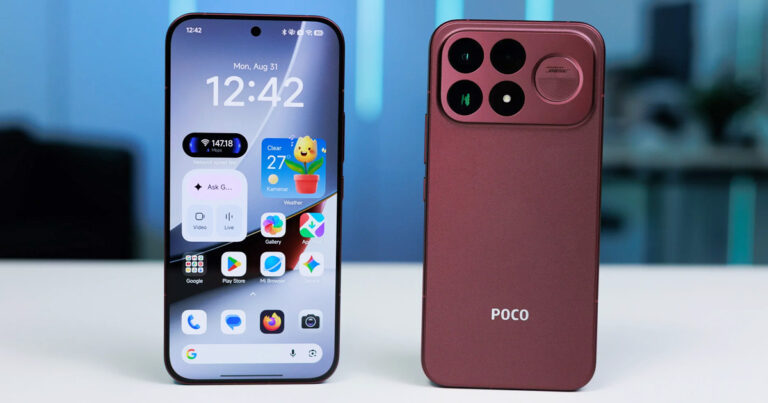


Not long ago, we covered in a separate article the new in-house chipset from Xiaomi called XRING O1. It has huge potential to bring a revolution to the premium mobile phone segment. Its first benchmark results are more than impressive. In raw performance, it even beats the dominant chip Snapdragon 8 Gen 3.
Excellent Geekbench 6 results that rival Snapdragon
The tested device on the Geekbench 6.1.0 platform with the internal model ID Xiaomi 25042PN24C achieved 2709 points in the single-core test and then 8125 points in the multi-core test. It therefore outperforms several of today’s modern chipsets designed for Android smartphones.
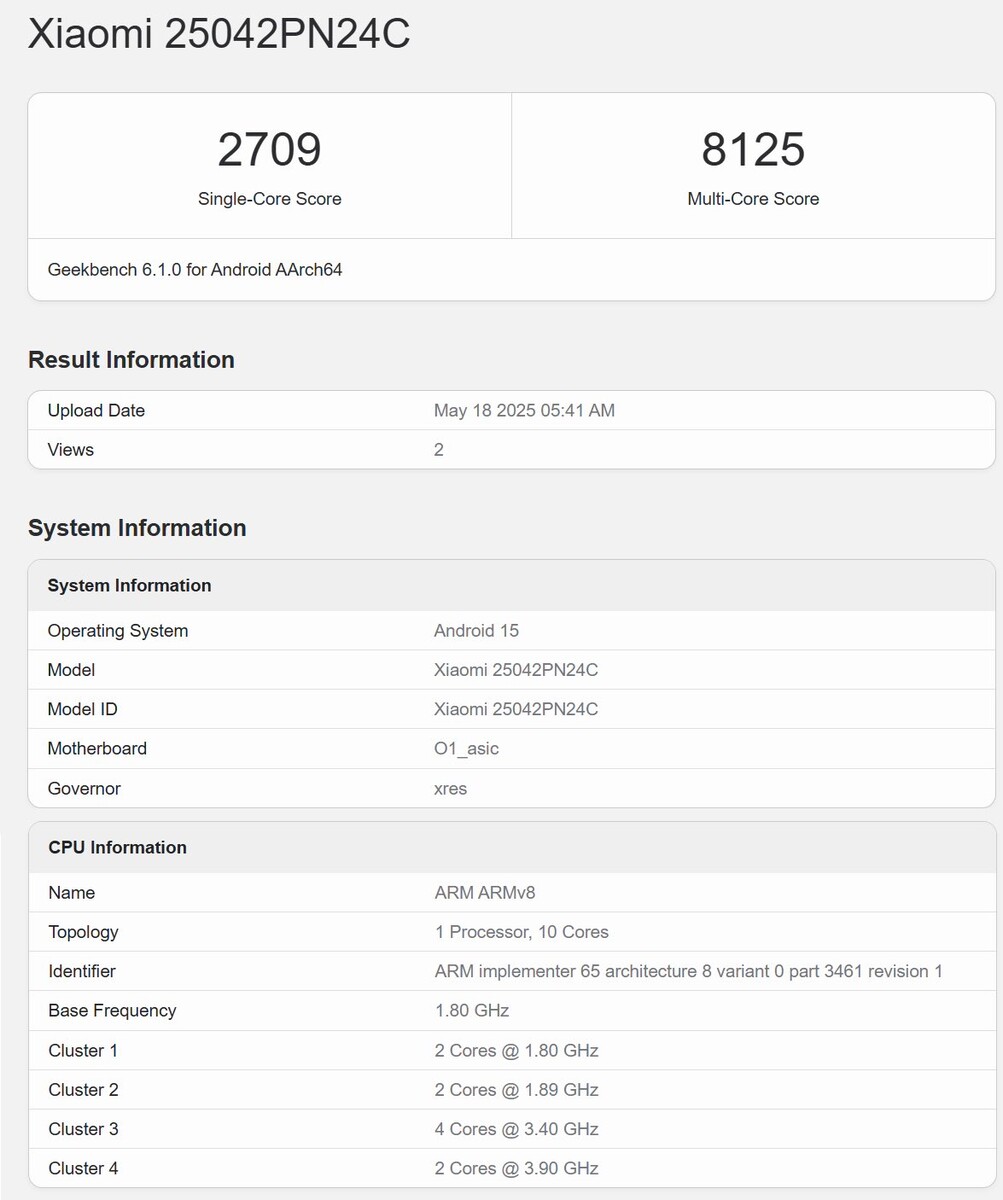
Xiaomi is sending a clear signal – it wants to be among the absolute top tier not only in products, but right at the core of the technology. For comparison, our Vivo X100 Ultra with the Snapdragon 8 Gen 3 chipset achieved 2188 points in the single-core test and 6879 points in the multi-core test. So XRING O1 is clearly the more powerful processor.
XRING O1 uses a unique 10-core architecture that combines 2 high-performance cores clocked at 3.9 GHz, 4 balanced cores at 3.4 GHz, and also 4 efficiency cores running at more power-efficient clocks of 1.89 GHz and 1.8 GHz. This hybrid design is meant to deliver a balance between high performance and great energy efficiency.
Although it hasn’t been confirmed, the tested device appears to be a Xiaomi 15S Pro, since it was spotted with the same model number „25042PN24C“ back in January in Mi code storage, and it was also certified at the 3C level with 90W wired charging.
XRING O1 also shines in graphics performance
Along with what looks like excellent compute performance at first glance, XRING O1 comes with a graphics accelerator Immortalis-G925 running at 1,795 GHz. It’s expected that this graphics solution will handle even the most demanding game titles at maximum settings, and it should also perform well with apps designed for augmented reality.

Graphics have always been the Achilles’ heel for many alternative chipsets. It seems that Xiaomi can meet that challenge. The company president of Xiaomi, Lu Weibing, revealed that XRING O1 won’t only go into smartphones – it will also be part of tablets, smartwatches, and even products from the smart home category. For the manufacturer, it will be more cost-effective because the chip is designed in-house, so it doesn’t have to pay other companies.
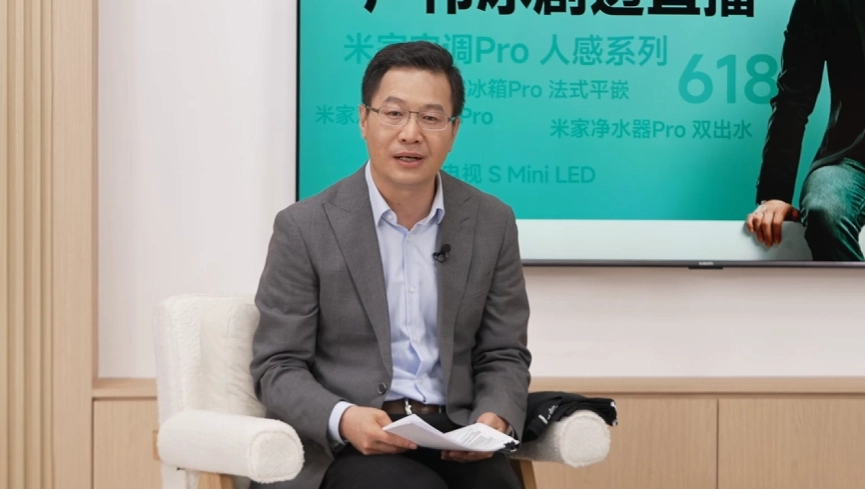
According to CEO Lei Jun, this strategy has deep roots. In his speech on May 15, he described XRING O1 as the result of a decade of Xiaomi efforts in chipset development, and also as a “beginning of a new chapter in the journey toward hardware independence.”
XRING O1 will also go into tablets and smart home devices
The official launch of the XRING O1 chip is expected by the end of May 2025, and the first device to receive it will most likely be the upcoming Xiaomi flagship model exclusively for the Chinese market.
Alongside that, the chip is also mentioned in connection with the powerful tablet Xiaomi Pad 7 Ultra, which will offer a 14-inch display and support for fast 120 W charging. This model is also expected to be intended only for the Chinese market.
To get more updates from the Xiaomi world, keep following our Xiaomi Planet website — join our Facebook group, where we build an active community and help each other out. Also subscribe to our Telegram, where we add the best offers and coupons from China every day.
Don’t miss the best coupons 📩
Subscribe and we’ll email you new coupons before they expire. We only send it once a month — no spam.