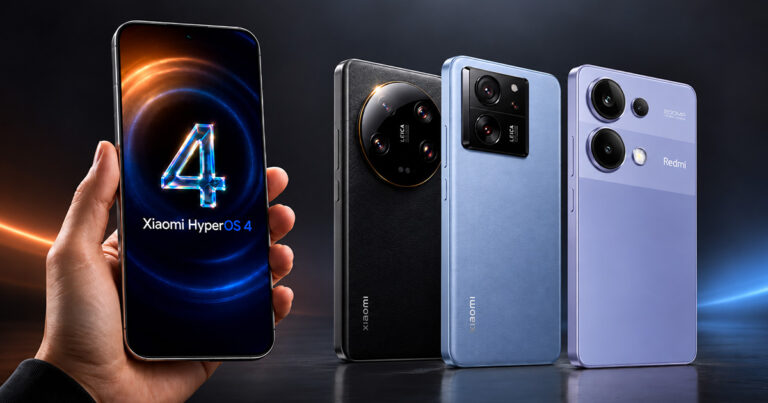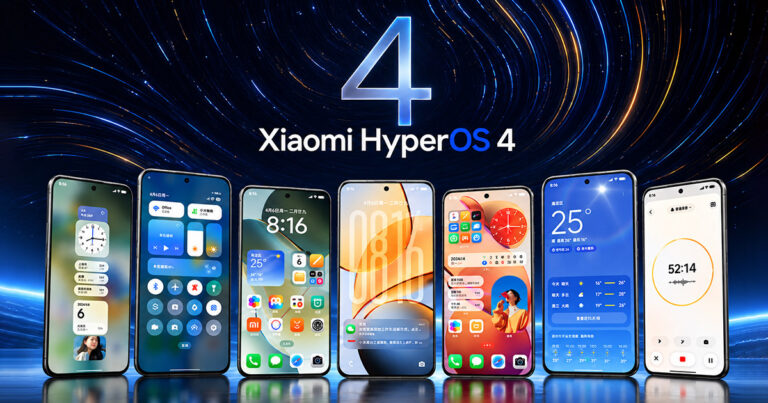


The company Xiaomi has introduced its latest HyperOS 3.0, which was officially announced at the August 28 conference—so far only for mainland China. The new version isn’t just a routine update; it responds to user feedback and brings an experience that, according to Xiaomi, is “smooth and intuitive in every respect.”
We’ll announce the Global version of HyperOS 3.0 in our group
Smoothness on a whole new level
With HyperOS 3.0, Xiaomi focuses mainly on optimization at the level of core technologies. It builds on experience from its own chip development and boosts both performance and energy efficiency to a higher level.

The system reduces rendering load, offers higher stability, and overall lower power consumption. More than 100 system animations were optimized, so every interaction feels smoother and more visually appealing. Users should feel instant responsiveness with every action.

The manufacturer calls it a “full grand slam of smoothness,” because it’s not just cosmetic tweaks—it involves real changes to the system core. Xiaomi therefore promises not only a smoother operation, but also less device overheating during longer use or gaming.
Xiaomi Super Island: A new way to multitask
One of the biggest updates is the so-called Xiaomi Super Island. It’s an expanded multitasking space that supports up to three independent “islands” at the same time. That means that even if you have multiple tasks running, they won’t interfere with each other. You can switch between information quickly and smoothly, while the system always shows you what matters most to you.

Super Island lets you use small app windows without having to stop your current activity. For example, while watching a video, you can open your calendar, check travel information, or share data with a simple swipe directly between windows. In practice, this means fewer interruptions and more efficient smartphone use.
Advanced interaction and intelligent features
HyperOS 3.0 aims not only to speed up the system, but also to deliver practical improvements. Xiaomi emphasizes that it focused on “noticeable smoothness,” something you’ll notice right as soon as you start using it. The system also uses advanced energy-management algorithms, which should translate into longer battery life in real-world use.

The new system also puts a focus on sharing information—Super Island supports simple drag-and-share between apps, making it faster and more natural to share photos, travel details, or links.
Overall, it’s a layer that combines visual appeal with practical features, all built on a solid technological foundation. The look also changed—icon design, for example, or the design of the locked screen—which aligns more with current industry trends.
Upgraded album and lossless photo and video sharing
HyperOS 3.0 also brings a completely reworked Gallery app. The album home page and the collections page let users fully customize the order and display—by date, time added, or time captured. You can create your own layout that fits your habits best. Everyone will end up with an album “tailored to them.”

One of the standout features is Stick&Share, meaning instant sharing of photos and videos to an album on another device with a simple tap. The transfer happens in full quality and without data loss, and it also supports files such as videos, coordinates, contacts, or web pages. Great news: Xiaomi HyperOS supports two-way transfer with Apple iPhone devices. So the feature is not only lightning-fast, but also cross-platform compatible.
Linking across ecosystems: Xiaomi × Apple
Xiaomi HyperOS 3.0 takes compatibility and connectivity to a new level. It delivers seamless integration with Apple devices—not only by sharing notifications between iPhone and Xiaomi smartphones, but even by letting you reply to messages from a Xiaomi phone directly through iPhone. Two-way notification sync is now real even between two different ecosystems.

There’s also support for Xiaomi cloud albums directly on iPhone without having to change devices. Photos from your Xiaomi smartphone can be viewed and shared in iOS apps. Even more advanced features come with desktop integration via Mac and iPad using MiShare Desktop.

This lets you unlock using Touch ID or Face ID, supports multiple windows, file transfers, and even app mirroring. So you can display smartphone apps in a large window on Mac and control them with your mouse and keyboard. It’s a very smooth, natural expansion of your workspace for people who use multiple devices at the same time.

Super Xiao Ai: Intelligence that understands you
As part of HyperOS 3.0, there’s a new generation of the Super Xiao Ai voice assistant—it’s now much faster, more accurate, and it can react to the context. It can instantly launch an app or a feature, and it can also independently suggest actions based on what’s happening right now.
The Circle to Search feature lets you intuitively circle anything on your screen—such as a question, a product, or an animal—and get recommendations, information, or actions in real time.

The system also includes “One-step connection”, enabling you to complete common tasks immediately (e.g., opening a QR code, paying a bill, or sharing a file) without having to manually search for the app or feature.
Super Xiao Ai is part of HyperOS, and its performance is backed by an AI capabilities certificate for mobile operating systems—the first such certificate in China. At the moment, we can’t tell whether this AI will be used beyond China.
Security and privacy at a new level
HyperOS 3 comes with major security and privacy improvements. With two-step verification, your accounts are better protected even when you sign in on multiple devices. The system now supports advanced data encryption as soon as you leave the device, ensuring maximum protection during transfer.

The “Find device” feature has been improved and works even when your powered-off or offline smartphone is offline—location is determined through an encrypted network of other devices. A new security control module lets you manage app access rights precisely—file by file, photo by photo, contact by contact. Whatever you choose is the only thing the app will receive.
Xiaomi HyperOS 3 beta is here
Xiaomi has officially started beta testing HyperOS 3, and the first wave of updates begins as early as August 29, currently only in mainland China. Among the first devices will be flagship models like Xiaomi 15 Ultra, 15 Pro, Redmi K80 Pro, as well as the new Xiaomi Pad 7S Pro 12.5 tablets and Pad 7 Pro.
The next wave will arrive by September 17, and we expect the third update wave at the latest by September 30. Foldable phones will also be covered, such as Xiaomi MIX Fold 4 and MIX Flip, plus more tablets and new TVs like S Pro Mini LED 2025.
With HyperOS 3, you’ll also get a lot of new features, with the most important changes including:
- smooth performance even under heavy load,
- Super Island — an intelligent interface for your most important notifications,
- an improved Super XiaoAi — an assistant that handles tasks in a single step,
- a refreshed system design — subtle, natural, and immersive,
- and stronger privacy protection that respects your choices
As for the global version, the release date is not known yet, but chances are we’ll see it when Xiaomi presents its new flagship devices next year 16, which could happen sometime between February and March 2026.
Which models will get Android 16 with HyperOS 3.0?
As we mentioned in our previous article, older models like Xiaomi Mi 11 will most likely stay on HyperOS 2 and won’t receive updates anymore. Here’s the complete list of smartphones:
Xiaomi
- Xiaomi 15
- Xiaomi 15 Pro
- Xiaomi 15 Ultra
- Xiaomi 14
- Xiaomi 14 Pro
- Xiaomi 14 Ultra
- Xiaomi 13
- Xiaomi 13 Pro
- Xiaomi 13 Lite
- Xiaomi 12
- Xiaomi 12 5G
- Xiaomi 12 Pro
- Xiaomi 12 Pro (Dimensity Chip Edition)
- Xiaomi 12 Lite
- Xiaomi 12 Lite NE
- Xiaomi 12T
- Xiaomi 12T Pro
- Xiaomi 12S
- Xiaomi 12S Pro
- Xiaomi 12S Ultra
Redmi
(Note Series)
- Redmi Note 14
- Redmi Note 14 Pro
- Redmi Note 14 Pro+
- Redmi Note 13
- Redmi Note 13 Pro
- Redmi Note 13 Pro+
- Redmi Note 13R
- Redmi Note 13R Pro
- Redmi Note 12 4G
- Redmi Note 12 4G NFC
- Redmi Note 12S
- Redmi Note 12 Turbo
- Redmi Note 12T Pro
Redmi (classic models)
- Redmi 12
- Redmi 13
- Redmi 13C
- Redmi 14C
- Redmi 14C 5G
Redmi (A series)
- Redmi A3 Pro
- Redmi A4 5G
Redmi K Series
- Redmi K80
- Redmi K80 Pro
- Redmi K70
- Redmi K70 Pro
- Redmi K70 Ultra
- Redmi K70E
- Redmi K60
- Redmi K60 Pro
- Redmi K60 Ultra
- Redmi K60E
- Redmi K50 Ultra
Redmi (Turbo Series)
- Redmi Turbo 4
- Redmi Turbo 3
POCO
(F Series)
- POCO F7
- POCO F7 Pro
- POCO F7 Ultra
- POCO F6
- POCO F6 Pro
- POCO F5
- POCO F5 Pro
POCO (X Series)
- POCO X7
- POCO X7 Pro
- POCO X7 Pro (Iron Man Edition)
- POCO X6 5G
- POCO X6 Pro 5G
POCO (M Series)
- POCO M7 Pro 5G
- POCO M6 Pro 5G/4G
- POCO M6 5G/4G
POCO (C Series)
- POCO C75
- POCO C65
Foldable phones / tablets
- Xiaomi MIX Fold 4
- Xiaomi MIX Fold 3
- Xiaomi MIX Fold 2
- Xiaomi MIX Flip
- Xiaomi MIX Flip 2
- Xiaomi Pad 7
- Xiaomi Pad 7 Pro
- Xiaomi Pad 7 Pro
- Xiaomi Pad 6S Pro
- Xiaomi Pad 6 Pro
- Redmi Pad SE
- Redmi Pad Pro
- Redmi Pad SE 8.7
- Redmi Pad Pro 5G
To get more updates from the Xiaomi world, keep following our Xiaomi Planet website — join our Facebook group, where we build an active community and help each other out. Also subscribe to our Telegram, where we add the best offers and coupons from China every day.
Don’t miss the best coupons 📩
Subscribe and we’ll email you new coupons before they expire. We only send it once a month — no spam.