
One big group, at least two brands, and two flagship series. That’s what today’s comparison of the two best series from Xiaomi and Redmi will look like. Both companies have recently released this year’s flagship phones.
The first one was the model line Xiaomi Mi 10, and a little later the Redmi K30 Pro series arrived as well.
Two series, four phones
Today’s comparison will be a bit unconventional, because even though we’re practically comparing only two models, it’s actually up to 4 different devices. Each of the compared series also has its improved model. Even if the outcome can be expected, let’s take a look at the specs comparison of the Xiaomi Mi 10, Xiaomi Mi 10 Pro, Redmi K30 Pro and the Redmi K30 Pro Zoom smartphones.
Spec comparison Xiaomi Mi 10 vs Redmi K30 Pro:


| Xiaomi Mi 10 | Xiaomi Mi 10 Pro | Redmi K30 Pro | Redmi K30 Pro Zoom | |
|---|---|---|---|---|
| Dimensions | 162.6 x 74.8 x 9 mm | 162.6 x 74.8 x 9 mm | 163.3 x 75.4 x 8.9 mm | 163.3 x 75.4 x 8.9 mm |
| Weight | 208 g | 208 g | 218 g | 218 g |
| Used material | Glass | Glass | Glass | Glass |
| Display | AMOLED / 6.67 inches | AMOLED / 6.67 inches | AMOLED / 6.67 inches | AMOLED / 6.67 inches |
| 1080 x 2340 px | 19.5:9 | 1080 x 2340 px | 19.5:9 | 1080 x 2400 px | 20:9 | 1080 x 2400 px | 20:9 | |
| Pixel density | 386 ppi | 386 ppi | 395 ppi | 395 ppi |
| Contrast | 5 000 000 : 1 | 5 000 000 : 1 | 5 000 000 : 1 | 5 000 000 : 1 |
| Refresh rate | 90 Hz | 90 Hz | 60 Hz | 60 Hz |
| Sampling rate | 180 Hz | 180 Hz | 180 Hz | 180 Hz |
| Maximum Brightness | 1 120 nits | 1 200 nits | 1 200 nits | 1 200 nits |
| Processor | Snapdragon 865 | Snapdragon 865 | Snapdragon 865 | Snapdragon 865 |
| RAM | LPDDR5 | LPDDR5 | LPDDR4X | LPDDR5 | LPDDR5 |
| Storage | UFS 3.0 | UFS 3.0 | UFS 3.0 | UFS 3.1 | UFS 3.1 |
| Primary camera | 108 MPx | 108 MPx | 64 MPx | 64 MPx |
| aperture f/1.69 | sensor size 1/33″ | 1.6 µm | aperture f/1.69 | sensor size 1/33″ | 1.6 µm | Aperture f/1.89 | sensor size 1/1.7″ | 1.6 µm | Aperture f/1.89 | sensor size 1/1.7″ | 1.6 µm | |
| Number of lenses | 7 P | 8 P | 6 P | 7 P |
| Stabilization | optical | optical | electronic | optical |
| Video | 8K 30 fps | 4K 60 fps | 8K 30 fps | 4K 60 fps | 8K 30 fps | 4K 60 | 8K 30 fps | 4K 60 |
| More cameras | 2 MPx portrait | f/2.4 | 1.4 µm | 12 MPx portrait | f/2.0 | 1.4 µm | 2x optical zoom | 2 MPx portrait | 1.75 μm | 2 MPx portrait | 1.75 μm |
| 13 MPx ultrawide | f/2.4 | 123° | 20 MPx ultrawide | f/2.2 | 117° | 13 MPx ultrawide | 123° | 13 MPx ultrawide | 123° | |
| 2 MPx macro | f/2.4 | 1.12 µm | 8 MPx telephoto lens | f/2.0 | 1.0 µm | 10x hybrid zoom | 5 MPx macro | 8 MPx telephoto | 3x optical zoom | 30x digital zoom | |
| Front camera | 20 MPx | 20 MPx | 20 MPx | 20 MPx |
| Speakers | Stereo | chamber 1.0cc | Stereo | chamber 1.2cc | Mono | Mono |
| 3.5 mm jack | No | No | Yes | Yes |
| WiFi | 6 | 6 | 6 | 6 |
| Bluetooth | 5.1 | 5.1 | 5.1 | 5.1 |
| NFC | Yes | Yes | Yes | Yes |
| Infraport | Yes | Yes | Yes | Yes |
| Location services | Dual band A-GPS|GLONASS|BDS|GALILEO|QZSS | Dual band A-GPS|GLONASS|BDS|GALILEO|QZSS | Dual band A-GPS|GLONASS|BDS|GALILEO|QZSS | Dual band A-GPS|GLONASS|BDS|GALILEO|QZSS |
| Battery | 4780 mAh | 4500 mAh | 4700 mAh | 4700 mAh |
| Charging | 30 W | 50 W | 33 W | 33 W |
| Wireless charging | 30 W | 30 W | No | No |
| Reverse charging | 10 W | 10 W | No | No |
Design
This category is usually quite subjective, because everyone likes something different. If we rely purely on technical specs, we have to say that Mi 10 is smaller by a tenth of a millimeter and also lighter by a whole 10 g. Still, it kept all the important specs and doesn’t have anything fundamentally less than the compared Redmi.

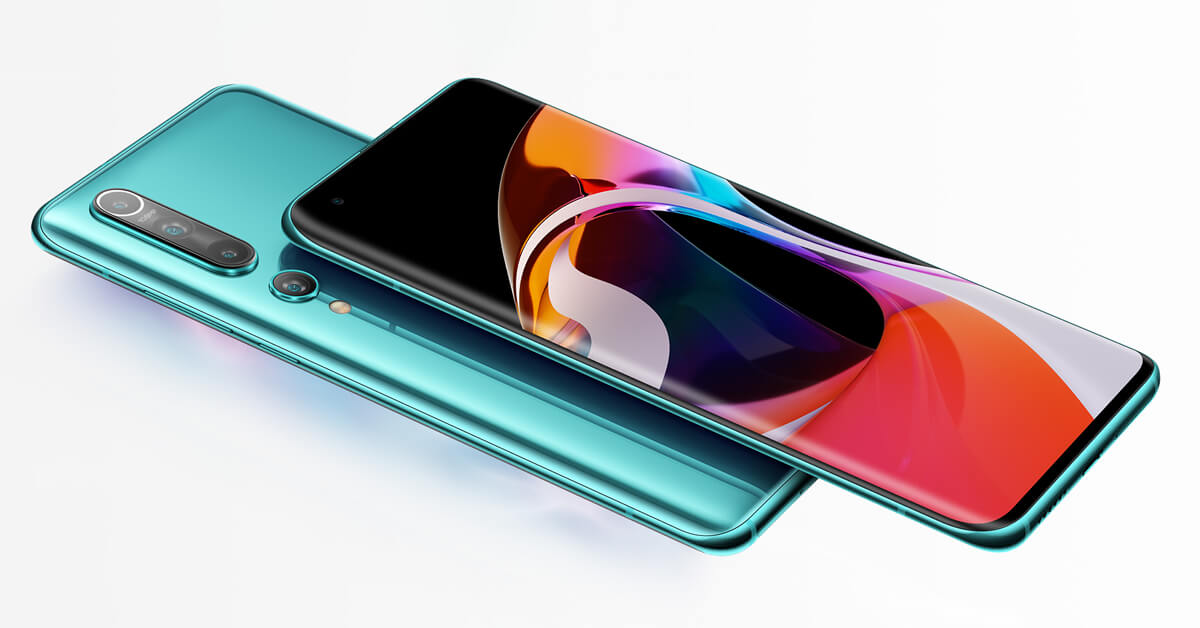
We like Mi 10 even more regardless of the specs. It comes in more understated color shades, and in our opinion the back cameras are also arranged more conservatively, which we like. The noticeable display curve along the edges is also something, and the small hole in the corner isn’t a big obstacle.
K30 Pro is also a beauty—an all-AMOLED display with no cutouts or holes is a treat for the eyes. But Mi 10 left a better impression on us. With the Redmi K30 Pro, we were especially impressed by the IP53 dust and water resistance certification, which should provide increased durability compared to the Mi 10.
The displays have one key difference
Deciding between the screens of both series is difficult even for us. Each of them has its strengths, but also some downsides. The technical specifications of both displays are more or less the same. Both are genuine 6,7-inch AMOLED panels with an integrated in-display fingerprint reader.

Mi 10 has a higher refresh rate compared to K30 Pro, and that’s a big plus. Once you’ve tried a display like this, you won’t want to go back to the standard one. By installing a modified firmware, it’s possible to achieve progress in this direction also on Redmi. However, that’s already an intervention bordering on voiding the warranty, which may affect the overall functionality too.

The disadvantage of the Mi 10 display is its neat curved side edges, which take away from the functional active screen area. As a second minus compared to the K30 Pro, there’s also the placement of the front camera. It’s hard to decide, and both displays have something to offer.
No matter which of the four smartphones you choose, you definitely won’t be disappointed when looking at the display. But the 90 Hz refresh rate puts Mi 10 in the lead.
Performance is the same
As you surely know, there’s nothing to compare in this category. All the compared smartphones have the same chipset and the same RAM modules. The cheapest model Redmi K30 Pro with 6 GB RAM and 128 GB storage falls slightly behind—it uses an LPDDR4x RAM module and an UFS 3.0 storage chip.

The faster and more power-efficient UFS 3.1 storage type is found in the more expensive K30 Pro versions, as well as in all Zoom Edition versions. All the compared smartphones also use a similar cooling system based on a Vapor Chamber.
The performance differences between all the flagship devices are so minimal that you won’t even notice them during everyday use. So when choosing one of the four, you don’t really need to consider performance at all. In this comparison category, it’s a tie.
Cameras and multimedia
The winner is clear right from the start, and in this category the differences between the smartphones are probably the most noticeable. The best combination of camera sensors is offered by Xiaomi Mi 10 Pro. Its outstanding results are also reflected in the DxOmark rating, where Mi 10 Pro was first place for a certain period of time.

K30 Pro Zoom still has to wait for its inclusion in this ranking. Given its specifications, though, a record-high placement isn’t expected.
Mi 10 Pro moved to the front mainly thanks to the 108 MPx sensor with 8 lenses, which lets in more light. It’s also due to the improved optical stabilization, a 20 MPx ultra-wide sensor, and an 8 MPx telephoto lens with 10x hybrid zoom.
If we were to rank the compared smartphones based on the technical specifications of their camera sensors, this is the order we’d get:
- Xiaomi Mi 10 Pro
- Redmi K30 Pro Zoom
- Xiaomi Mi 10
- Redmi K30 Pro
Multimedia also includes sound, and here Xiaomi Mi 10 Pro also has the lead. Two stereo speakers with an extremely large chamber don’t have any real competition among the challengers. In the Redmi K30 Pro series, we also consider it a plus that it keeps the 3.5 mm audio connector.
The rest of the standard equipment is almost the same
All the compared smartphones have the rest of the standard features at nearly the same level. WiFi of the sixth generation can be found in each of them, as well as the popular NFC module. Don’t forget to mention dual GPS with support for all available positioning standards.

All smartphones are dual SIM and support 5G mobile networks. There’s no microSD card slot in their configuration. They all run on Android 10 together with the MIUI 11 custom interface. Since these are flagships, more than one Android and MIUI update is also expected in the future.

However, there’s one thing that K30 Pro has and Mi 10 doesn’t. It’s the so-called Super Bluetooth, which can maintain a connection at a distance of up to 400 m from the device.
Battery
When it comes purely to battery capacity, the classic Mi model 10 comes out on top with a 4780 mAh battery. Next are the two Redmi K30 Pro models with 4700 mAh batteries, and in last place is the Mi 10 Pro with a 4500 mAh capacity.

However, the Mi 10 Pro wins in wired charging speed with up to 50 W, while the K30 Pro is only at 33 W. With the standard Mi 10, charging is at 30 W. Plus, Mi 10 smartphones also support 30 W wireless charging and 10 W reverse charging.
Prices
Our comparison comes out with almost equal scores, but that definitely doesn’t apply to the selling prices—the differences are literally huge. Since the K30 Pro series isn’t available globally yet, we’ll compare the Chinese prices provided by the manufacturer at the launch of all smartphones.
To make it clearer, here’s the table again:
| Xiaomi Mi 10 | Xiaomi Mi 10 Pro | Redmi K30 Pro | Redmi K30 Pro Zoom | |
|---|---|---|---|---|
| 6 GB RAM | 128 GB storage | - | - | 390 € | - |
| 8 GB RAM | 128 GB storage | 530 € | - | 445 € | 495 € |
| 8 GB RAM | 256 GB storage | 570 € | 660 € | 480 € | 520 € |
| 12 GB RAM | 256 GB storage | 620 € | 725 € | - | - |
| 12 GB RAM | 512 GB storage | - | 790 € | - | - |
Xiaomi Mi 10 Global

 EU warehouse

TIPExpress delivery from a European warehouse—no customs duty and VAT.
This product will be delivered to you via express shipment from a local warehouse in Europe. Delivery from EU warehouses usually takes from 2-10 days and is handled by a courier. When it arrives, you won’t pay any additional fees—no customs duty and no VAT.
Regardless of all the other specs, the clear winner in this category is the Redmi K30 Pro. In every version, it has the lowest price among the smartphones being compared.
Just for interest, the starting price of the lowest Mi 10 version is higher than the price of the most expensive Redmi K30 Pro Zoom version.
Final decision
Choosing only one – the best – is not at all difficult. The best combination of all parameters is clearly the Xiaomi Mi 10 Pro. Its biggest weakness, however, is its comparatively high price, and for the most expensive version in Europe you’ll pay up to 999 €.
On the other hand, the clearly best value for money and equipment is the Redmi K30 Pro Zoom. In performance, the differences aren’t significant, and the combination of camera sensors is better than on the standard Mi 10.
When comparing all specs together with the price, the clear king of value for money and features is the one that offers the best overall deal—and among these four, it’s the one that’s most worth it.
We also send detailed comparisons of Xiaomi smartphones by email. 👇
Don’t miss the best coupons 📩
Subscribe and we’ll email you new coupons before they expire. We only send it once a month — no spam.