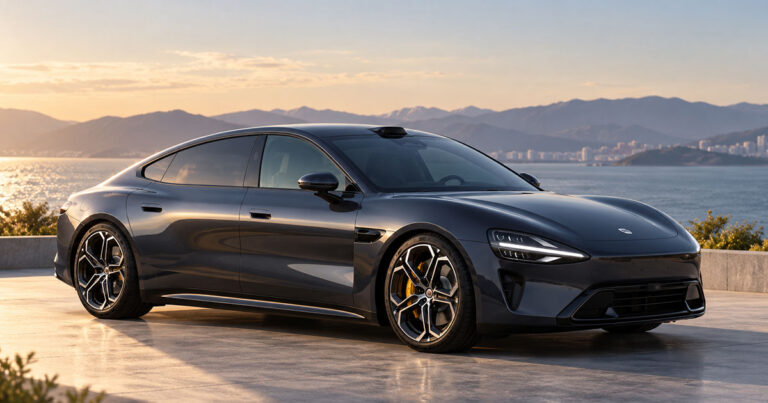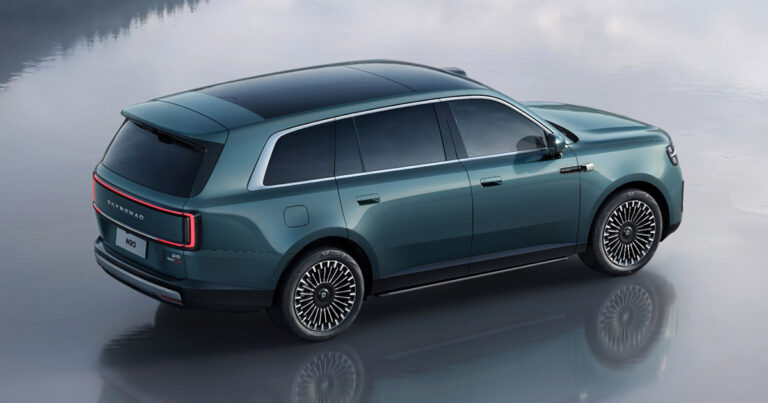



- A Chinese family set off with Xiaomi YU7 from China via Kazakhstan and Siberia all the way to Europe and Africa
- At temperatures around -30 °C, they measured consumption of 24.5 kWh/100 km
- After 21,000 km, the car showed a lifetime average of only 22.2 kWh/100 km
- Outside China, the YU7 lost connectivity—and non-working chargers were also part of the problems
On the Chinese platform Bilibili, we found a road trip that we haven’t seen with a Xiaomi car before. A Chinese family took a brand-new Xiaomi YU7 and drove off from western China through Kazakhstan, freezing Siberia, Europe, and then all the way to Africa. The whole trip is documented in videos that are completely in Chinese.
We had nine episodes from their series rewritten and translated. That’s how we got to real-world experiences, consumption, and the problems that never make it into Xiaomi’s official materials.
Who is the family that took the Xiaomi YU7 around the world?
Behind the channel 叽叽歪歪的平行世界 on the Chinese platform Bilibili is a married couple with their daughter. We can roughly compare Bilibili to Chinese YouTube. But the family is no stranger to expeditions like this. They first traveled by car outside China back in 2016, and since then they’ve completed several other major trips like this.

The name of their channel can be loosely translated as “A parallel world of constant jabbering.” It’s a pretty accurate description of their videos, because the couple constantly comments on what’s happening, argue, and handle everyday family situations. In one episode, for example, they fight about whether the car’s heating is set to the fourth level—already too strong.
Their series from 2019 about a round-the-world trip in an SUV with Chinese license plates has as many as 83 episodes. Later, they traveled through Europe in a Tesla, across wintry Canada in a motorhome, through Southeast Asia, and in 2023 they created the series “Electromobility to Europe.” Next came a road trip with a Xiaomi SU7, and now it’s time for the new YU7. The current series has millions of views, and the channel itself has more than half a million subscribers.
Before the YU7, they circled the world with the Xiaomi SU7. Not once did anything break for them
Before the new road trip, the family was driving a Xiaomi SU7. They bought the car for about 290-thousand yuan—roughly 35-thousand euros at today’s exchange rate. In a relatively short time, they racked up almost 50-thousand kilometers and even made it to the Sahara with it.
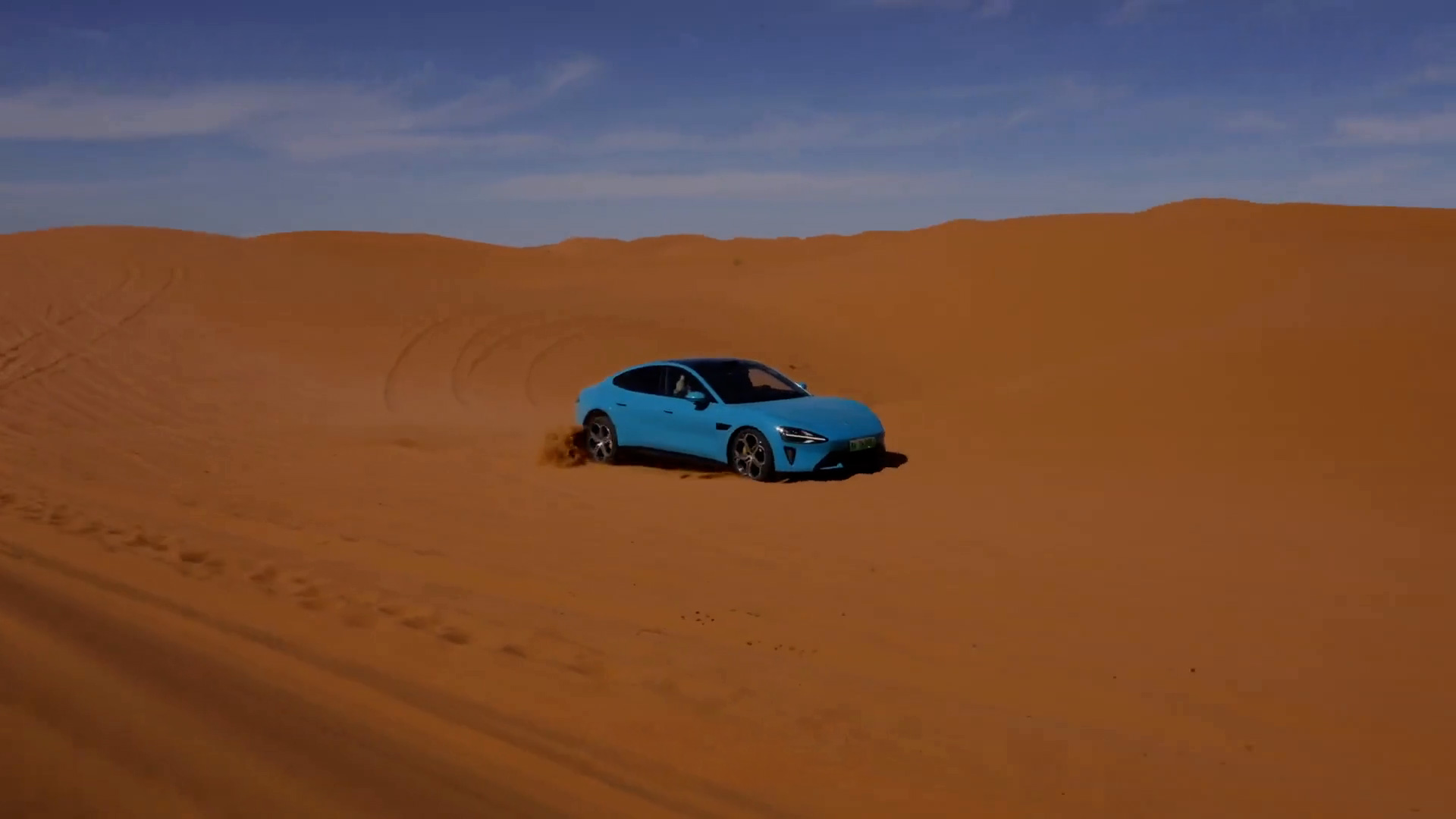
In the video, the father claims that over the entire distance, the SU7 didn’t have a single technical problem. The car only had two scrapes and a damaged protective film after washing with a high-pressure cleaner. Then, they waited more than 7 days for the new Xiaomi YU80.

They sold the SU7 practically on the same day they picked up the new SUV. The reason was completely pragmatic. The bigger YU7 is more practical for this kind of travel, and the family also openly admitted that they can’t afford to own both cars at once.
The road trip didn’t start ideally. The new YU7 had its windshield broken
Even before they got beyond China’s borders, they had their first unpleasant setback. A stone from under a truck hit the windshield of the new YU7, and the replacement cost 6 700 yuan—about 800 euros. They had to pay for the whole repair out of their own pocket.
They didn’t buy Xiaomi’s car insurance or service package because the car was supposed to leave China practically right away, and the local insurance there doesn’t apply outside the country. However, the family praised Xiaomi’s service a lot. During a multi-hour windshield replacement, they also received lunch, dinner, drinks, and gifts. What annoyed them more was the tire e-shop, which delivered only three winter tires instead of the four they ordered.
They headed from China toward Kazakhstan. On the first day, they managed 900 km
They had the car shipped by a carrier to Xinjiang, and from there they wanted to continue on their own. The original plan was to go via the Irkeshtam border crossing into Kyrgyzstan. But shortly before the border, they were stopped by truck drivers returning from Kyrgyzstan and advised them not to drive that way at that time. So the family changed the plan, returned to Urumqi, and chose a more northern route via the Timi-Najin border crossing.
Right after the Chinese border, an unpleasant stretch awaited them—about 475 kilometers with not a single charging station. On the first day in Kazakhstan, they managed up to 900 kilometers and arrived in Pavlodar. The next day, they added another 420 kilometers toward Russian Omsk.

That’s where winter first became clearly noticeable. When leaving Urumqi, the car showed consumption on the highway at 25 kWh/100 km. They had winter tires, a strong headwind, and snow behind it. After getting off the highway, consumption settled at roughly 19 to 20 kWh/100 km. In the car, the wife admitted she was afraid they wouldn’t make it. At around -15 °C, on continuous ice, in the end the YU7 managed the full 475 kilometers and reached the first charging station with six percent battery.
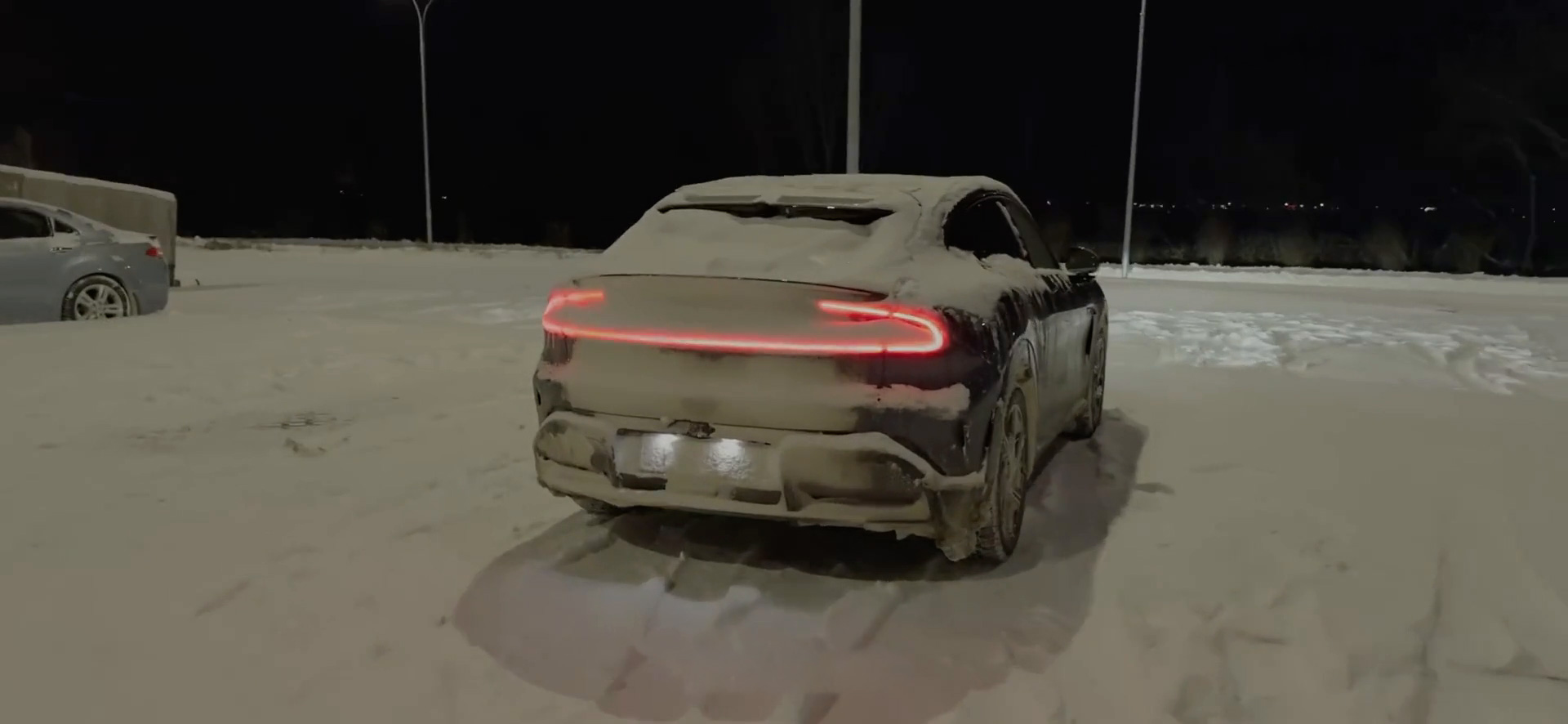
Siberia at -30 °C showed the real winter consumption of the Xiaomi YU7
The most interesting part of the whole series, in our view, comes between Omsk and Tyumen. The family got into a real Siberian winter, where temperatures dropped as low as -30 °C. This time, we also don't just have to trust the driver's words. In the video, the father shows directly the screen of the onboard computer with the data “Drive and consumption”.
| - | Xiaomi YU7 in Siberia |
|---|---|
| Distance traveled since charging | 186 km |
| Energy consumed | 45.9 kWh |
| Consumption | 24.5 kWh / 100 km |
| Temperature | -30 to -25 °C |
| Heating | 4. level |
| Terrain | flat, with no inclines |
After covering 186 kilometers, the car used 45.9 kWh of electric energy. The resulting consumption was 24.5 kWh/100 km. The outside temperature was roughly between -30 and -25 °C, and they had the heater set to the fourth level. According to the crew, it was even too warm inside the cabin.
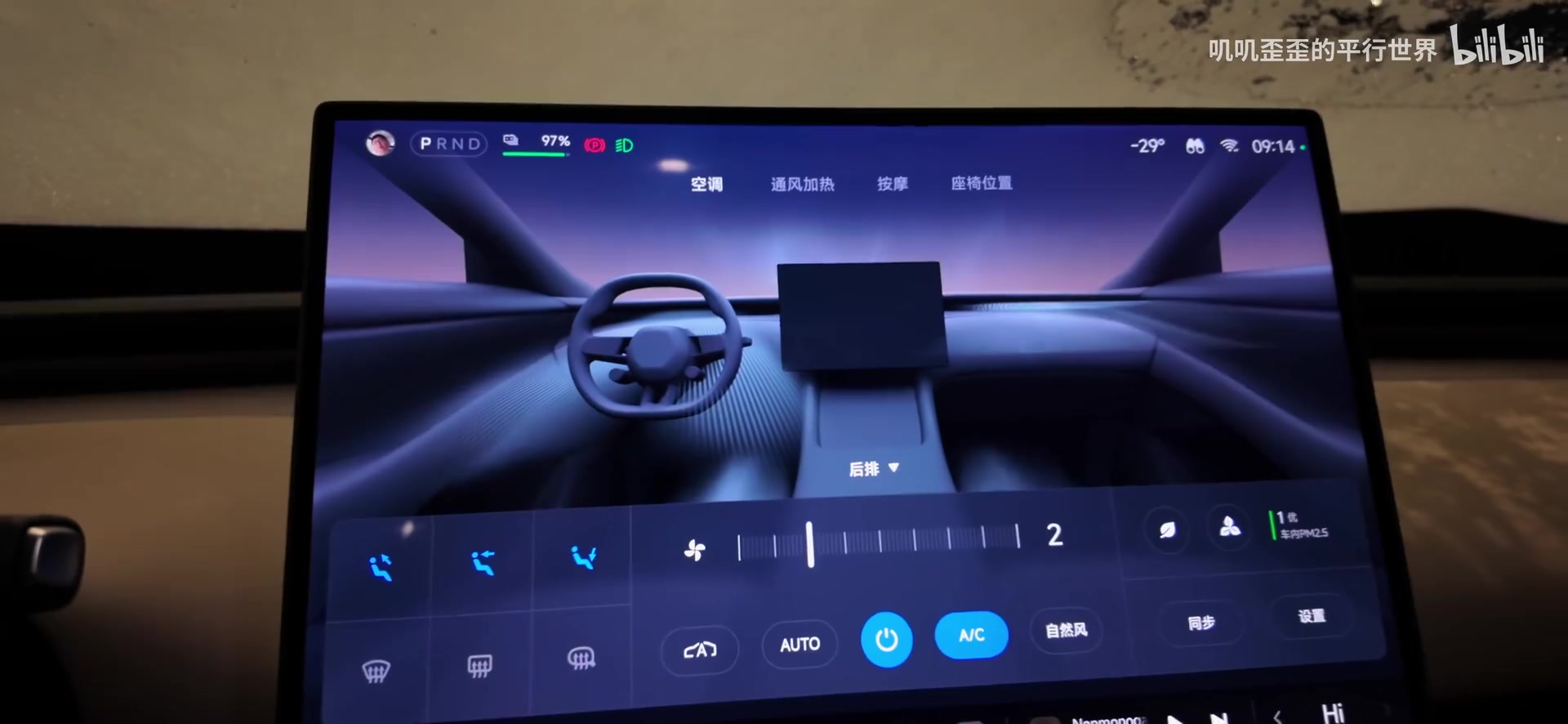
Even more interesting was the lifetime meter reading from the car. At that moment, Xiaomi YU7 had driven 10,875 kilometers, with 2,492 kWh consumed and an average consumption of 22.1 kWh/100 km. It's already a sufficiently large sample of kilometers for the figure not to be affected by a single short drive.

Paradoxically, a bigger problem than the car itself was the charging infrastructure. The stretch between Omsk and Tyumen is roughly 650 kilometers. The family checked four charging points in advance, and up to three were reported as not working. In the end, they were saved by one of the so-called broken chargers, which thankfully worked.
After leaving China, another downside of the Chinese version of the vehicle also came to light. The car lost data connectivity, and the family could no longer preheat it remotely from the hotel room. Every morning, therefore, they had to go down to the car physically and switch the heating on manually. The same issue may also affect owners of individually imported Chinese YU7 vehicles in Europe.
However, we need to be fair about what we don't know from the videos. The family didn't state the exact charging time in extreme cold, and we also don't know whether the battery was actively preheated before charging, or by exactly how much the real range dropped compared with summer conditions. So we don't want to speculate about those details.
An interesting moment also came at McDonald's in Tyumen, where they met another Xiaomi YU7 owner. The father was excited and explained to him that he had brought his car here all the way from China. But judging by the other man's reaction, he quickly understood that for a local YU7 owner, it isn't quite such a big sensation.
After Siberia, they arrived in Europe
After the Russian part, the expedition continued onward toward Europe. The European episodes are among the most watched ones in the entire series. The family gradually went through several countries, and in the videos you can see Italy, the Netherlands, Sicily, Malta, and more places.
In warmer conditions, consumption dropped significantly again. During one day in Germany, they drove 484 kilometers at about 20 kWh/100 km. Outside it was 27 °C and the air conditioning was running practically the whole time. They didn't notice any technical malfunction of the YU7 during this stage.
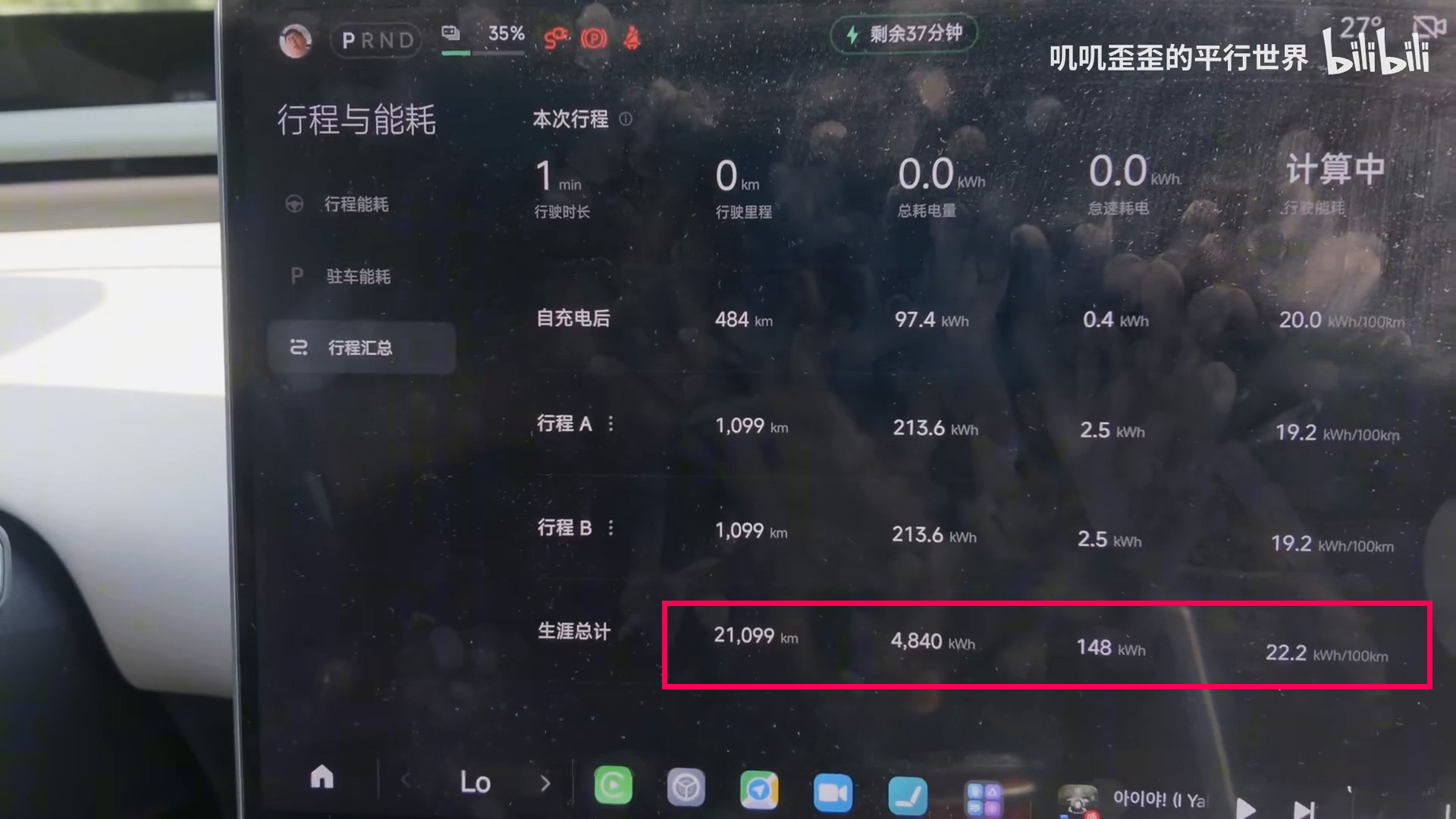
At that moment, the onboard computer showed 21,099 total kilometers and the lifetime average 22.2 kWh/100 km. So compared with the Siberian measurement, the car added over ten thousand kilometers, and its long-term consumption changed by only one tenth.
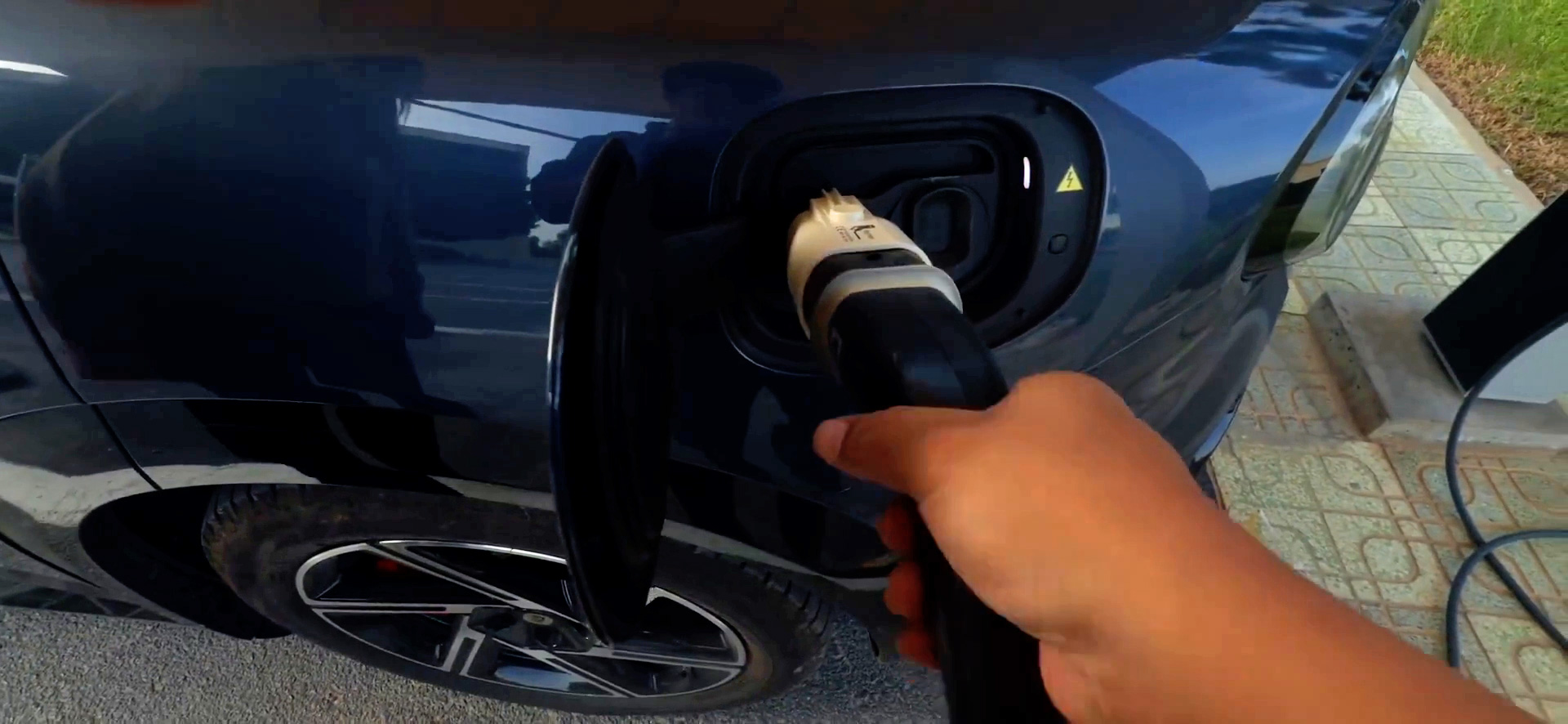
The series also shows plenty of details that you wouldn't even think about in a typical car review. For example, the family carries two adapter connectors, because European charging stations use different standards than those in China. One of the adapters even broke during the trip, and then they found out that some components for electric vehicles can't simply be shipped from Europe back to China.
From Italy, they continued by ferry to Africa
After traveling around Europe, the next big stage came. From Sicily, the family decided to cross by ferry to Tunisia. Originally, they planned to continue overland through Morocco and Algeria, but the Algerian land borders were closed. So they chose the ferry from Palermo to Tunis.
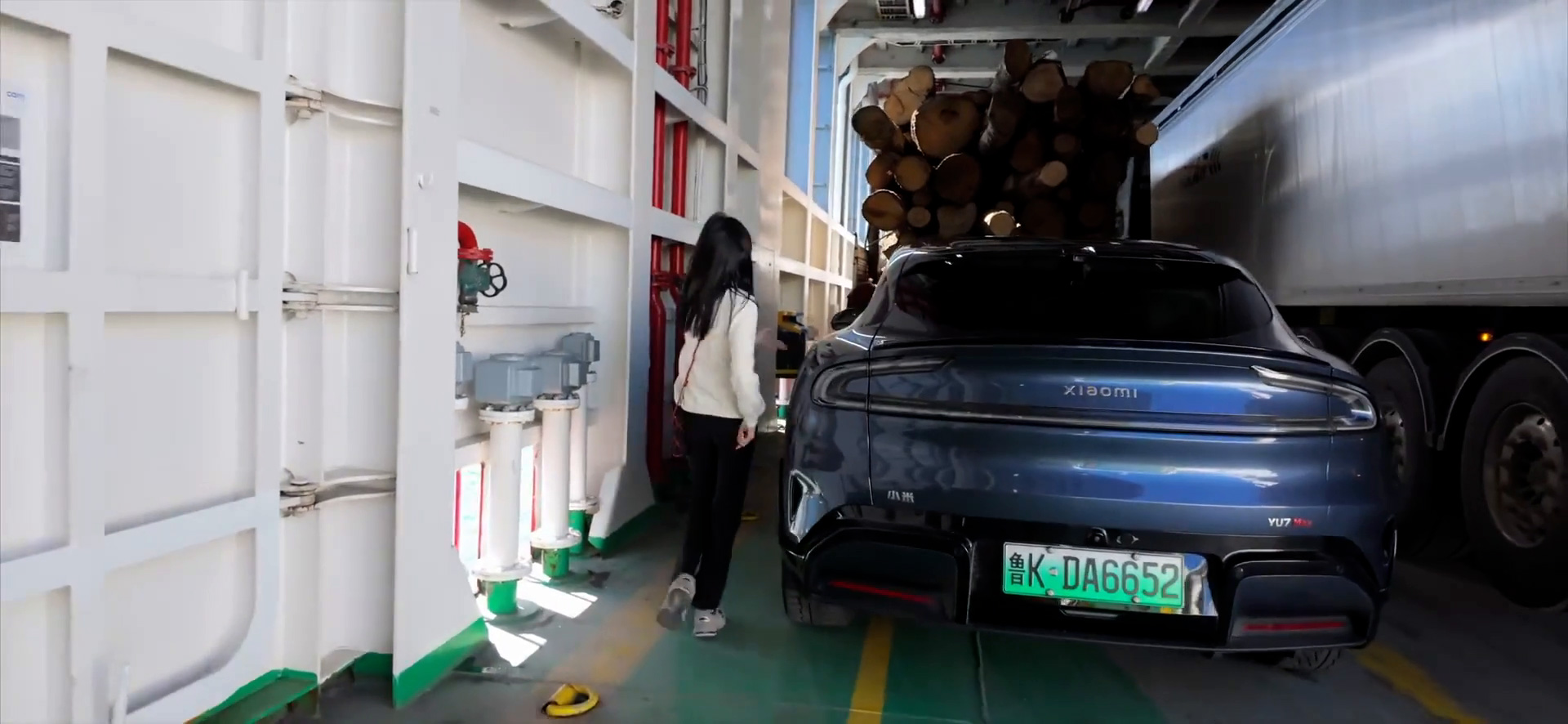
The trip took about eleven hours, and for three people, they paid 210 euros for both the car and their own cabin. The boat arrived in Tunis in the evening. However, they got out of the port only around 11 p.m. at night.
Tunisians customs officers saw a Xiaomi car for the first time
Right at the border, one of the most interesting scenes from the whole series happened. The customs officer immediately noticed the car’s logo and repeated, “Xiaomi, Xiaomi YU7”. The official who was helping the family prepare the necessary documents then asked them whether he could take a closer look at the car.
According to him, he had seen a Xiaomi car for the very first time in his life. When the YU7 was shown to him, he called over more colleagues, including luggage control staff, and several of them started taking photos with the car. The father commented on this situation in the video quite accurately:
“Xiaomi has huge recognition abroad. At home, people bash it in all sorts of ways, while outside they acknowledge it in all sorts of ways.”
The documents for entering were, surprisingly, pretty straightforward, according to the family. Instead of the usual paper permit, they generated a QR code via a website. The form was in French, so the local official provided them with internet access and explained step by step what they needed to fill in. Supposedly, no one asked for a driver’s license.
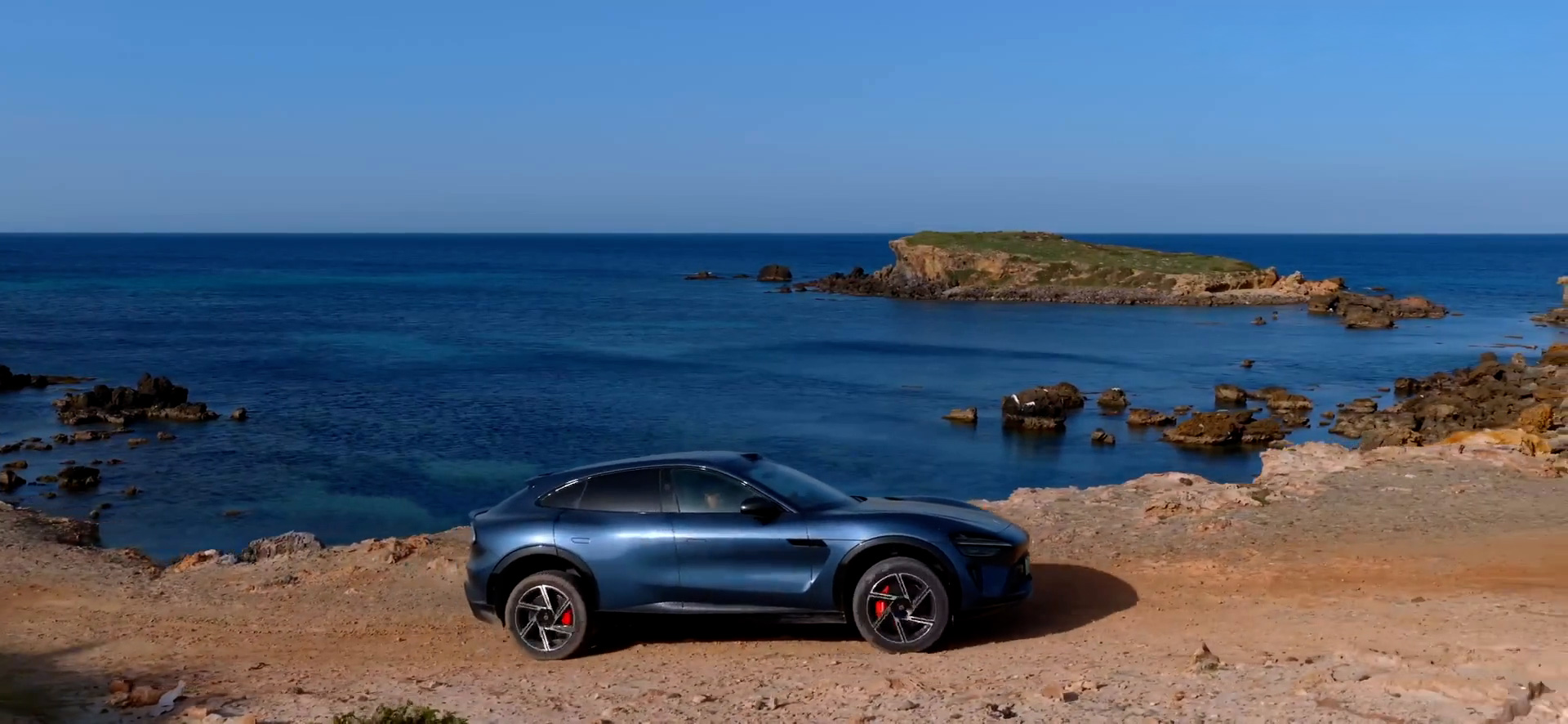
The first problem only showed up when charging. The hotel offered two charging stations for free, but both were broken and didn’t work even the next day. Luckily, the battery lasted them long enough for the next trip.
Charging was finally sorted out at an MG dealership. The owner first tested the Xiaomi YU7 himself, and then allowed the family to charge the car fully. Chinese automakers aren’t anything new in Tunisia either. Besides MG, for example, BYD also has representation in the country.
After Africa, the YU7 returned to Europe
The trip didn’t end in Tunisia either. In later parts, the family appears again across Europe, and that’s where several really interesting reactions to the Chinese car took place. Xiaomi YU7 also let German Kevin give it a try—he had been driving their SU7 for a year already.
First, he asked about performance. In his view, it’s one of the things that interests Germans the most about a car. He guessed the power between 500 and 700 horsepower. The Xiaomi YU7 in their version has roughly 690 hp, so he was very close.
When it got moving, he compared the ride comfort to a ship.
The family admitted they hadn’t heard a description like that for driving comfort before. Kevin also praised various little details and said the car’s controls were easier than in some German models.
Later came the line in which one of the series installments got its name:
“In Germany, people are starting to believe that the Chinese can make good cars. But it’s going very slowly—because Germans are still stuck on VW, BMW, and Mercedes.”
YU7 was labeled as a premium car, and in his opinion, with the right price it could appeal to a lot of customers. What’s interesting is that throughout the entire test drive, range and charging were hardly discussed at all. The debate focused mainly on driving characteristics, performance, comfort, and price.
Kevin wasn’t the only European who climbed into the Xiaomi YU7. Back in February—when the family headed to the Winter Olympics in Milan—they stopped at a rest area in Germany. A man approached them who drives an Audi TT, and his first question was exactly the same as Kevin’s. He wanted to know how many horsepower the car has. When he heard the number 690, he said that’s exactly the kind of car he would want.
He asked whether he could sit inside, and according to the family, he surprisingly knew his way around the car well. But then came the less pleasant part. The Xiaomi YU7 would be his, but he can’t get to it. He asked in Munich and Düsseldorf, and Xiaomi doesn’t have any dealership there yet. He added that he hopes the price in Europe won’t be much higher than in China.
In the end, he asked for contact details. He went to his own car, brought a box of cookies as a gift, and had them write down his email address directly on it. Supposedly, he doesn’t carry the phone around with him at home.
At the moment, there’s only a car model in the German Xiaomi store
The family also stopped in Essen, where Xiaomi opened its first brick-and-mortar store in Germany. Despite the fact that Xiaomi vehicles are among the most discussed products of the brand in China, at the store you still can’t buy a real YU7 just yet.
There is only its scale model there. However, the seller told the family that customers are asking about the car extremely often. The most common question is, of course, when Xiaomi cars will start being officially sold in Europe.
The seller also shared his take on how the brand is perceived. According to him, a large part of Germans knew Xiaomi mainly as a smartphone manufacturer. Only a brick-and-mortar store shows customers that the brand also makes TVs, appliances, and a wide range of other electronics.
The road trip also revealed practical problems with Chinese cars in Europe
It was long-distance travel in particular that uncovered several details you wouldn’t run into during a typical car test. Some of them are also very interesting for people considering an individual import of a Chinese electric vehicle.
- The family carries two reducer connectors—one for the European standard and the other for the American and Japanese standard.
- Valuables are kept in the front trunk, because based on their experience, in case of a car theft it’s significantly harder to access them.
- They fitted the roof cargo box before the trip, since it increased fuel consumption and made luggage checks at the borders more complicated.
- They handled winter tires already in China, because they knew that rules in some European countries require them.
- They try to arrive with the lowest possible battery charge state because electricity is cheaper in that country. The daughter revealed that the same principle was used by the father already for gasoline cars.
For us, though, the most interesting part is the technical result itself. Under normal conditions, the consumption of YU7 was roughly around 19 to 20 kWh/100 km. In an extreme Siberian winter at temperatures around -30 °C, it rose to 24,5 kWh/100 km. That’s approximately a quarter increase, with the car’s heating running at very high power.
It’s also worth emphasizing that the biggest complications during the winter part of the journey were not caused by the Xiaomi YU7 itself, but by the charging infrastructure and the loss of Chinese online services after leaving the domestic market. The car itself, during the documented parts of the trip, did not have any more serious technical failure.
Another goal is to be America
The last episode from the series we’ve prepared so far ends with preparations for the next big stage. In the video, the family says that they will load the Xiaomi YU7 onto a ship and want to continue on toward America. The shipping company required the vehicle to be completely washed before loading, so the family paid about 50 euros for the car wash.
You also need to consider that individual episodes come out with a delay of several months compared to the actual filming. You can estimate this pretty well, for example, from Ramadan during the African part. So the family is probably in reality much further along than the currently published videos suggest.
In our view, the entire road trip is exceptional precisely because the Xiaomi YU7 doesn’t show anything in lab conditions or during a short press test. The car covered thousands of kilometers across different continents, highways, ice, snow, extreme frost, and even hot Africa. What’s more, thanks to the Chinese videos we got access to data and experiences that practically never appear outside China.
Xiaomi plans to officially enter the European market with its vehicles in 2027. Until then, we can’t officially buy the YU7 here. Thanks to this Chinese family, though, we already know quite a lot about how the car behaves thousands of kilometers from home and far beyond the infrastructure it was originally designed for.
To get more updates from the world of Xiaomi, keep following our Xiaomi Planet website. Join our Facebook group, where we build an active community and help each other out. Subscribe to our Telegram as well, where we add the best deals and coupons from China every day.
Don’t miss the best coupons 📩
Subscribe and we’ll email you new coupons before they expire. We only send it once a month — no spam.