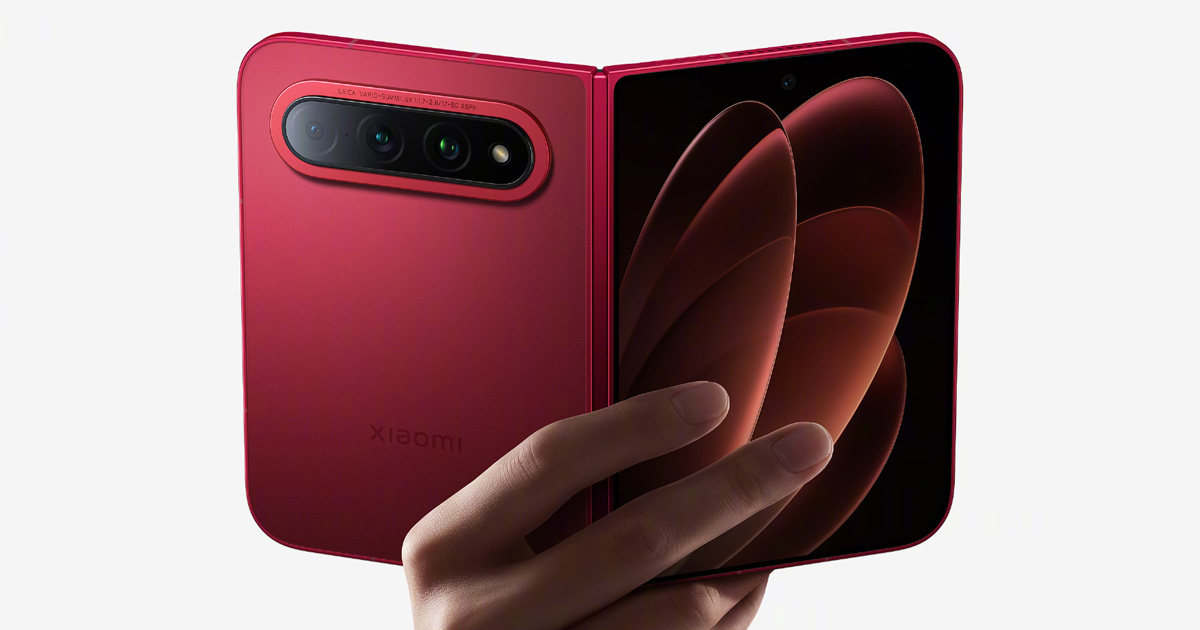
- Xiaomi 18 Fold is official: the most expensive Xiaomi phone in history and the first to use its own XRING O3 chip.
- Folded thickness is 10.68 mm, weighs 219 g, is passport-sized, and has IP58 protection.
- The 5.38" and 7.58" displays have a √2:1 aspect ratio like A4 paper, LTPO 1–120 Hz, and up to 4,000 nits of brightness.
- Pricing starts at 10,999 yuan (about €1,400) for 12 + 256 GB, while the 16 + 1 TB version with LPDDR6 costs 14,999 yuan.
- Sales in China begin September 10; outside China, the phone won’t be sold.
Tonight in Beijing, Xiaomi kicked off its autumn conference, and Lei Jun personally introduced the Xiaomi 18 Fold—the first phone with the in-house XRING O3 chip and also the most expensive smartphone the brand has ever made.
It isn’t a classic book-style foldable or a clamshell—this is a new “mid-fold” format: when folded, it’s passport-sized, and when unfolded it offers nearly a 7.6-inch display. Xiaomi isn’t hiding that it wants to get ahead of Apple, which will show its first foldable in just two days. All the facts in the article were presented directly on the Xiaomi livestream and verified with the official specs on mi.com.
Thicker than a passport, lighter than the iPhone Pro Max
The Xiaomi 18 Fold project was created two years ago, and the development itself took 20 months. The result is a body that has a folded thickness of only 10.68 mm (each half is 5.02 mm), folded dimensions of 117.8 × 83.6 mm, unfolded dimensions of 117.8 × 163.8 mm, and a weight of 219 grams.
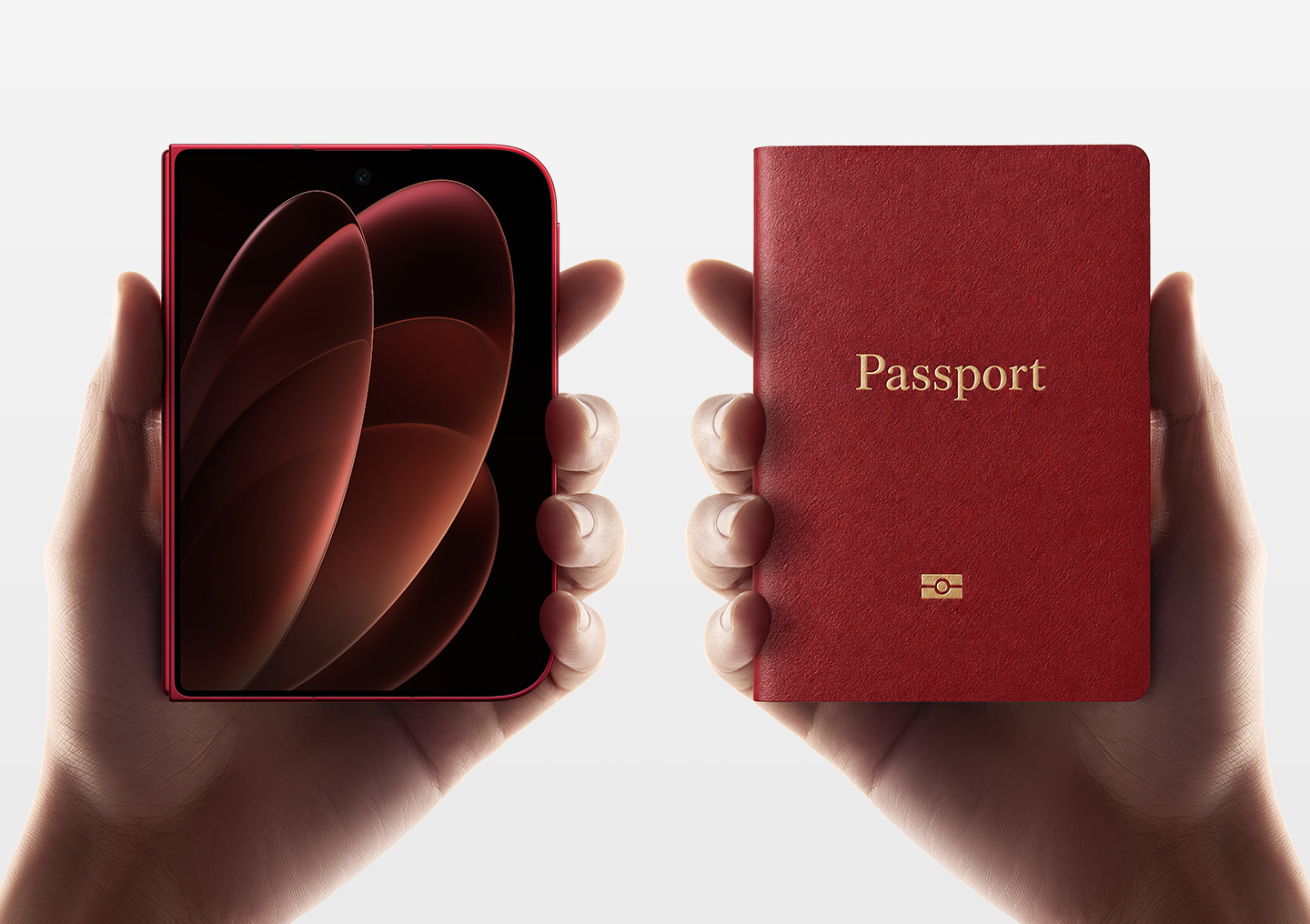
On stage, Lei Jun repeatedly compared the phone to the iPhone Pro Max with a 6,9″ display: Xiaomi 18 Fold is lighter, after unfolding it shows more text on one line, and the keyboard on the external display is about 8 % wider than on a traditional large smartphone—so it’s easier to type on and has fewer typos.
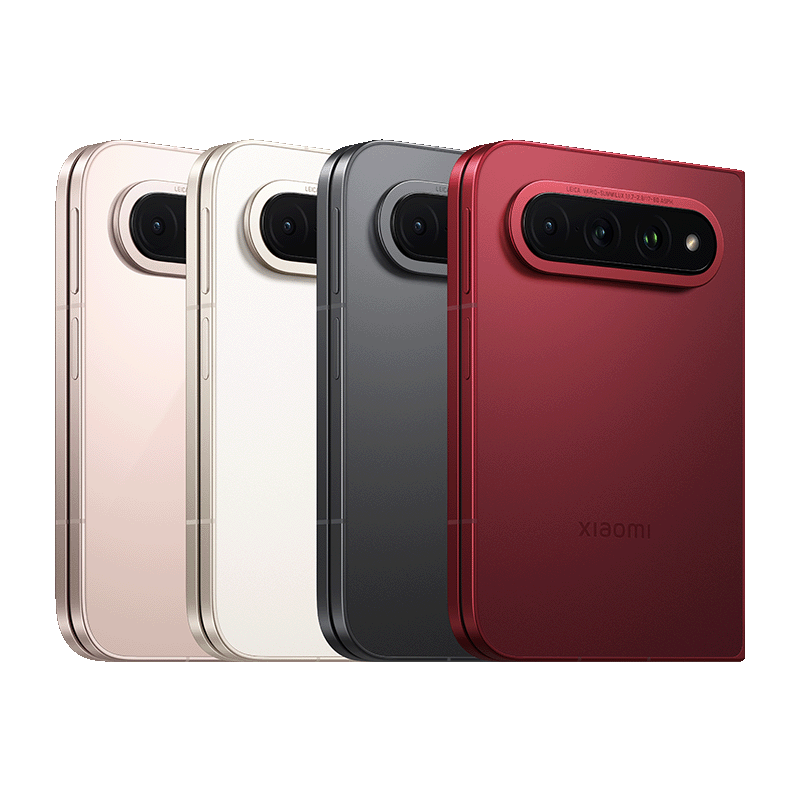
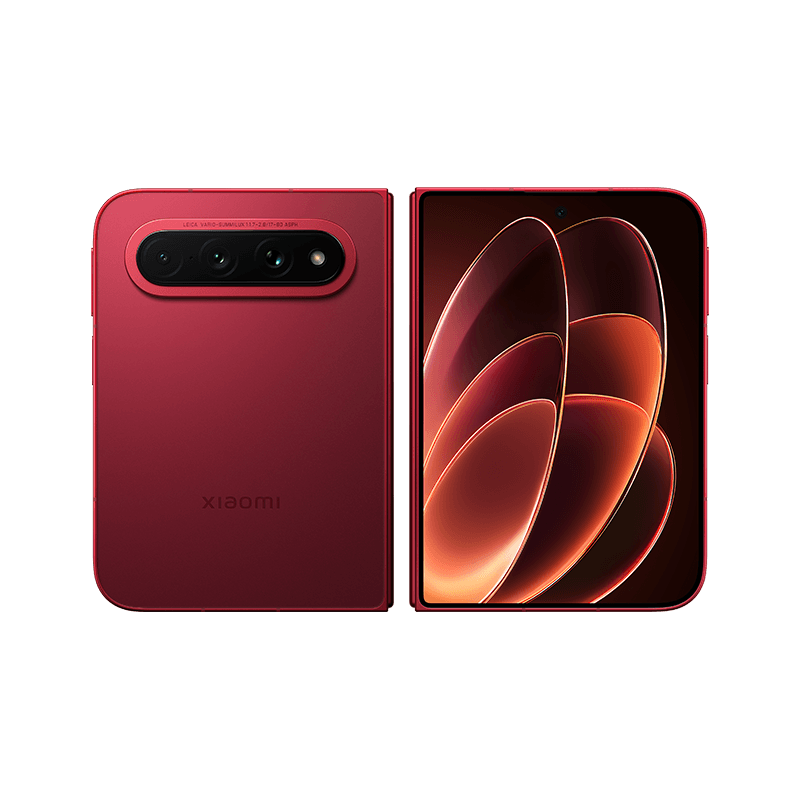
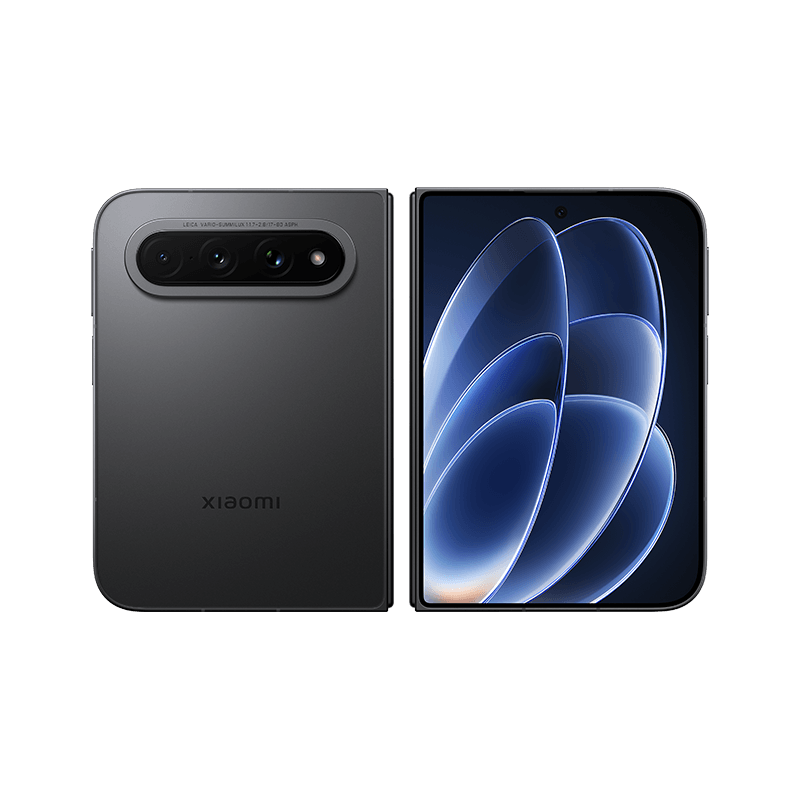
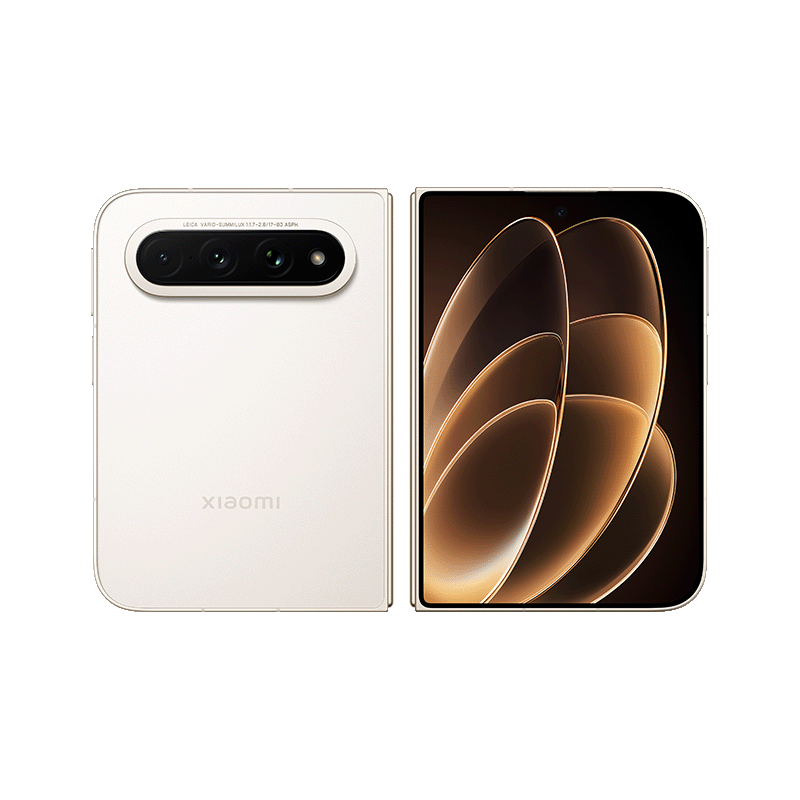
The folded phone is comfortably operated with one hand; your thumb can reach even the top edge of the display when you pull down the control center. The bezels are equally thin on all four sides, the corners have a super-elliptical shape, and the flat center frame houses speakers, a USB-C port, and antenna bands positioned symmetrically at the center.
The camera module has a race-track shape with engraved Leica optics parameters. The fingerprint sensor reads through a side button, and the phone—one of the few foldables—comes with IP58 and IP59 protection, meaning it can handle 30 minutes in 1.5 meters of deep water as well as hot water jets.
Two displays with an aspect ratio like paper
The external display measures 5.38 inches (1,712 × 1,168 px), the internal one is 7.58 inches (2,364 × 1,672 px), and both have a √2:1 aspect ratio—same as an A4 sheet of paper. If you fold A4 in half, you get A5 with the same aspect ratio, and that’s exactly how the folded and unfolded phone works.
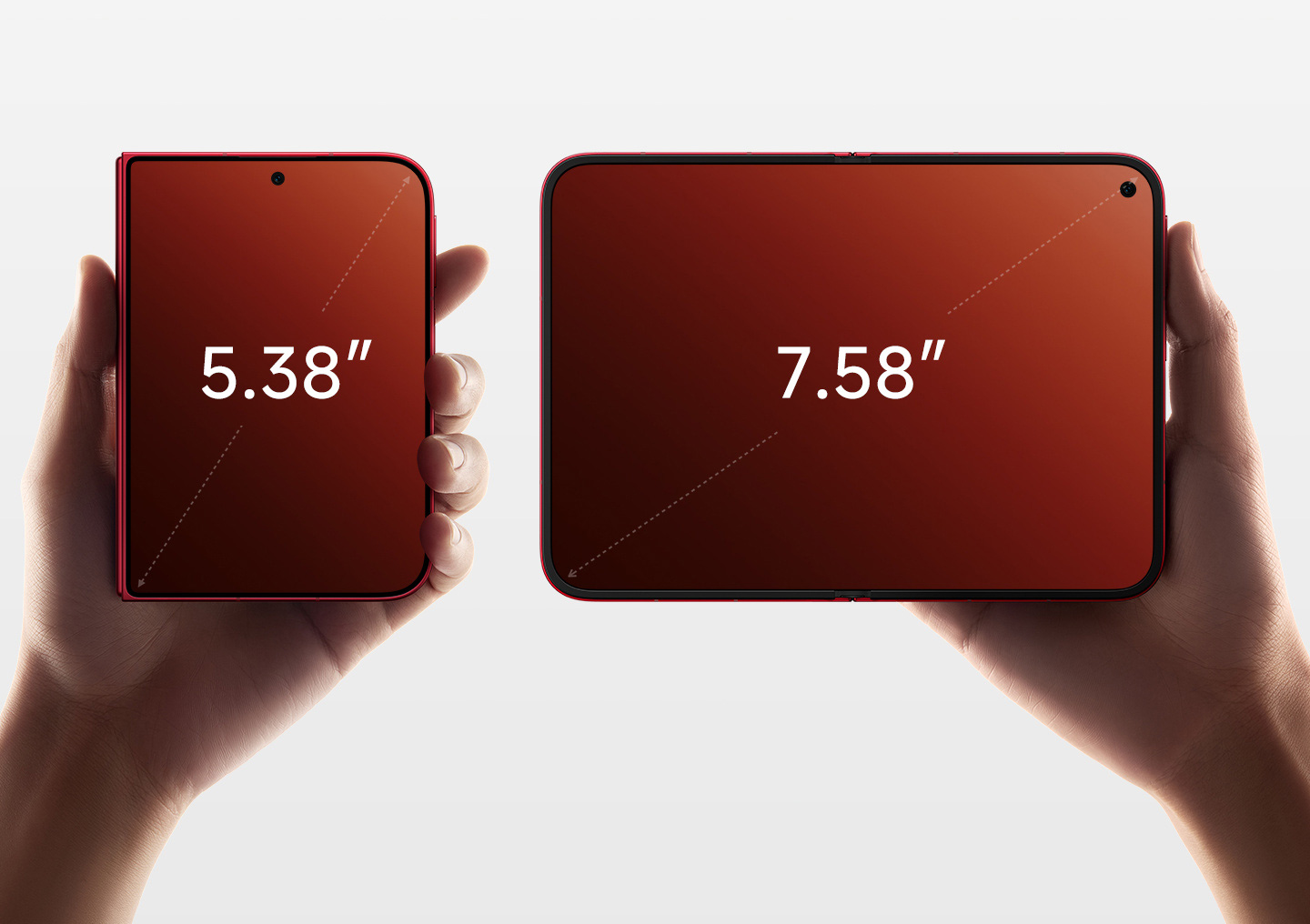
Both panels are AMOLED with Super Pixel technology and a full RGB layout which, according to Xiaomi, delivers sharpness comparable to 2K resolution at lower power consumption than the 1,5K display. These are LTPO panels with an adaptive refresh rate from 1 to 120 Hz, peak brightness of 4 000 nits, and as low as 1 nits. The outer display uses LIPO technology with bezels just 1,23 mm wide, while the inner display is Pol-less with a low-reflection AR layer.

The unusual aspect ratio has a practical reason. For photos with a 3:2 ratio, the 18 Fold uses 20 % more screen area than a typical large foldable; for 16:9 videos, it uses 15 % more as well, and the black bars are noticeably narrower. HyperOS 4 adds improved multitasking: three apps can run side by side like on three regular phones—up to six windows at once—with an additional floating window.
There’s also the Super Xiao Ai Inspiration Ball feature—a ball you can drag onto anything on the screen, then ask with a single sentence what it is, where it is, or even have it adjust the photo. According to mi.com, this feature should arrive with an update at the end of September.
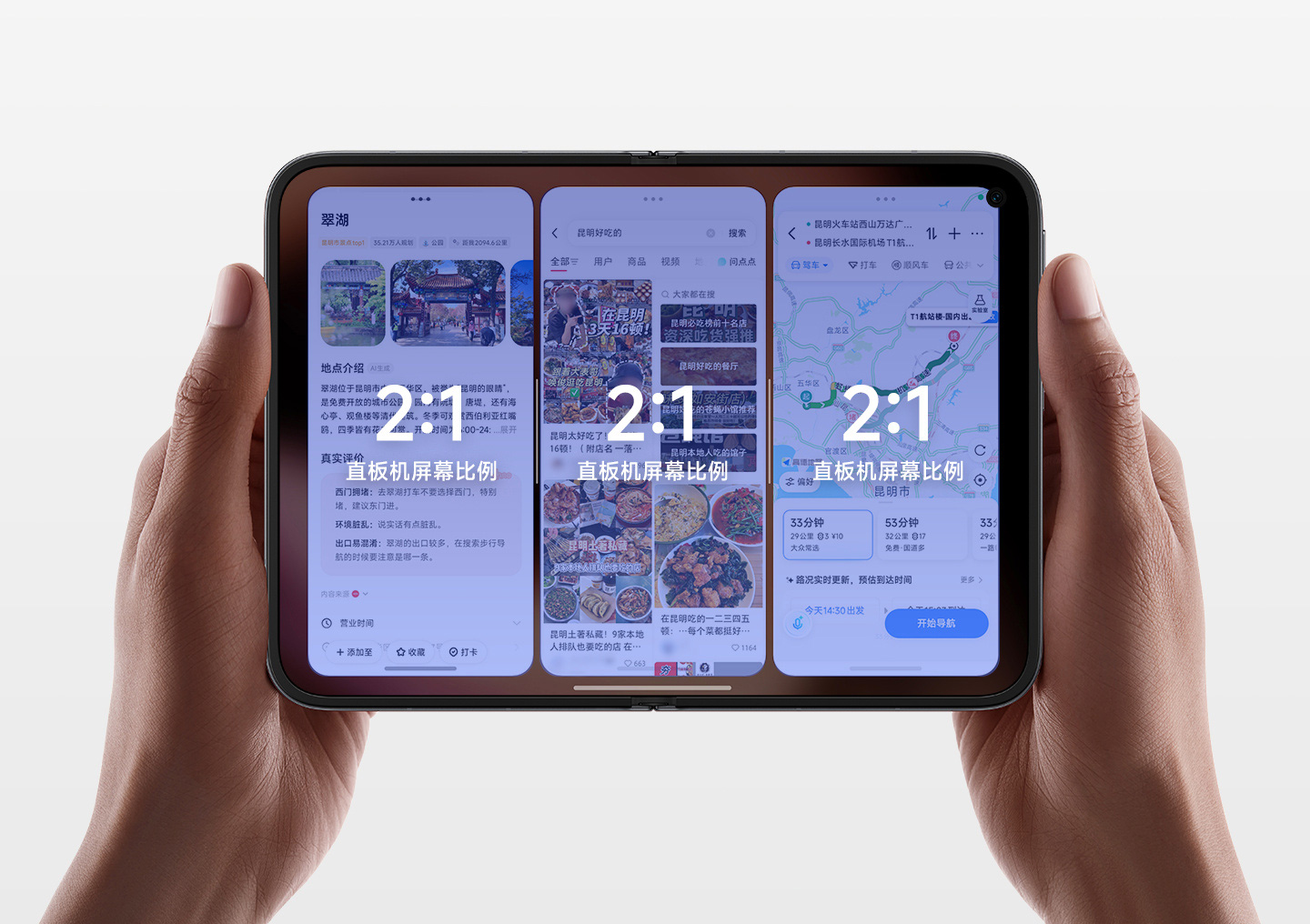
Lei Jun targeted people who view presentations and documents on a large display, as well as designers who need to look at photos or edit video. He described the inner display as a compact tablet you realistically use every day, and compared to typical large foldables, it offers a larger usable area despite smaller dimensions.
Durability like a regular phone: 80 000 drops and 1 500 pieces damaged
Xiaomi dedicated the biggest part of the presentation to durability, because that’s the most common question with foldables. The new Dragon Bone hinge with a three-stage mechanism creates a natural teardrop shape for the inner display and protects it across the entire contact area.
The center frame is for the first time made of 7-series aerospace-grade aluminum alloy with a 550 MPa slip spacing, while the front and back are covered by Xiaomi Dragon Crystal Glass 3.0, and the outer display is additionally reinforced with ion implantation.
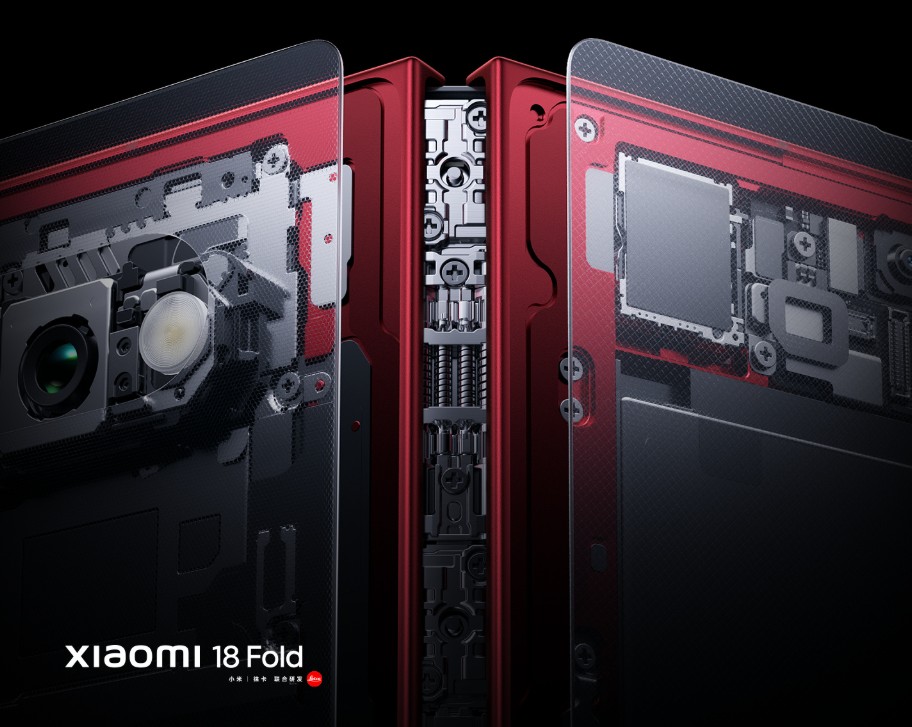
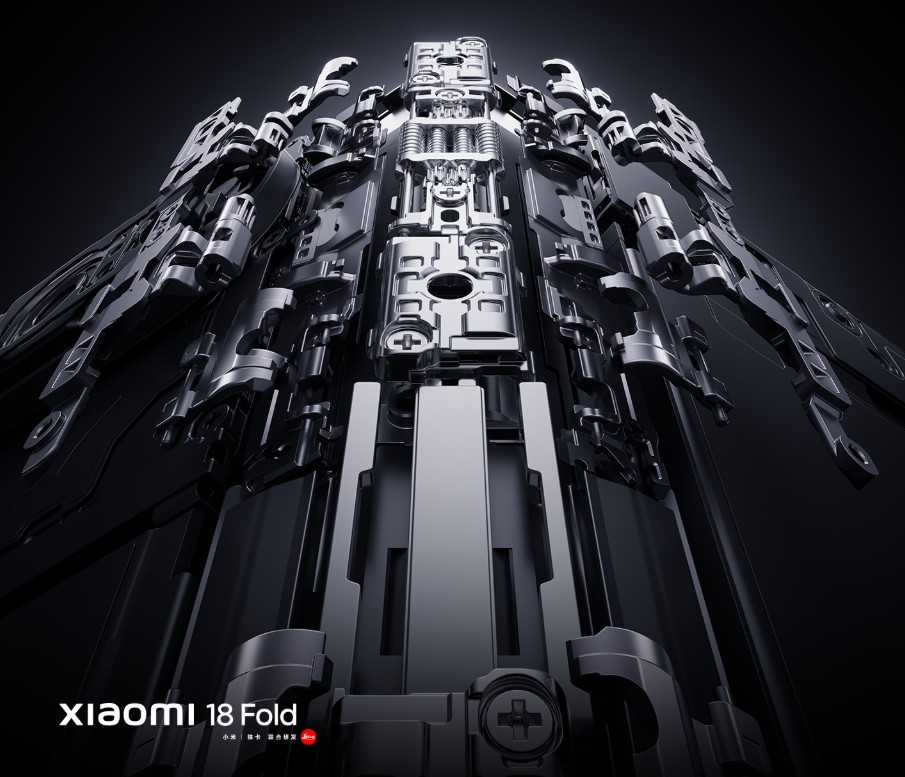
For the first time in serial production, the inner display uses dual-layer UTG glass: the top ultrathin glass layer was thickened to 50 micrometers, increasing strength versus the previous model by 178%, and the bottom 30-micrometer support layer added another 29% in impact resistance.
According to Xiaomi, the average fold depth is up to 30 micrometers. The touch layer received a new organic flexible material with six times higher elongation than rigid materials, so no black spots appear on the display when it’s dropped. Compared to the MIX Fold 4, the inner panel’s resistance to sharp objects increased by 258 %, and the drop height the display can survive with the steel ball increased by 214 %.
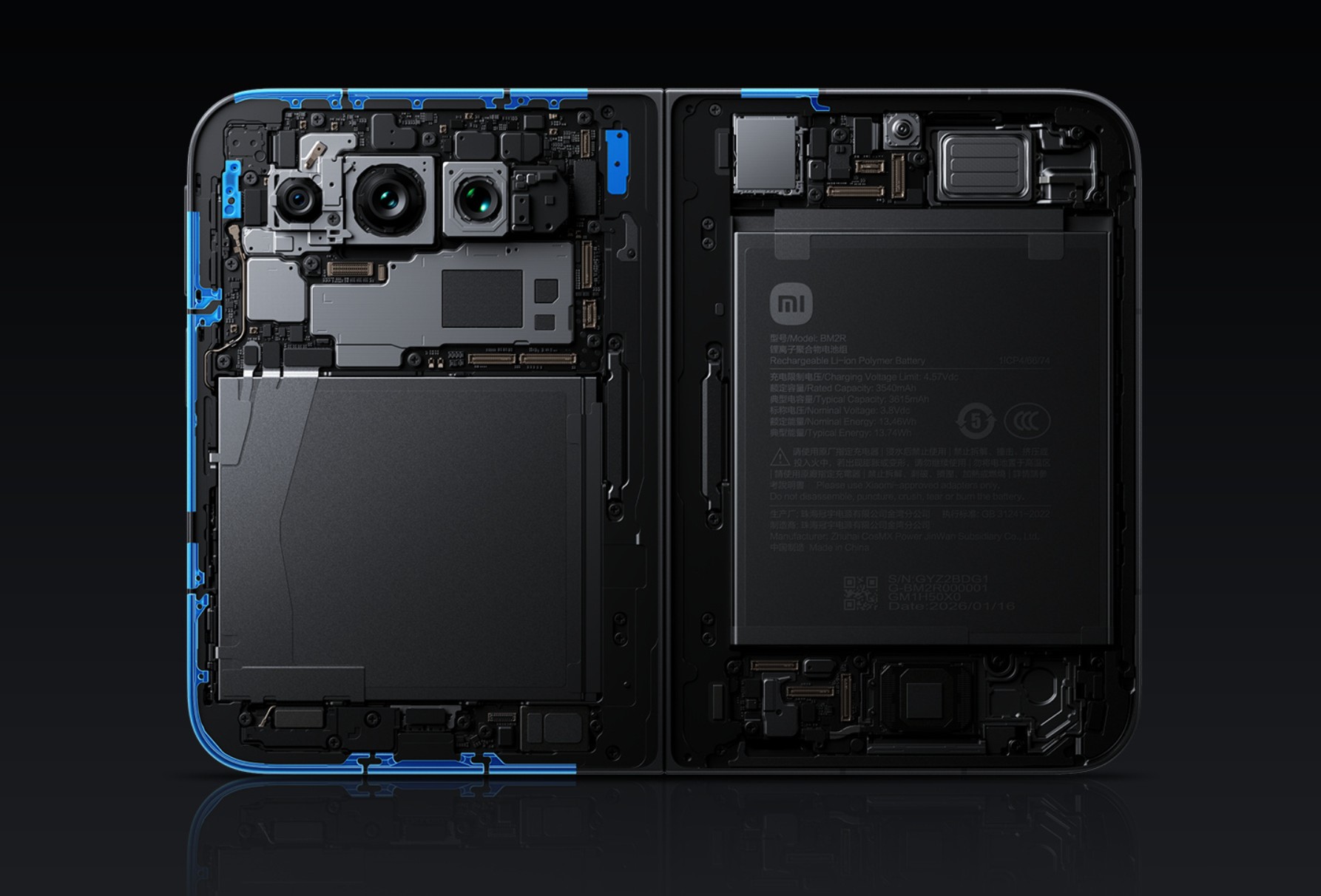
Engineers simulated drops at 10 437 angles, capturing deformations with a 3D camera system delivering millions of frames per second, and based on that they made 492 construction adjustments. Lei Jun added that the phone went through more than 80 000 drop tests, during which 1 500 prototypes were sacrificed. The result is drop resistance from a height of 1.2 meters—on par with a regular phone.
XRING O3 and LPDDR6: the performance king among foldables
Under the hood sits the Xiaomi XRING O3 — a 3nm TSMC chip with 24 billion transistors. It has ten big CPU cores clocked up to 4.35 GHz, a 16-core G2-Ultra NX GPU, and a four-core NPU rated at 200 TOPS. We broke it down in detail in a separate article.
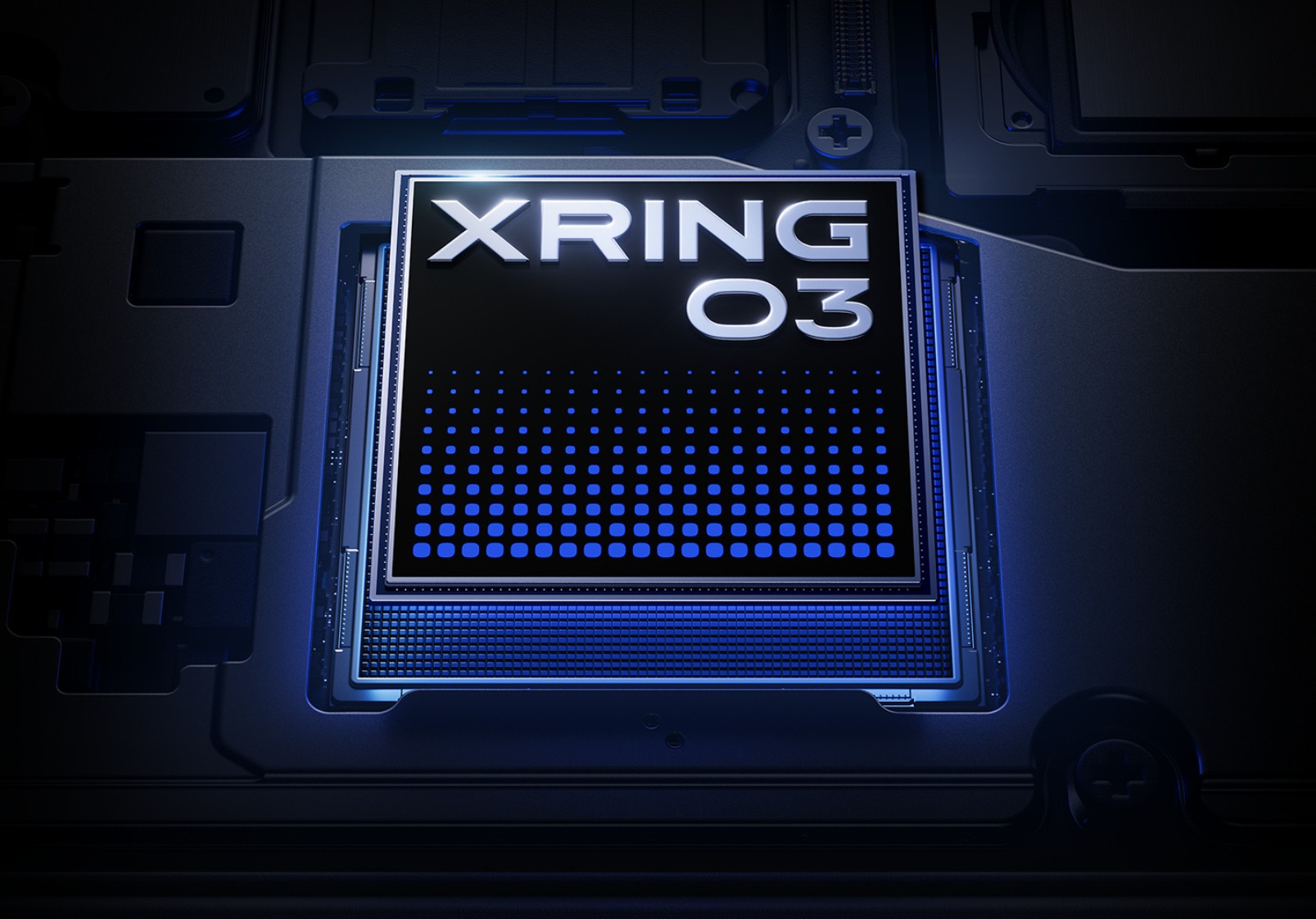
Compared to XRING O1, it delivers multi-core performance that’s 54 % higher and graphics that’s 85 % faster with 64 % lower power consumption. Cooling is handled by a 3D ring-shaped vapor chamber system with microcapillary channels.
Lei Jun reminded everyone that Xiaomi has already invested 21 billion yuan in developing its own chips out of the planned 50 billion, and XRING O3 is the first of three new chips that have entered mass production. The other two will arrive in the first half of 2027.
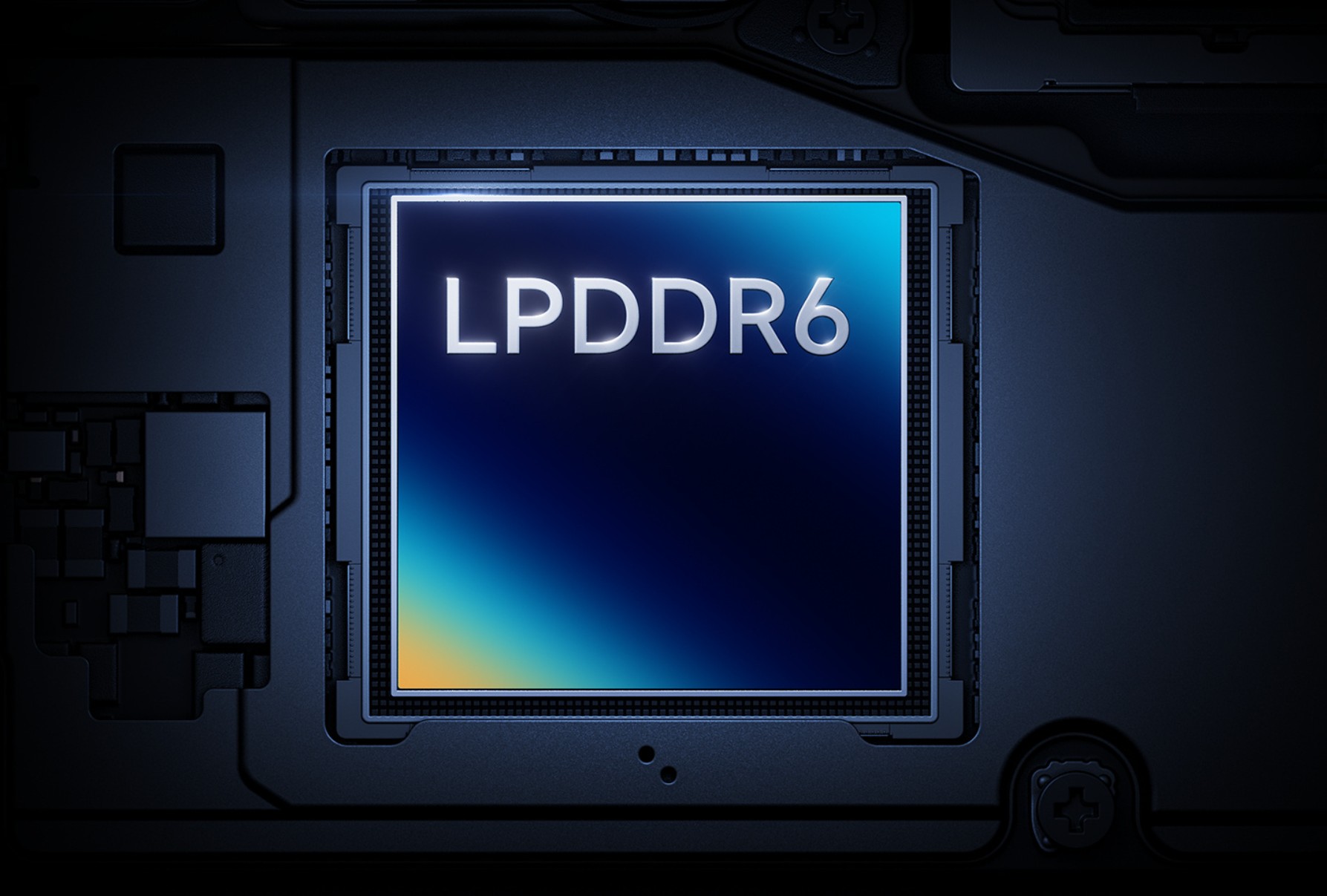
In the top configuration with 16 GB + 1 TB, memory sits next to the LPDDR6 chip from CXMT or SK Hynix with a throughput of 113.8 GB/s, which is received by this phone as the first phone in the world. The other three configurations (12 + 256 GB, 12 + 512 GB and 16 + 512 GB) feature, according to the official specification, standard LPDDR5X, while storage is always UFS 4.1. According to
Xiaomi’s 18 Fold lasts for an hour of playing Genshin Impact with stable 60 fps at body temperature 41,8 °C, meaning it stays cooler than competing foldables. The same applies for multitasking—e.g., during a video call with open documents alongside.
Three Leica cameras with a 200 MPx sensor
Despite its slim body, the full trio of Leica Summilux cameras fits inside: the main 200 MPx sensor with a 1/1.56″ size, f/1.7 aperture, 23 mm focal length, and optical stabilization; a 50 MPx periscope with f/2.8 aperture, 3.5x optical zoom (80 mm), OIS, and 7x lossless zoom; plus a 50 MPx wide-angle lens with an f/2.4 aperture.
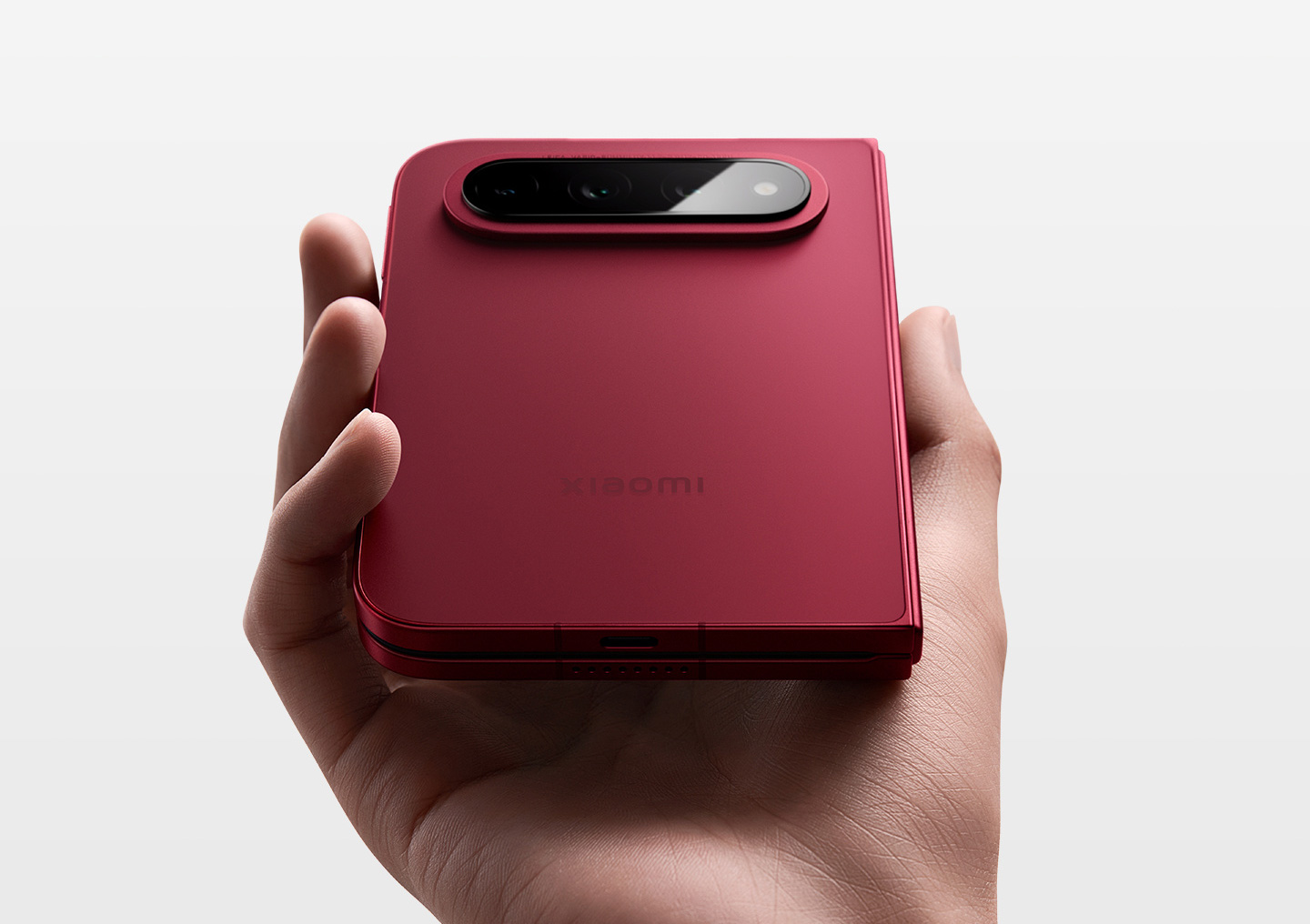
The selfie camera has 16 MPx and a 90° field of view. Video supports 8K at 24 fps or 4K 60 fps with Dolby Vision on all lenses. High resolution from the main sensor lets you crop freely and build compositions even after the shot—while keeping images sharp even on the large inner display.
The foldable format also brings a new way of shooting. The outer display acts as a large viewfinder with a near full-screen preview, so holding the phone feels like using a classic compact camera, with the person you’re photographing visible on the second display. On the inner display, you can shoot and browse the gallery at the same time in a split window. Xiaomi also showed a holder with a magnetic button that works as a remote shutter for photos, video, and even scrolling through short videos, with a built-in microphone for the Xiao Ai assistant and voice control for setting parameters including zoom.
Battery 6 000 mAh, a better signal than iPhone and UWB
A 6 000 mAh battery fits into the ten-millimeter-thin body— the largest in the category. It’s a dual stacked cell with 20% silicon and an energy density of 920 Wh/l, which, according to Xiaomi, lasts longer than the iPhone Pro Max even when using a large display; for the inner display, the manufacturer states 1.43 days.
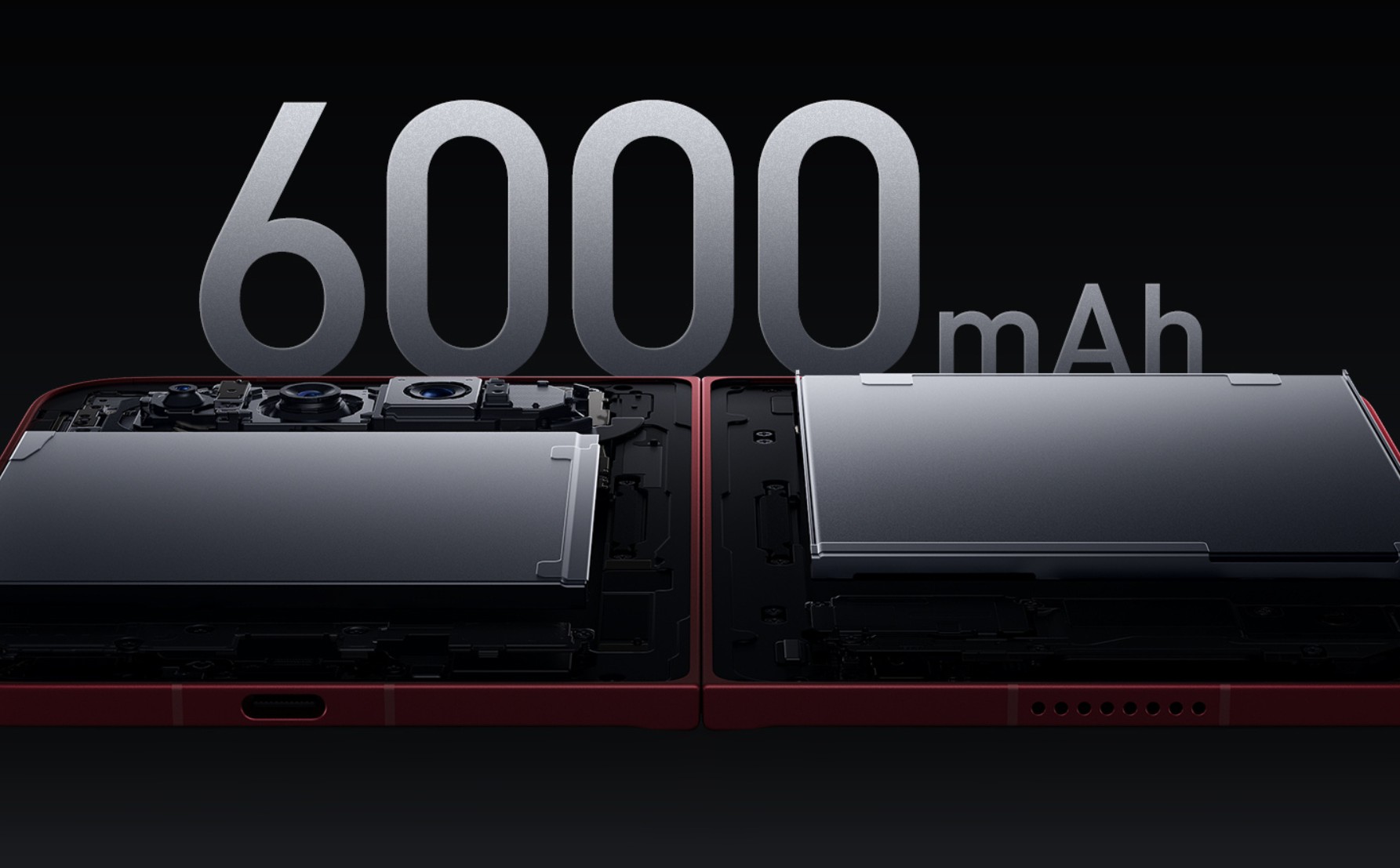
It charges 67 W wired and 50 W wirelessly. With a magnetic cover, it also supports magnetic wireless charging. Xiaomi also highlighted a new communication system with a dedicated chip and a new antenna architecture, designed to deliver better signal reception in both folded and unfolded states than on the iPhone. It also includes roaming across more than 210 countries with over 520 operators, Wi‑Fi 7, Bluetooth 6.0, and a built-in UWB chip that can also act as a digital car key for Xiaomi, Xpeng, and Audi vehicles.
Colors, ceramic edition, price, and availability
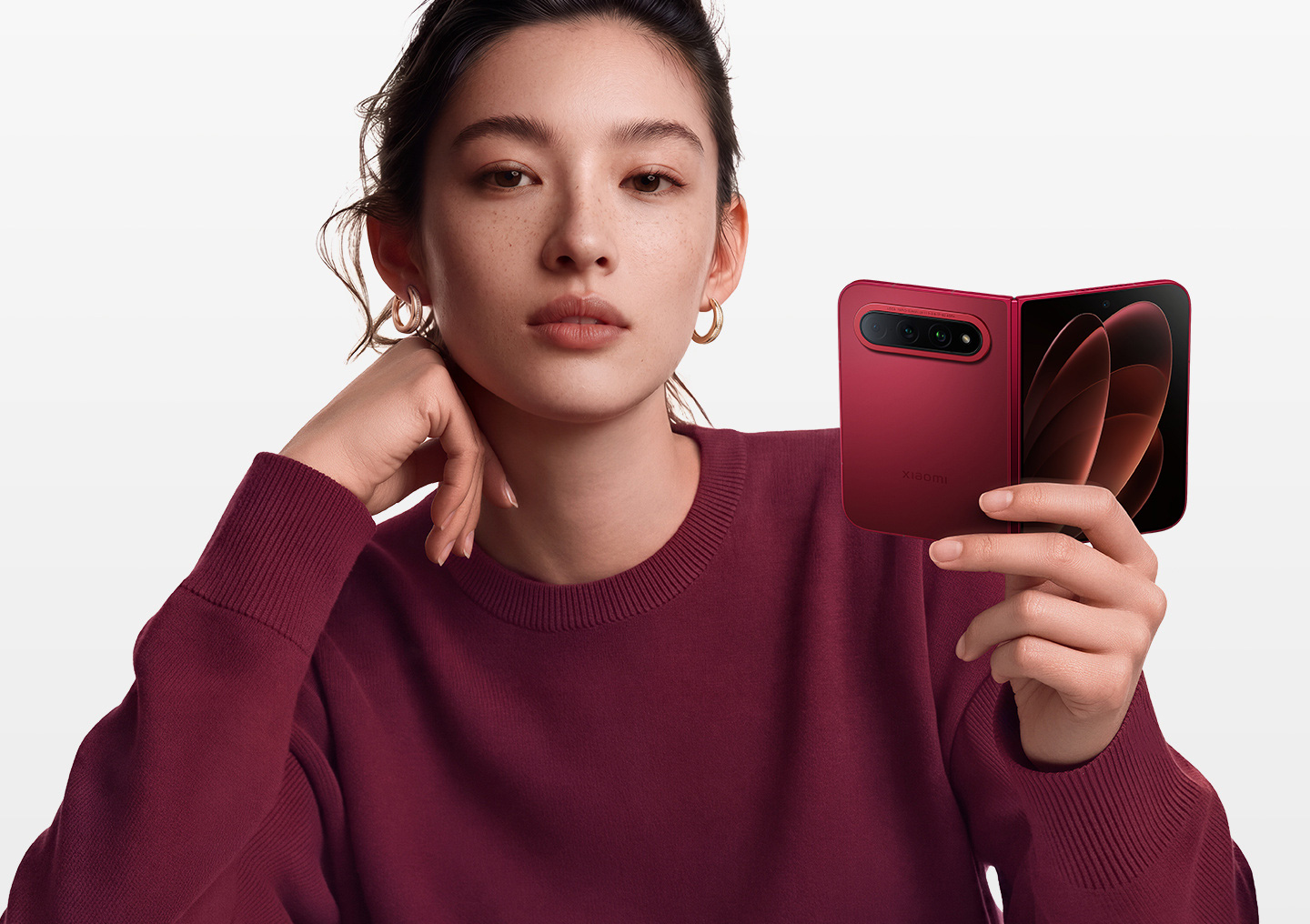
The Xiaomi 18 Fold comes in three colors. The main one is Xiye Red, a rich red with a brownish undertone inspired by autumn berries—something Xiaomi calls a trendy color for this season. Second is Warm Gold White, white with a champagne-gold base, and third is a matte black with a subtle metallic-gray sheen.


On top, there’s a ceramic special edition in a pale-pink shade with a fabric-like texture on the frame. It’s made from silicon nitride that’s sintered at 1,840 °C—harder than regular ceramics at half the weight—so the phone weighs the same 219 g. Production goes through 40 steps, takes 45 days, and results in only 1,500 units.
Lei Jun openly commented on the pricing, saying that memory is extremely expensive right now and the phone isn’t cheap, but it offers solid value for money. The base version with 12 + 256 GB costs 10,999 yuan, which is roughly €1,400. The 12 + 512 GB version comes to 11,999 yuan (about €1,540), the 16 + 512 GB model is 12,999 yuan (around €1,670), and the flagship 16 + 1 TB with LPDDR6 memory is priced at 14,999 yuan (approximately €1,930). The ceramic edition in the same configuration costs 15,999 yuan (about €2,060). For comparison, the competing foldable of the same format with a chip from the previous generation and two cameras starts at, according to Lei Jun, from 12,999 yuan.
Sales in China start on September 10 at 10:00 local time. Buyers in the first week will get free annual insurance for both displays worth 998 yuan. Xiaomi has already confirmed that the 18 Fold will remain exclusive to the Chinese market, so it will only reach Slovakia via importers—and with the Chinese version of HyperOS.
If the Chinese version doesn’t bother you, you won’t have network issues here. According to the official specification, the 18 Fold supports all LTE bands used by Slovak and Czech operators, including the key B20 (800 MHz), as well as B1, B3, B7, B8, and B28. Among the 5G bands, n78, n1, n3, n28, and n20 are also covered, so 5G should work fully with all our operators. We expect coupons for the Xiaomi 18 Fold from our partners Gshopper and TradingShenzhen as soon as the phone is added to their listings. We’ll update the article with a pricing box, coupons, and sales links once that happens.
| - | Xiaomi 18 Fold |
|---|---|
| Inner display | 7.58″ AMOLED Pol-less / 2364 × 1672 px / aspect ratio √2:1 / LTPO 1 – 120 Hz / 4 000 nits |
| Outer display | 5.38″ AMOLED / 1712 × 1168 px / aspect ratio √2:1 / LTPO 1 – 120 Hz / 4 000 nits |
| Chip | Xiaomi XRING O3 (3 nm TSMC / 10 cores up to 4.35 GHz / 16-core GPU) |
| Memory | 12 + 256 GB / 12 + 512 GB / 16 + 512 GB (LPDDR5X) / 16 + 1 TB (LPDDR6) / UFS 4.1 |
| Cameras | 200 MPx f/1.7 OIS + 50 MPx periscope 3.5× f/2.8 OIS + 50 MPx ultrawide f/2.4 / Leica Summilux |
| Selfie | 16 MPx f/2.2 |
| Battery | 6 000 mAh / 67 W wired / 50 W wireless |
| Dimensions | 117.8 × 163.8 × 5.02 mm when unfolded / 117.8 × 83.6 × 10.68 mm when folded |
| Weight | 219 g |
| Construction | Dragon Bone hinge / aluminum 7-series / Dragon Crystal Glass 3.0 / dual-layer UTG |
| Durability | IP58 + IP59 / drop from 1.2 m |
| Connectivity | 5G / Wi‑Fi 7 / Bluetooth 6.0 / UWB / NFC / USB 3.2 Gen 2 |
| System | HyperOS 4 |
| Colors | Xiye Red / Warm Gold White / black / ceramic pink (1 500 pcs) |
| Price | 10 999 / 11 999 / 12 999 / 14 999 yuan / ceramic 15 999 yuan |
| For sale | from 10. September 2026 only in China |
To get more updates from the world of Xiaomi, keep following our Xiaomi Planet website. Join our Facebook group, where we build an active community and help each other out. Subscribe to our Telegram as well, where we add the best deals and coupons from China every day.
Don’t miss the best coupons 📩
Subscribe and we’ll email you new coupons before they expire. We only send it once a month — no spam.