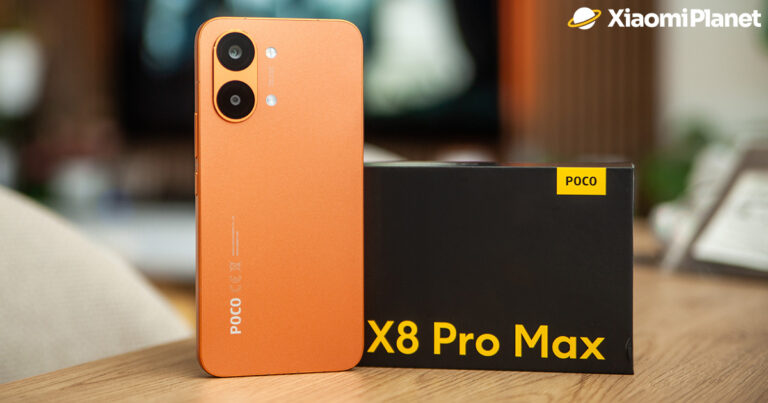

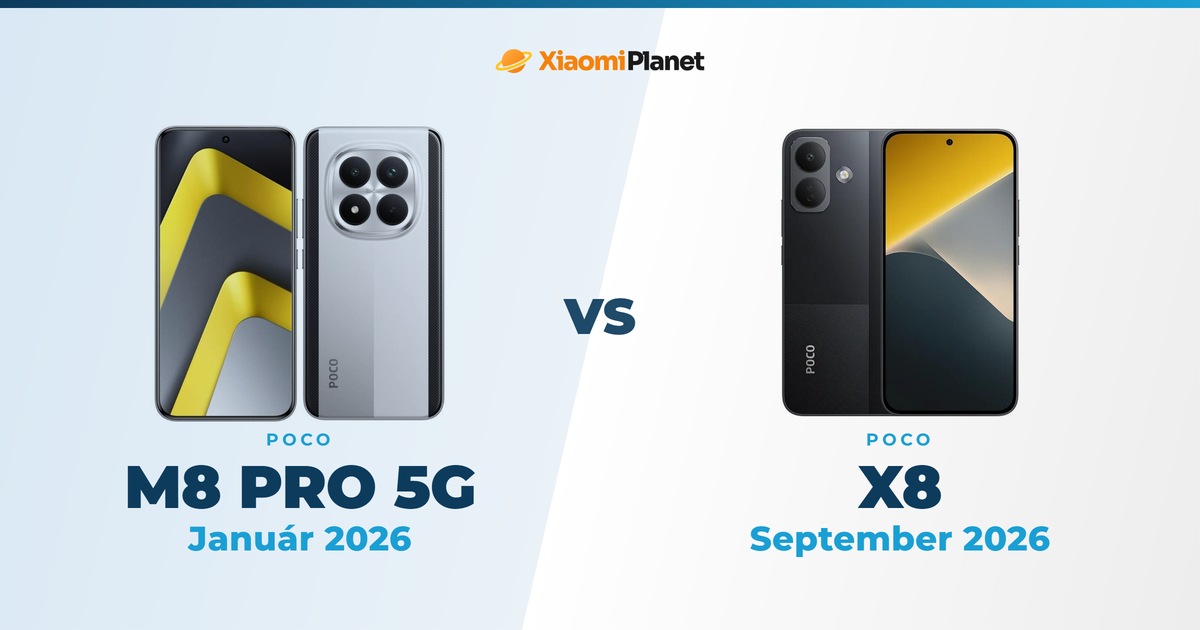
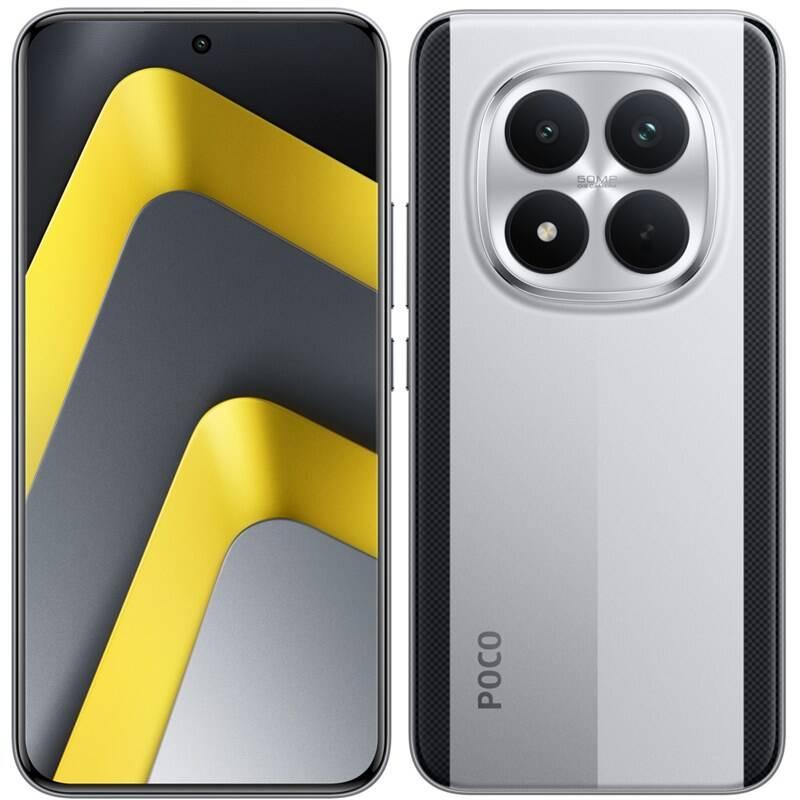
A higher tier and a later release date don’t automatically mean a better phone, and the pair POCO X8 vs POCO M8 Pro is a good example. The September newcomer X8 is available from the European warehouse for roughly 48 € more than the January POCO M8 Pro 5G, but in performance testing, with camera equipment, and even when charging, it ends up on the short end.
X8 does, however, have one trump card that we praised at launch: a huge battery. That’s why we compared the official specs of both phones with independent measurements from Notebookcheck (M8 Pro test and X8 test). From that, we summed up who the cheaper M8 Pro is really worth, and when it makes sense to pay extra for X8. We’re comparing the same versions 8 + 256 GB, which are the ones sold most often here.
POCO M8 Pro 5G vs POCO X8: Spec comparison
| POCO M8 Pro 5G | POCO X8 | |
|---|---|---|
| Launch | January 2026 | September 2026 |
| Chip | Snapdragon 7s Gen 4 / 4 nm | Snapdragon 6s Gen 4 / 4 nm |
| AnTuTu v11 (Notebookcheck) | 1 057 813 points | 822 196 points |
| Memory | 8 + 256 GB / 12 + 512 GB | 8 + 256 GB / 12 + 256 GB |
| Storage type | UFS 2.2 | UFS 3.1 (256 GB) |
| Display | 6.83″ AMOLED / 1.5K / 120 Hz | 6.83″ AMOLED / 1.5K / 120 Hz |
| Peak brightness according to the manufacturer | 3200 nits | 3500 nits |
| Main camera | 50 MPx / 1/1.55″ / f/1.6 / OIS | 50 MPx / f/1.8 / OIS |
| Second rear camera | 8 MPx ultra-wide-angle | 2 MPx depth |
| Front camera | 32 MPx | 16 MPx |
| Video with rear cameras | 4K / 30 fps | 1080p / 30 fps |
| Battery | 6500 mAh | 8340 mAh |
| Wi‑Fi battery life (Notebookcheck) | 23 h 30 min | 29 h 29 min |
| Charging | 100 W / 22.5 W reverse | 67 W / 22.5 W reverse |
| Wi-Fi and Bluetooth | Wi‑Fi 6E / Bluetooth 5.4 | Wi-Fi 5 / Bluetooth 5.1 |
| Durability | IP66 / IP68 / IP69 / IP69K | IP66 / IP68 / IP69 / IP69K |
| Thickness and weight | 8.31 mm / 205.9 g | 8.6 mm / 223 g |
| System | Xiaomi HyperOS 3 (via update) | Xiaomi HyperOS 3 |
Why the older and cheaper POCO is stronger
It all depends on which Redmi each phone is based on. POCO M8 Pro 5G is the global twin of the Redmi Note 15 Pro+ model, which was the top model of last year’s Note series, and it even shares the same firmware. The base POCO X8, on the other hand, is closer to the simpler Redmi Note 17 Pro, which bet on battery and durability—not performance.
The X letter in the name doesn’t mean a higher tier this time, as POCO naming would usually suggest. So in this comparison it’s the chipset and the equipment that matter, not the lineup or the launch date. Also watch out for confusion with the models POCO X8 Pro and X8 Pro Max, which deliver completely different performance.
Design and build quality
Both phones have an equally large 6,83-inch display and almost identical dimensions, but the M8 Pro is thinner (8,31 mm vs 8,6 mm) and by 17 grams lighter. It weighs 205,9 g, while the X8 is up to 223 g, and the difference is largely due to the larger battery in the X8.

On paper, their durability is the same: both handle dust and water according to IP66, IP68, IP69, and IP69K, and the display is protected by Gorilla Glass Victus 2. For X8, POCO also lists lab drop tests from three meters (SGS) and submersion tests (TÜV SÜD). However, these are tests under exactly specified conditions—not a promise that the phone will survive every accident, and water damage is not covered by warranty for either of them.
Display
The panels are very close: AMOLED with a resolution of 2 772 × 1 280 pixels, a refresh rate of 120 Hz, and sharpness of 447 PPI. X8 has a higher peak brightness on paper (3 500 nits vs 3 200), but for X8, the manufacturer states it when only a quarter of the display is lit, so the numbers can’t be compared directly. More interesting is what Notebookcheck measured. In small bright areas, X8 is brighter (around 4 000 nits vs 2 840), but across a full white screen, M8 Pro wins with almost 1 800 nits versus roughly 1 030 nits on X8.
M8 Pro has officially confirmed support for Dolby Vision and HDR10+, which the official X8 specs don’t list. In sunlight, both will remain readable, so we treat the display as a draw with a slight advantage for M8 Pro in HDR content.
Performance and games
Here’s where the difference is the biggest. M8 Pro is powered by Snapdragon 7s Gen 4 with a clock up to 2.7 GHz, while X8 has the weaker Snapdragon 6s Gen 4 up to 2.4 GHz. In the AnTuTu v11 test by Notebookcheck, M8 Pro reached 1 057 813 points and X8 only 822 196, so M8 Pro has about 29 % higher score. In the Geekbench 6 test, it’s ahead by 27 % in single-core and 16 % in multi-core.
You can see even more on the chart, where the M8 Pro in the 3DMark Wild Life Extreme test scored 1 points, while the X098 scored only 8. According to Notebookcheck, the M759 Pro handles current games smoothly at medium details, while on the X8 most games will run, but more demanding titles are already a bit uncomfortable to play on it. The tested units had different storage (M8 Pro 8 + 12 GB, X512 8 + 8 GB), but this doesn’t change the order.
X8 has one advantage though: the 256 GB version has faster storage UFS 3.1, while M8 Pro uses the older UFS 2.2. You’ll notice it when copying large files and installing apps, though the weaker chip doesn’t quite balance that out.
Cameras and video
Both phones have a main 50 MPx camera with optical stabilization, but M8 Pro uses the sensor Light Fusion 800 with a 1/1.55″ size and a brighter f/1.6 lens. POCO X8 doesn’t state the sensor size in global specs—it only lists the optics f/1.8. The second camera is 8 MPx ultra-wide-angle on M8 Pro, while X8 has only a 2 MPx depth sensor that can’t take the photo on its own and only helps with background blur in portrait shots.

In video it’s even clearer: M8 Pro shoots in 4K at 30 fps, while X8, according to the official specs, only does Full HD at 30 fps—using both the rear and front cameras. The front camera is 32 MPx on M8 Pro and only 16 MPx on X8. Notebookcheck criticizes the X8 especially for weak photos in worse light, while M8 Pro, according to it, takes good shots even at night. If you shoot kids, trips, or record videos, you should go for M8 Pro.
Battery and charging
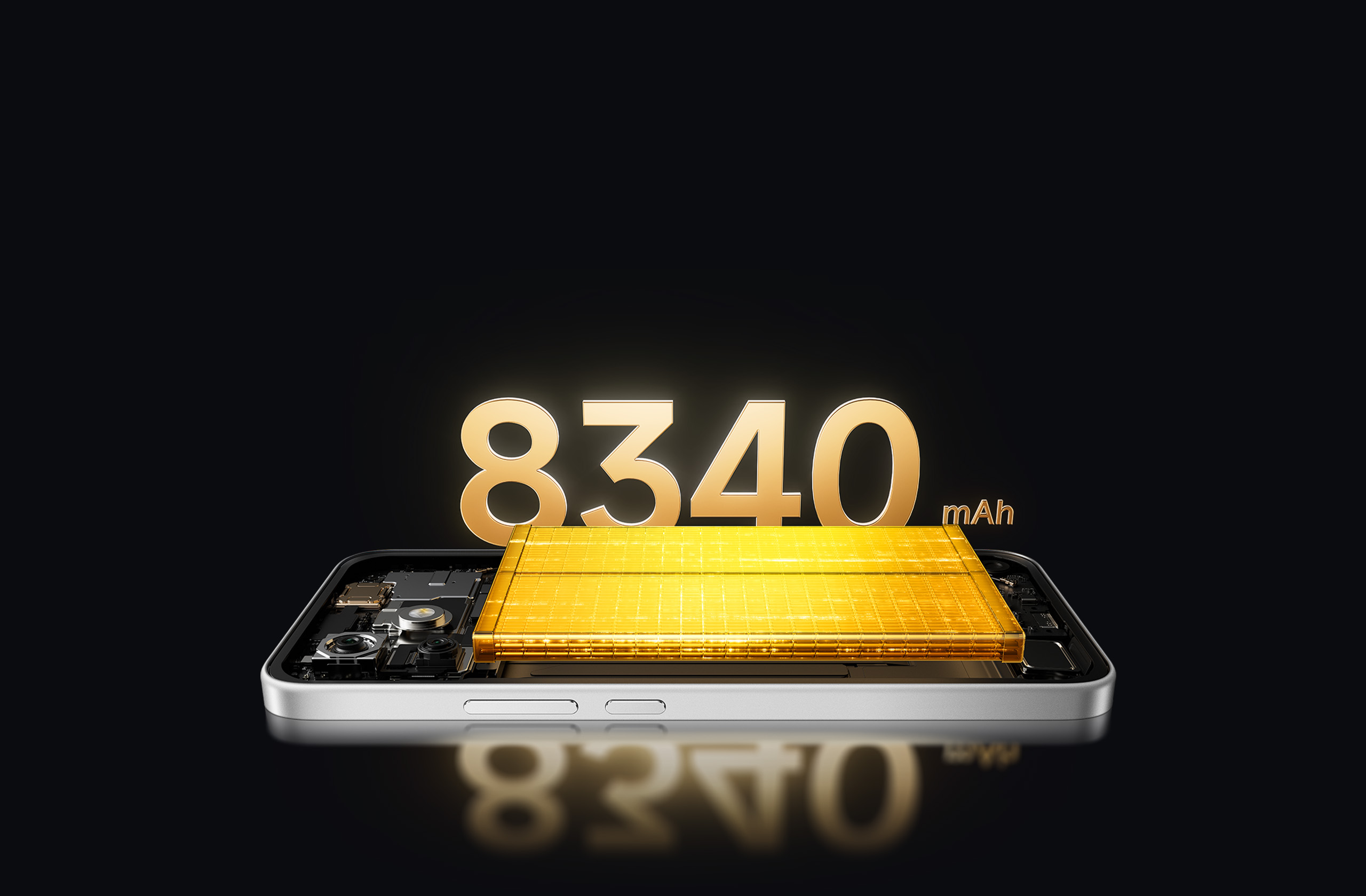
Battery is the main reason why X8 even exists. The silicon-carbon battery with a capacity of 8 340 mAh is 28% larger than the 6 500 mAh in M8 Pro, and an independent test showed it in full. When browsing the web over Wi‑Fi, X8 lasted 29 hours and 29 minutes, while M8 Pro managed 23 hours and 30 minutes—so X8 lasts almost six hours longer.
M8 Pro makes up for it with charging speed, as it supports 100 W instead of 67 W, and with the original adapter Notebookcheck charged it from zero to one hundred percent in under 50 minutes. However, neither phone comes with an adapter in the European package, so to charge at full speed you’ll need your own Xiaomi charger with the corresponding power. Both can charge other devices via cable with a power of 22,5 W.
System and connectivity
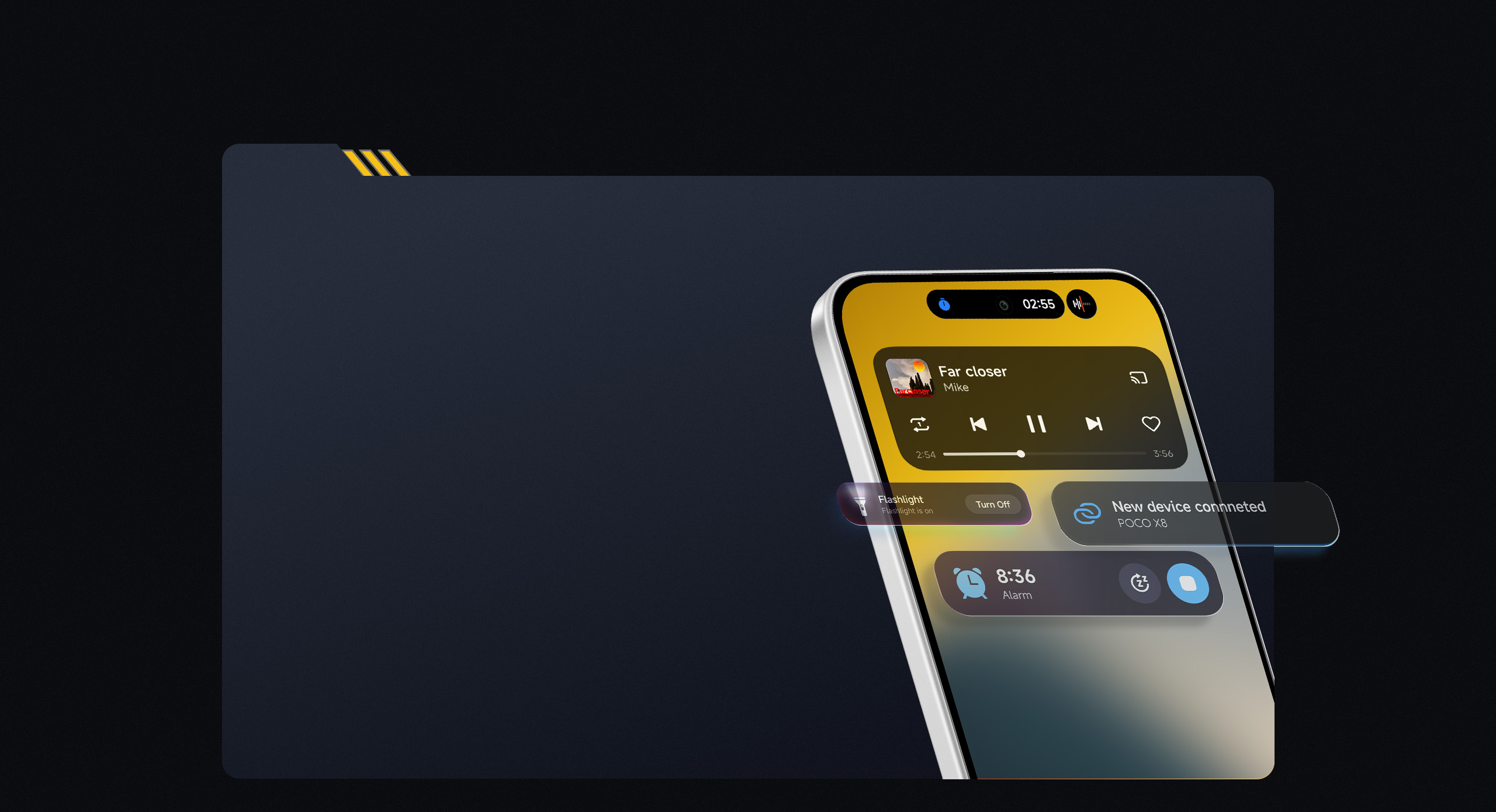
X8 launched straight with Xiaomi HyperOS 3 and Android 16. M8 Pro launched with HyperOS 2, but the global version has since received an update to HyperOS 3, so today there’s no major difference between the two in the system. Both have NFC for payments, an infrared blaster for controlling the TV, stereo speakers, and an in-display fingerprint reader. Neither supports eSIM.
When it comes to connectivity, M8 Pro wins, because it has Wi‑Fi 6E and Bluetooth 5.4, while X8 is stuck with Wi‑Fi 5 and Bluetooth 5.1. With a newer router, M8 Pro will pull more from your home network.
Final verdict: which one should you choose
POCO M8 Pro 5G is for you, if you want a faster phone for less money that can handle games, takes ultra-wide photos, records in 4K, and charges in under an hour. It wins in performance, camera setup, charging, connectivity, and even weight—and for most people looking for a phone under 300 €, it’s the smarter buy. When we compared prices, the 12 + 512 GB version was even a few euros cheaper than X8 with 8 + 256 GB.
POCO X8 is for you, if battery life matters to you more than anything else. You mainly use the phone for messages, navigation, and social media, and you don’t need an ultra-wide camera or 4K video. X8 isn’t a bad phone, and that extra six hours of battery life will be noticeable. For the additional cost, though, you get a weaker chip, worse cameras, and slower charging.
The more powerful POCO from Spain, the better battery life from France
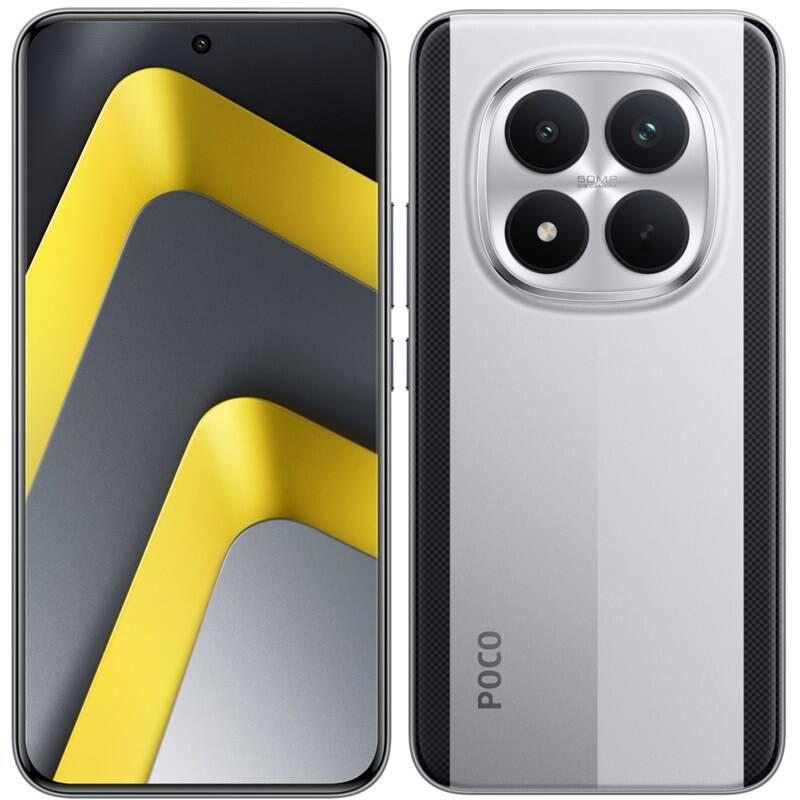
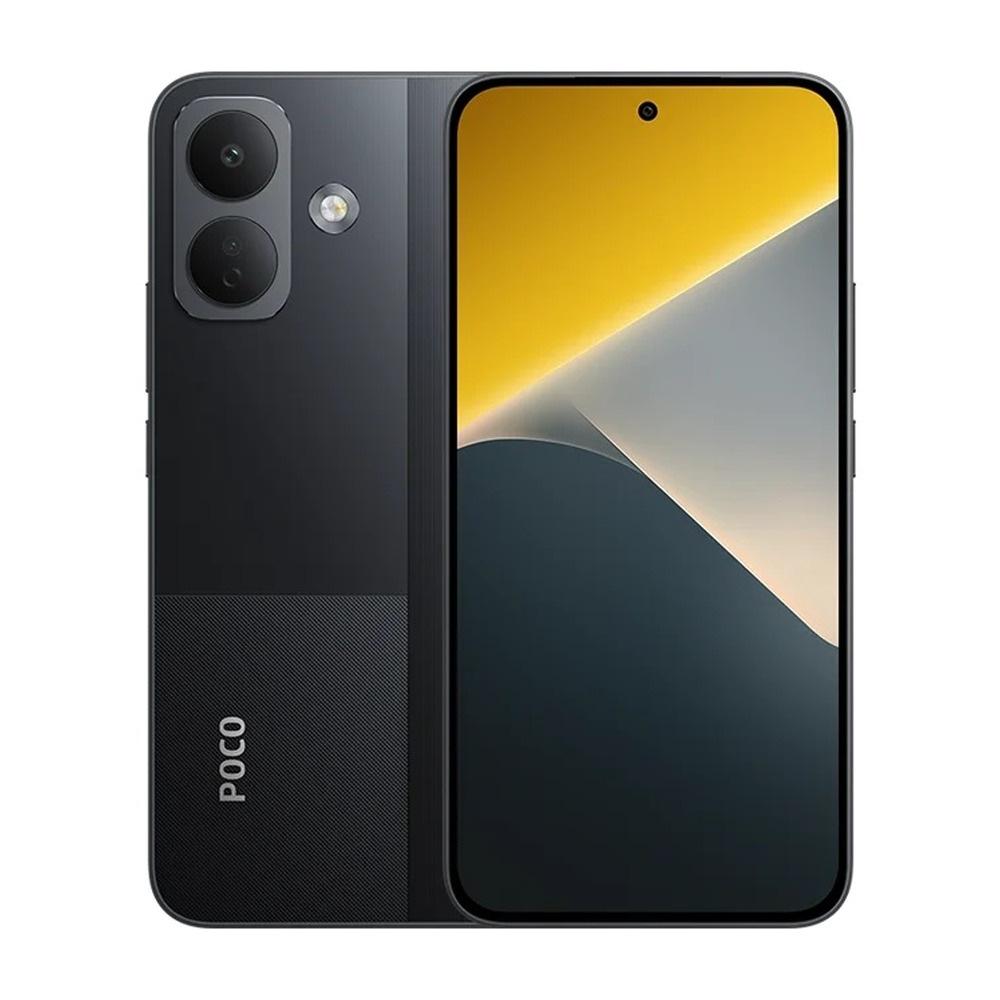
POCO M8 Pro 5G in the global version with Slovak language sold by the verified seller mi_fans_store on DHgate. Shipped from the Spanish warehouse via GLS, so it should arrive in about a week and you don’t need to deal with customs duty (clo) or import fees. Stock in Spain is limited: when we checked the offer, the seller had only from two to thirteen units for each color. There’s no adapter included in the package, so plan on using your own charger.
POCO M8 Pro 5G Global Version

TIPFast delivery from the Spanish warehouse with no customs duty and VAT.
This product will be delivered to you quickly from a local Spanish warehouse. Shipping from Spain usually takes 7-10 days and is handled by a courier. When it arrives, you don’t pay any extra fees—no customs duty, no VAT.
TIPFast delivery from the Spanish warehouse with no customs duty and VAT.
This product will be delivered to you quickly from a local Spanish warehouse. Shipping from Spain usually takes 7-10 days and is handled by a courier. When it arrives, you don’t pay any extra fees—no customs duty, no VAT.
Our extra service with VIP support — we’ll handle the order on DHgate for you and ship it straight to your address.
If you don’t have experience buying on DHgate, your payment won’t go through, or the coupon doesn’t work, we offer our readers and customers an order-handling service delivered directly to your address. You send us the money by bank transfer and we order the product straight to you. That way, you don’t have to worry about a failed payment or applying the coupon, and you can be sure the whole order goes through 100 % correctly. On top of that, you automatically get our VIP support — we handle any shipping issues for you and assist with warranty claims. The fee for this service is 15 € for the product price. You can contact us by email at info(@)xiaomiplanet.sk or on Messenger, where we’re active all the time.
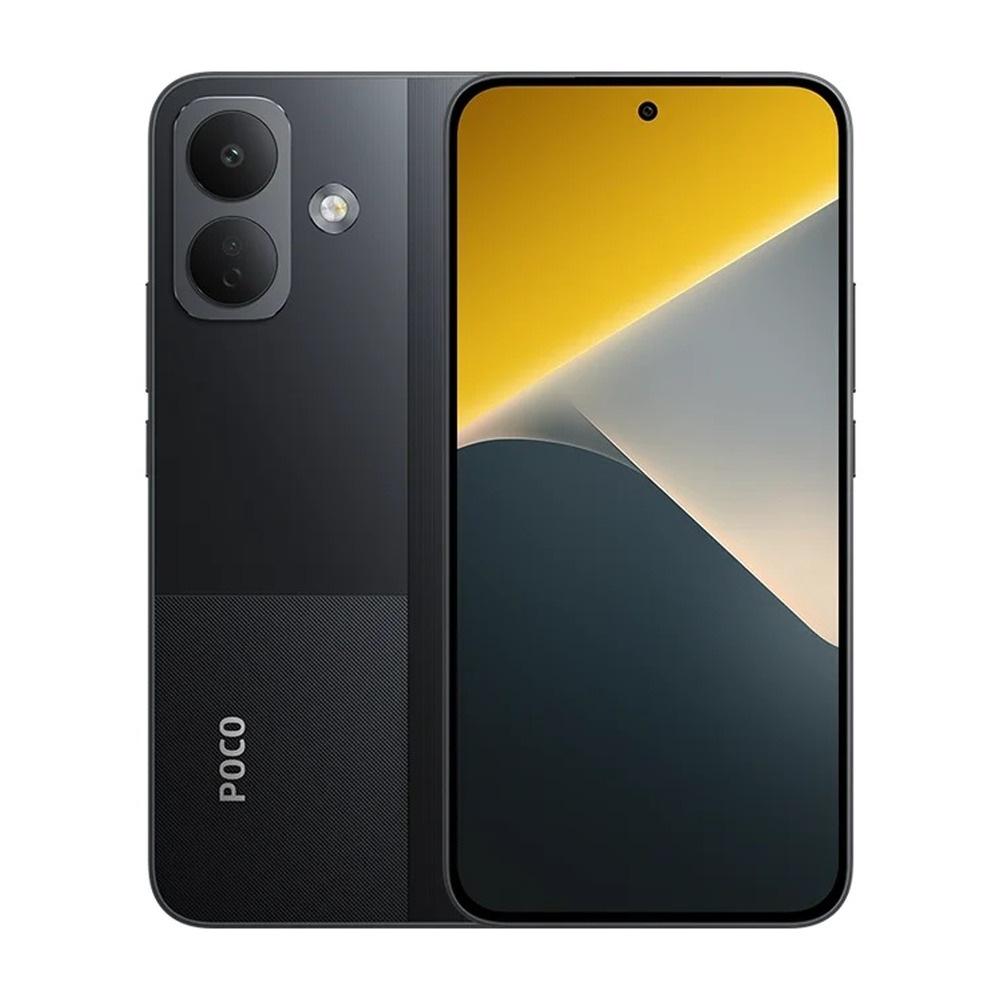
If you care mainly about battery life, POCO X8 in the global version you’ll find on AliExpress from the seller France Online Store. Ships from a French warehouse—the price already includes VAT and you don’t pay anything extra.
POCO X8 Global Version

TIPFast delivery from the French warehouse with no customs duty or VAT.
This product will be delivered to you quickly from a local Spanish warehouse. Shipping from Spain usually takes 7-10 days and is handled by a courier. When it arrives, you don’t pay any extra fees—no customs duty, no VAT.
TIPFast delivery from the French warehouse with no customs duty or VAT.
This product will be delivered to you quickly from a local Spanish warehouse. Shipping from Spain usually takes 7-10 days and is handled by a courier. When it arrives, you don’t pay any extra fees—no customs duty, no VAT.
To get more updates from the world of Xiaomi, keep following our Xiaomi Planet website. Join our Facebook group, where we build an active community and help each other out. Subscribe to our Telegram as well, where we add the best deals and coupons from China every day.
Don’t miss the best coupons 📩
Subscribe and we’ll email you new coupons before they expire. We only send it once a month — no spam.