
 Source: xiaomi.com
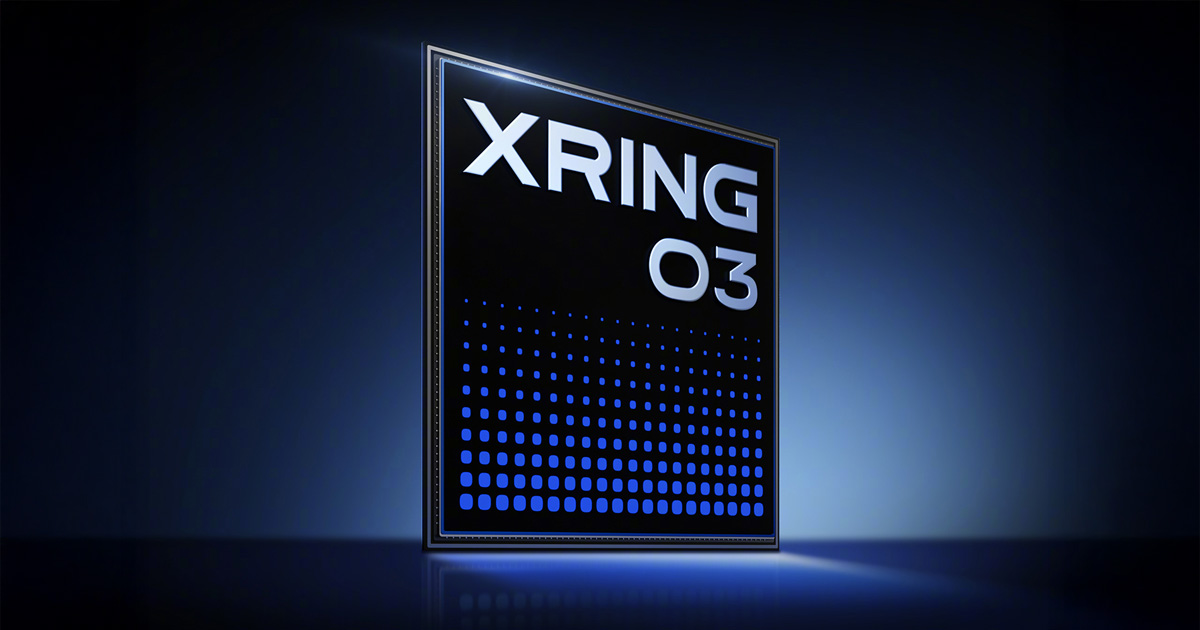
- Xiaomi officially unveiled XRING O3 — its own 3 nm chip with ten big cores, without power-saving ones.
- In AnTuTu it hits a record 5 228 014 points and, in a multi-core test, it also beats Apple M4.
- As a world-first, it supports LPDDR6 memory with 113.8 GB/s bandwidth.
- The new Mali-G2 Ultra NX graphics can handle AI upscaling directly in the GPU, and at peak performance saves up to 64% energy.
- It goes on sale as early as September in the foldable Xiaomi 18 Fold and the Pad 9 Pro Max tablet.
When Xiaomi showed its first flagship processor in 2025, the XRING O1, it sounded like a bold experiment. Today it’s clear it wasn’t an experiment. The company has officially unveiled its successor XRING O3 and attached to it a claim you don’t see every day: it’s allegedly the most powerful smartphone chip on the market right now. And the benchmark numbers Xiaomi published back up that statement.
Ten big cores and performance on par with Apple M4
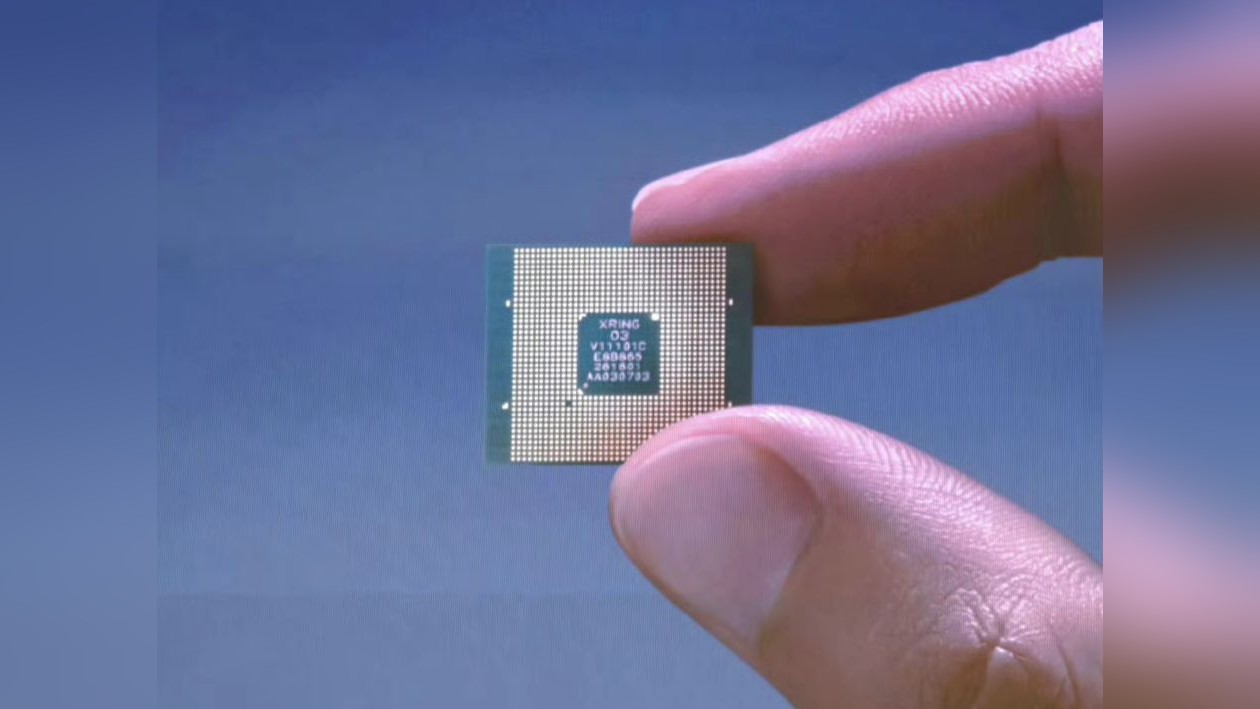
The XRING O3 is manufactured using a modern 3 nm TSMC N3P process, and with a die size of 133 mm² it packs 24 billion transistors. Xiaomi completely did away with power-saving cores—the processor is built around ten big cores: two C1-Ultra cores with up to 4.35 GHz, four C1-Premium cores at 3.68 GHz, and four C1-Pro cores at 3.15 GHz. It also totals up to 44 MB of cache—an amount more commonly found in laptops.

The results are brutal. In Geekbench 6.5, the chip scores 3,945 points in single-core and 15,221 points in multi-core—which is 31% and 61% higher than XRING O1, respectively. In multi-core, it also beats the Apple M4 chip (according to benchmarks on the web by Notebookcheck), which powers iPads and MacBook models.
In AnTuTu V11, XRING O3 has logged 5 228 014 points, which is currently the highest score among smartphone processors. Under typical load, the chip should also be up to a quarter more power-efficient than its predecessor.
Graphics with its own AI cores saves 64 % energy
The graphics are handled by the previously unrevealed Mali-G2 Ultra NX MC16, with 16 compute units—half of which received dedicated NX tensor accelerators. Thanks to them, the GPU can do AI upscaling and image generation directly in its own memory—image data doesn’t have to travel to the NPU and back, which reduces both latency and power consumption. A game rendered at 540p and upscaled to 1080p uses 20% less energy than native 1080p, while the chip can also upscale to 3.4K and interpolate from 60 to 120 fps.
In the Steel Nomad Lite benchmark, the GPU reaches 4,567 points (+85% vs O1) and in 3DMark Solar Bay Extreme up to 3,628 points—according to Xiaomi, that’s 63% more than the competing Apple A19 Pro. Even more interesting: the top performance of the old O1 is achieved by the new graphics with 64% lower power consumption.
The world’s first chip with LPDDR6 memories
XRING O3 is also the first processor with native support for LPDDR6 memory with a speed of 10 667 MT/s and bandwidth up to 113.8 GB/s. Xiaomi states an access latency of just 82 ns, handled by a unified bus with prefetch technology. There’s also a quad-core NPU delivering 200 TOPS for on-device AI, hardware H.266 decoding, and a security core built on the RISC-V architecture with EAL5+ certification.
You’ll also love the new 5th-generation ISP — it handles one sensor with a resolution up to 432 Mpx, a triple-camera array 64 + 64 + 50 Mpx, and processes night 4K video at 60 fps with AI noise reduction.
When and where will we see it
The first devices to use the new chip will be the foldable smartphone Xiaomi 18 Fold — which we covered earlier under the leaked name MIX Fold 5 — and the tablet Xiaomi Pad 9 Pro Max. Both new products are expected to hit the market as early as September, but for now they’re for the Chinese market.
After a rather uneven start with its own chips, Xiaomi is only a year and a half after the first generation going straight for the absolute top — and Qualcomm, MediaTek, and Apple have every reason to pay attention. You can find the complete chip specifications in the table below.
| - | Xiaomi XRING O3 |
|---|---|
| Manufacturing process | TSMC N3P (3 nm) |
| Transistors | 24 billions / 133 mm² |
| CPU | 2× C1-Ultra 4.35 GHz / 4× C1-Premium 3.68 GHz / 4× C1-Pro 3.15 GHz |
| Cache | 44 MB (L2 + L3 + SLC) |
| GPU | Mali-G2 Ultra NX MC16 with NX tensor accelerators |
| NPU | 4 cores / 200 TOPS (A8W4) |
| Memory | LPDDR6 10 667 MT/s / 113.8 GB/s |
| ISP | up to 432 Mpx / 4K60 night video with AI noise reduction |
| Geekbench 6.5 | 3 945 single-core / 15 221 multi-core |
| AnTuTu V11 | 5 228 014 points |
| Premiere | Xiaomi 18 Fold and Pad 9 Pro Max (September) |
To get more updates from the world of Xiaomi, keep following our Xiaomi Planet website. Join our Facebook group, where we build an active community and help each other out. Subscribe to our Telegram as well, where we add the best deals and coupons from China every day.
Don’t miss the best coupons 📩
Subscribe and we’ll email you new coupons before they expire. We only send it once a month — no spam.