
REVIEW: Xiaomi Tag
Our editorial rating based on product testing.
- Versatility
- Price
- Build quality
- Battery life
- Speed (especially on Apple networks)
- No UWB antenna (for our model)
- Inconsistent Google network (depends on the situation)
- Exclusive network use (one is used—whichever you choose)
If you have ever looked for misplaced keys, forgotten a backpack in a café, or nervously waited for your suitcase at the airport carousel, you definitely know how incredibly valuable a reliable tracking tag is. Until now, the market has been fairly sharply split between the more expensive Apple AirTags for Apple product owners and various, often compromise-filled alternatives for Android, but that is about to change.
The much-anticipated gadget Xiaomi Tag is finally here—and it’s aiming straight for the top. It brings one major, truly game-changing advantage: support for both of the two biggest ecosystems—Apple Find My and Google Find My Device. We put it through uncompromising testing on both networks, compared it against the benchmark in the form of the Apple AirTag, and now we’re sharing what we found in real-world use.
Where to buy Xiaomi Tag?
Xiaomi Tag is available directly via AliExpress, which offers fast duty-free delivery via AliExpress Standard Shipping—completely free of charge. On this online marketplace, we even found the UWB version of this tag, which was rumored to never arrive—but the truth is, it’s here. However, UWB technology is only available in the Chinese version of this tag, supporting Chinese versions of Xiaomi 17 Pro, 17 Pro Max, and Xiaomi 17 Ultra smartphones.
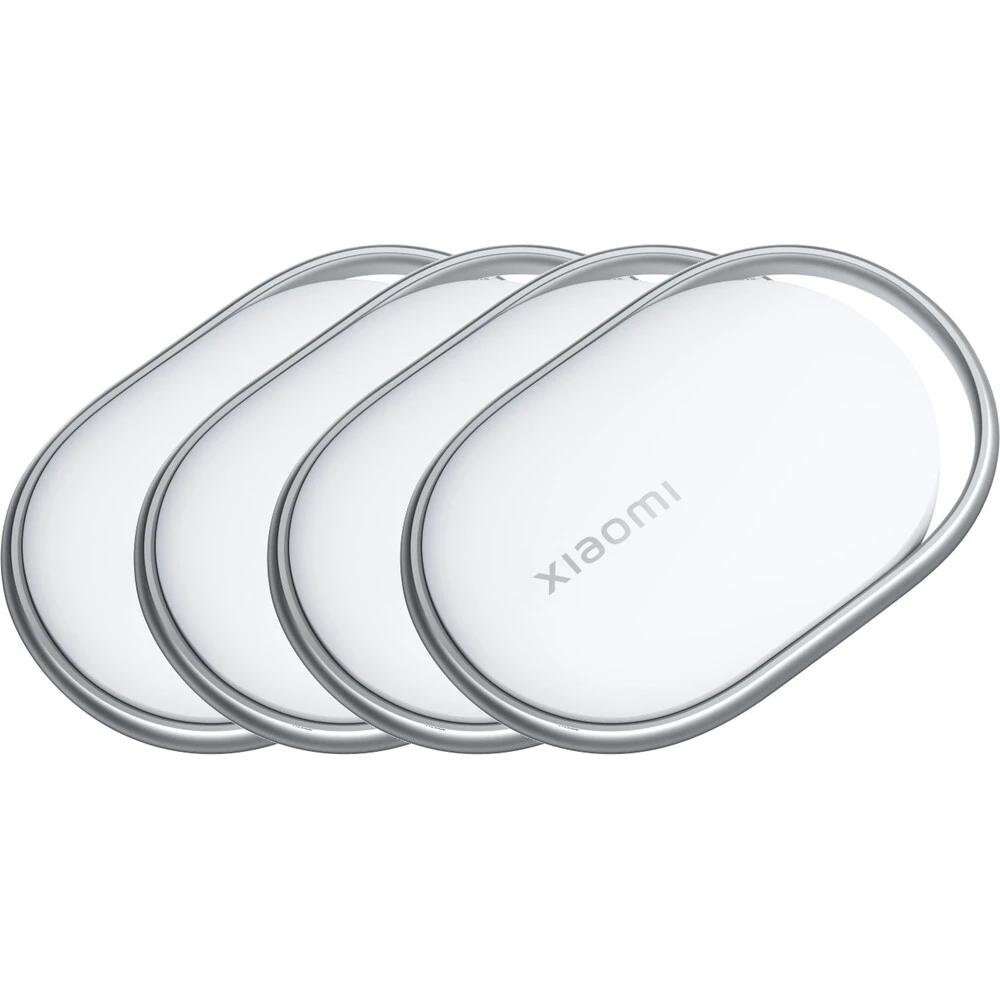
Xiaomi Tag Global Version

TIPExpress delivery from a Slovak warehouse within 1 to 3 business days.
This product will be delivered to you express from a local Slovak warehouse. Delivery usually takes 1-3 business days and is handled by a courier. The price is final.
TIPExpress delivery from a Slovak warehouse within 1 to 3 business days.
This product will be delivered to you express from a local Slovak warehouse. Delivery usually takes 1-3 business days and is handled by a courier. The price is final.
You can also get the new Xiaomi Tag right here in Slovakia. It’s available from our partner Smarty.sk at a very attractive price. There’s also a discounted four-pack option. The advantage is availability in local warehouses, which means very fast delivery in 1–3 business days, or you can pick it up at one of Smarty’s six stores across Slovakia.
Compact design and technical features
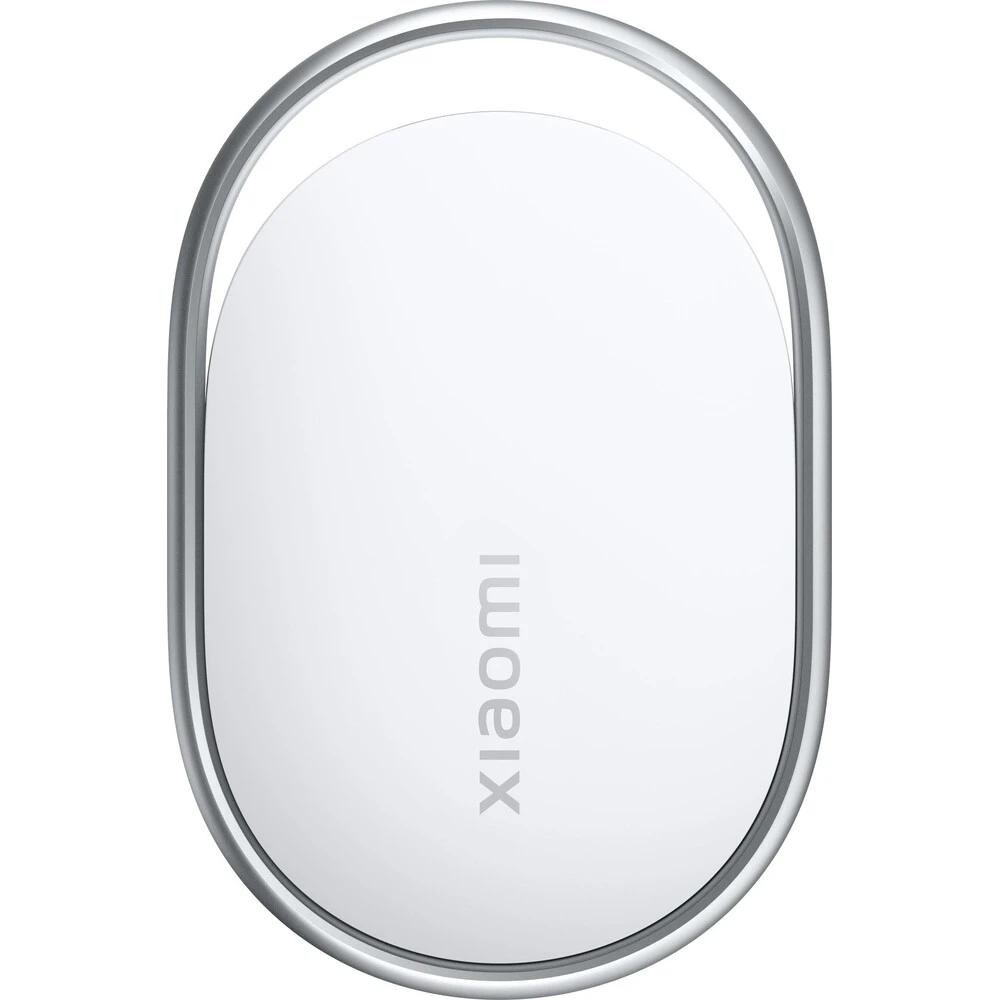
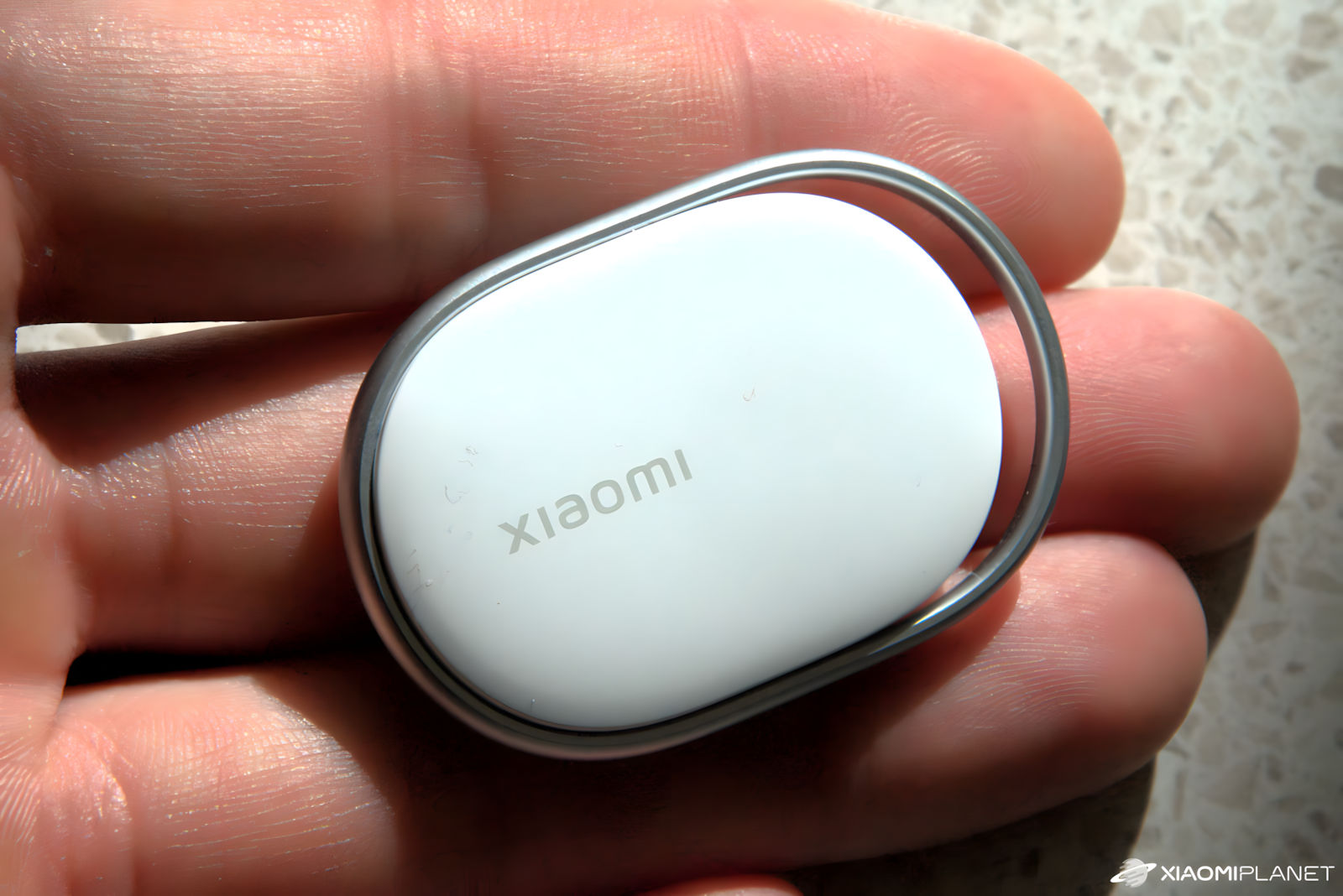
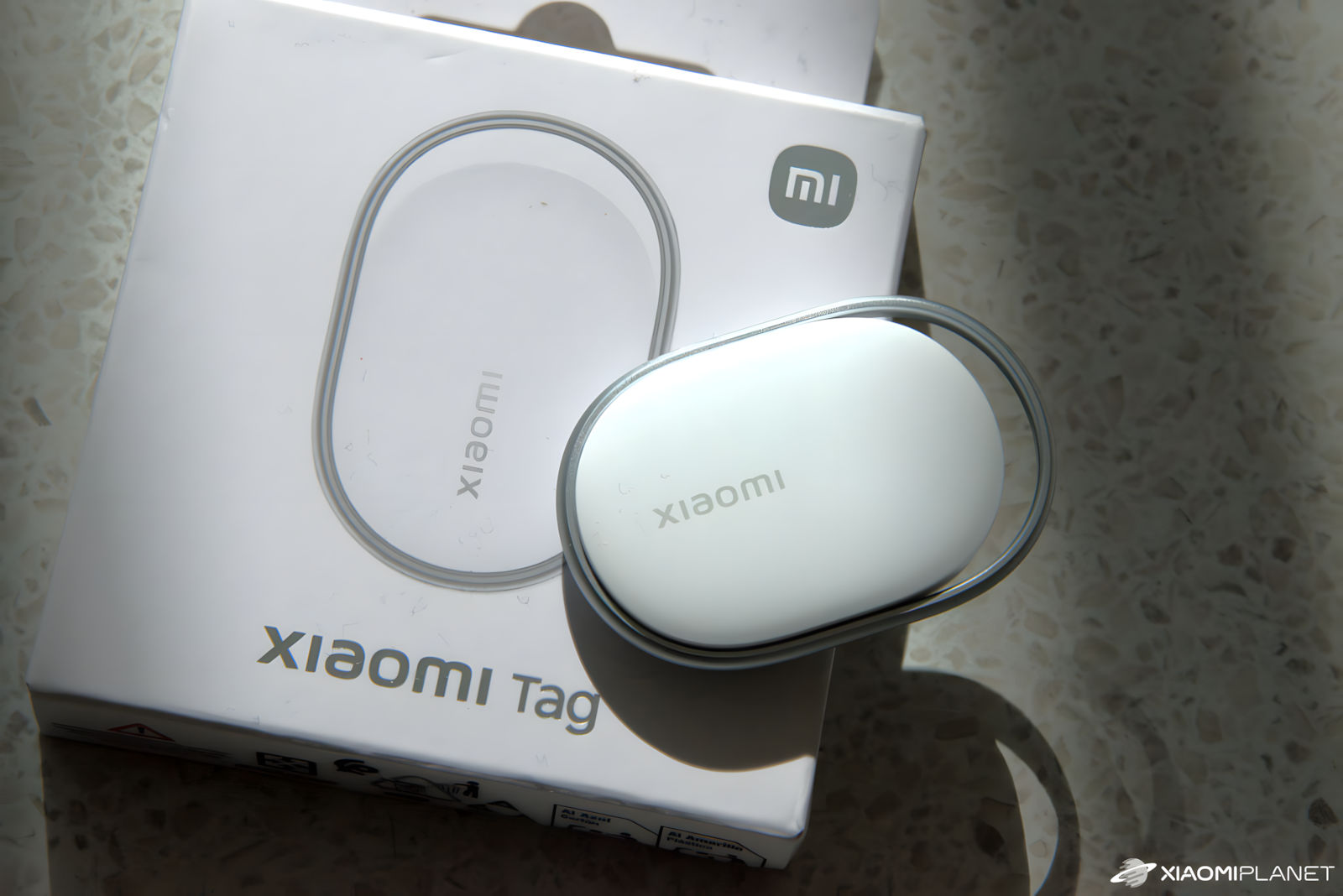
Right out of the box, the Xiaomi Tag will surprise you with its extremely compact dimensions of 46.5 × 31 × 7.2 millimeters and a weight of just 10 grams. That means you can easily slip it into a wallet, hang it on your keys, or hide it inside your luggage lining. Its minimalist design looks understated—exactly what you expect from a similar safety and tracking device.
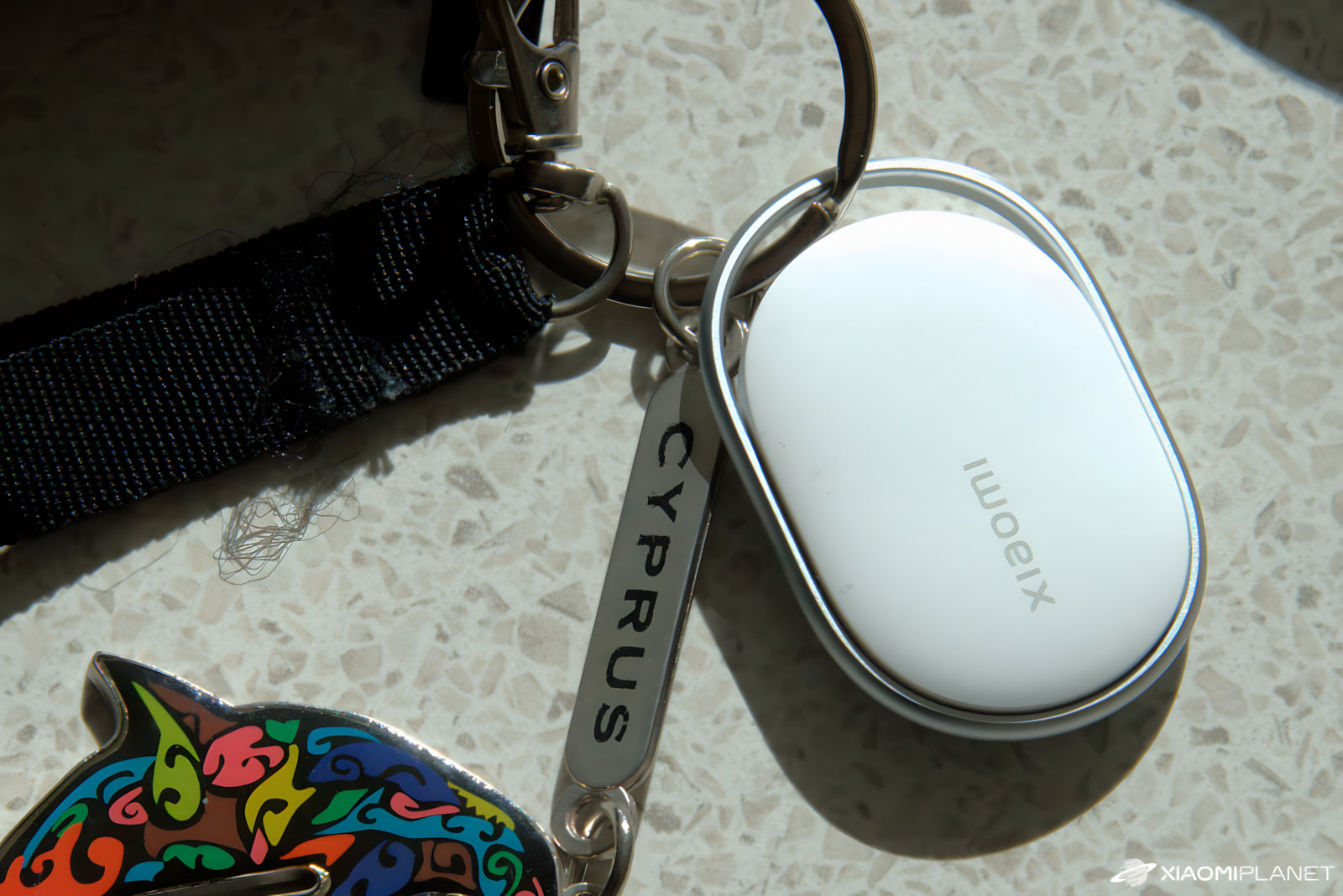
A huge plus is the certified water and dust resistance level IP67. That means it can handle normal rain, unexpected splashes, and even tougher outdoor conditions. Inside this handy little helper, there’s a replaceable button battery CR2032, for which the manufacturer promises more than one year of battery life under normal use. Thanks to the low power consumption of Bluetooth 5.4, operation is extremely efficient, and the app will notify you in time when it’s time to replace the battery.
The biggest draw is the support for the two massive networks mentioned above. However, the device does not support both networks at the same time—during initial setup, you simply choose whether to pair it with your iPhone via Apple Find My or with an Android smartphone via the Google Find My Device app. The device then broadcasts a secure Bluetooth signal that nearby compatible smartphones pick up and anonymously send the location to the cloud.
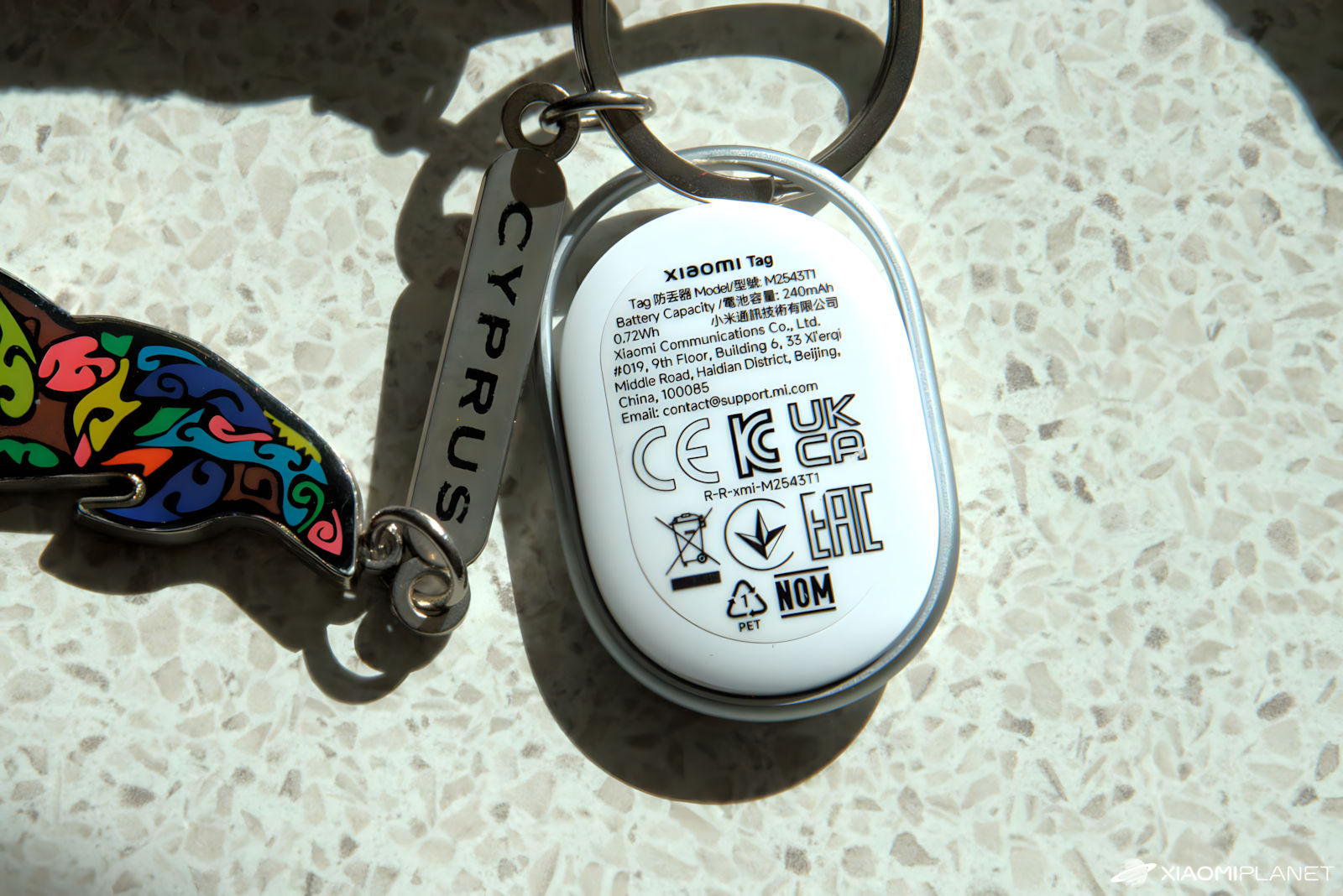
The package also includes an integrated piezo speaker for sound-finding when it’s very close. While the device doesn’t come with a UWB antenna for centimeter-level accuracy using a directional arrow, at a price that’s a fraction of the AirTag’s cost it’s a completely acceptable compromise. The Apple version also supports NFC technology for Lost Mode, so a finder can instantly display your contact details by tapping their phone against it.
Xiaomi Tag vs. Apple AirTag on the Apple Find My network
Our first—very important—testing took place in a home environment for the AirTag, meaning the Apple Find My network. We were extremely curious to see whether a third-party device could keep up with Apple’s original accessories. We placed both tags on the same luggage and headed out into the field. The results honestly surprised us—in a very positive way. Xiaomi Tag didn’t just match the AirTag; in many cases, it even beat it in speed of location updates.
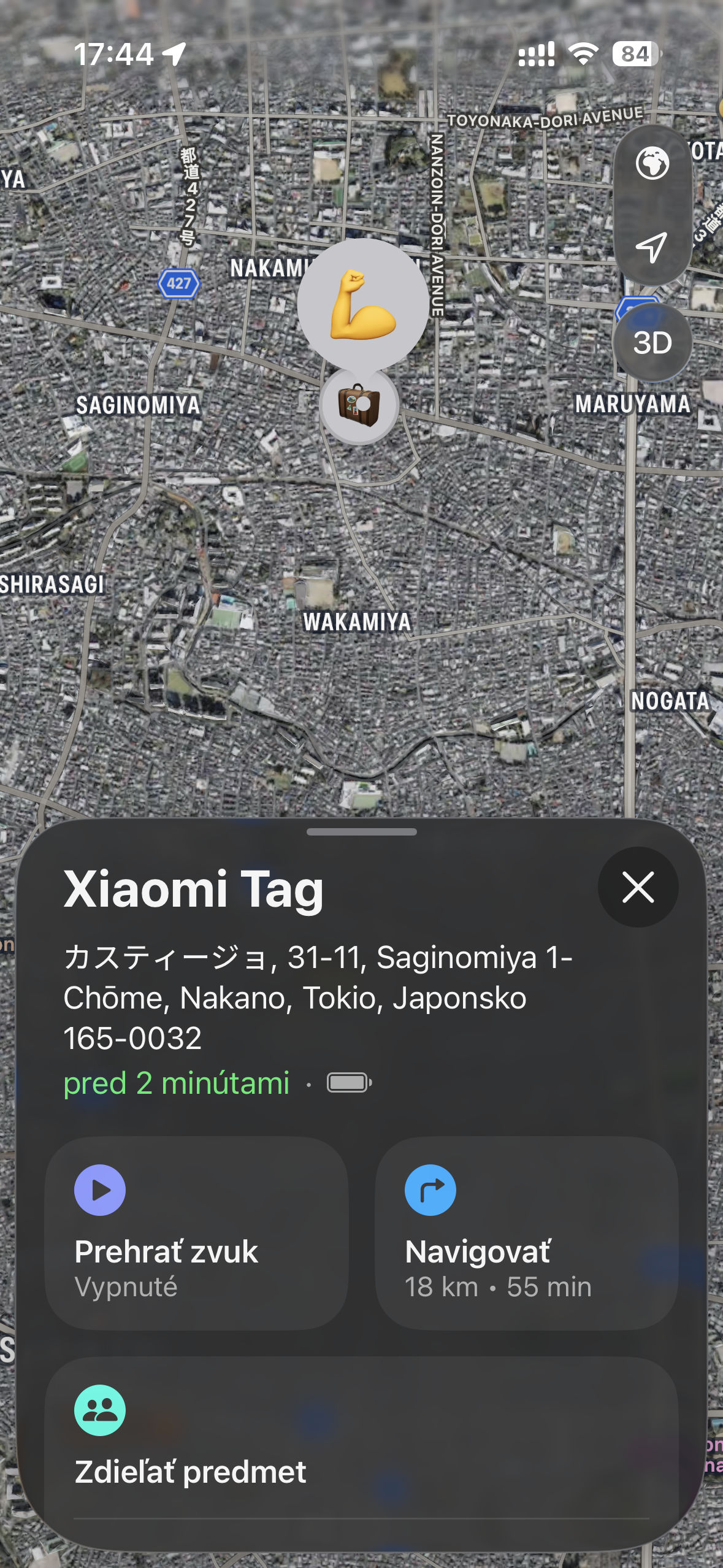
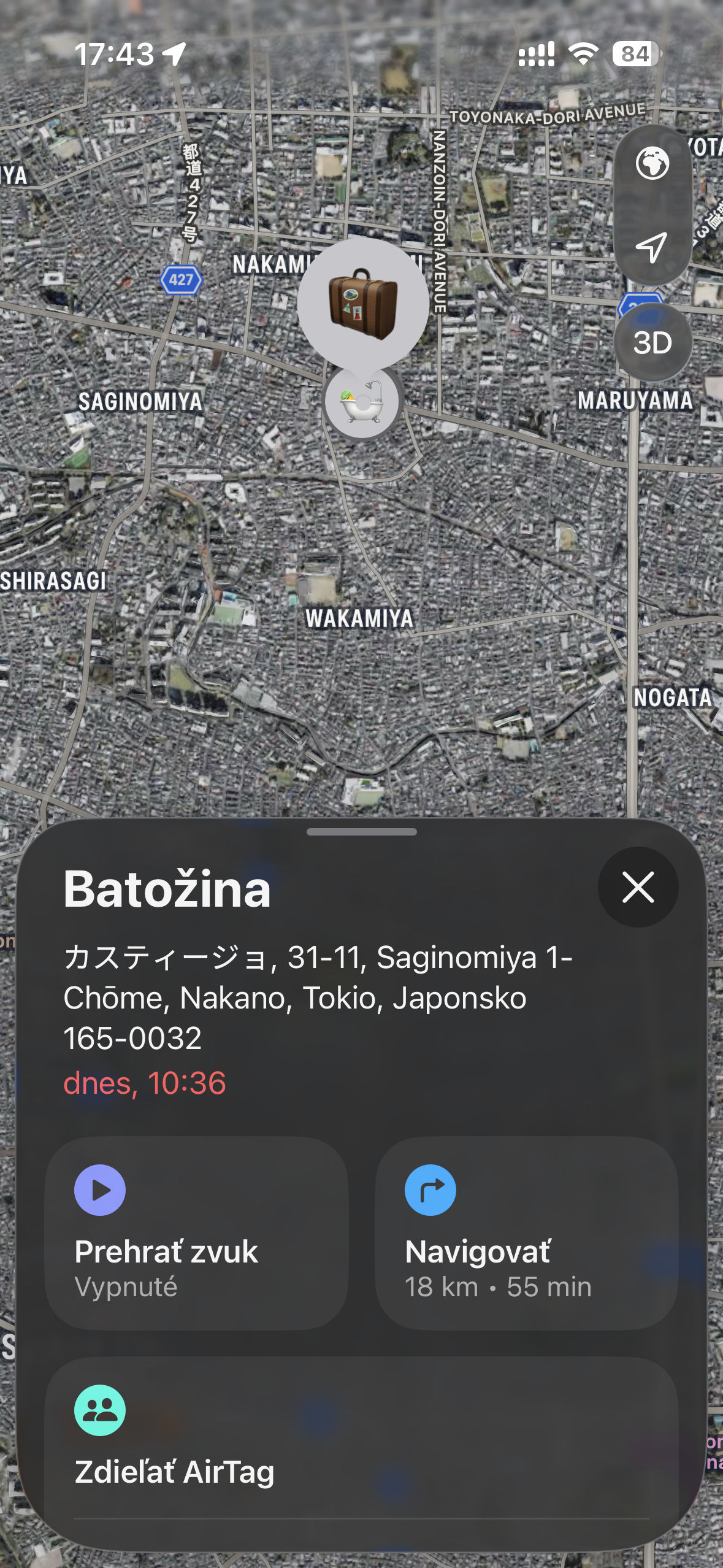
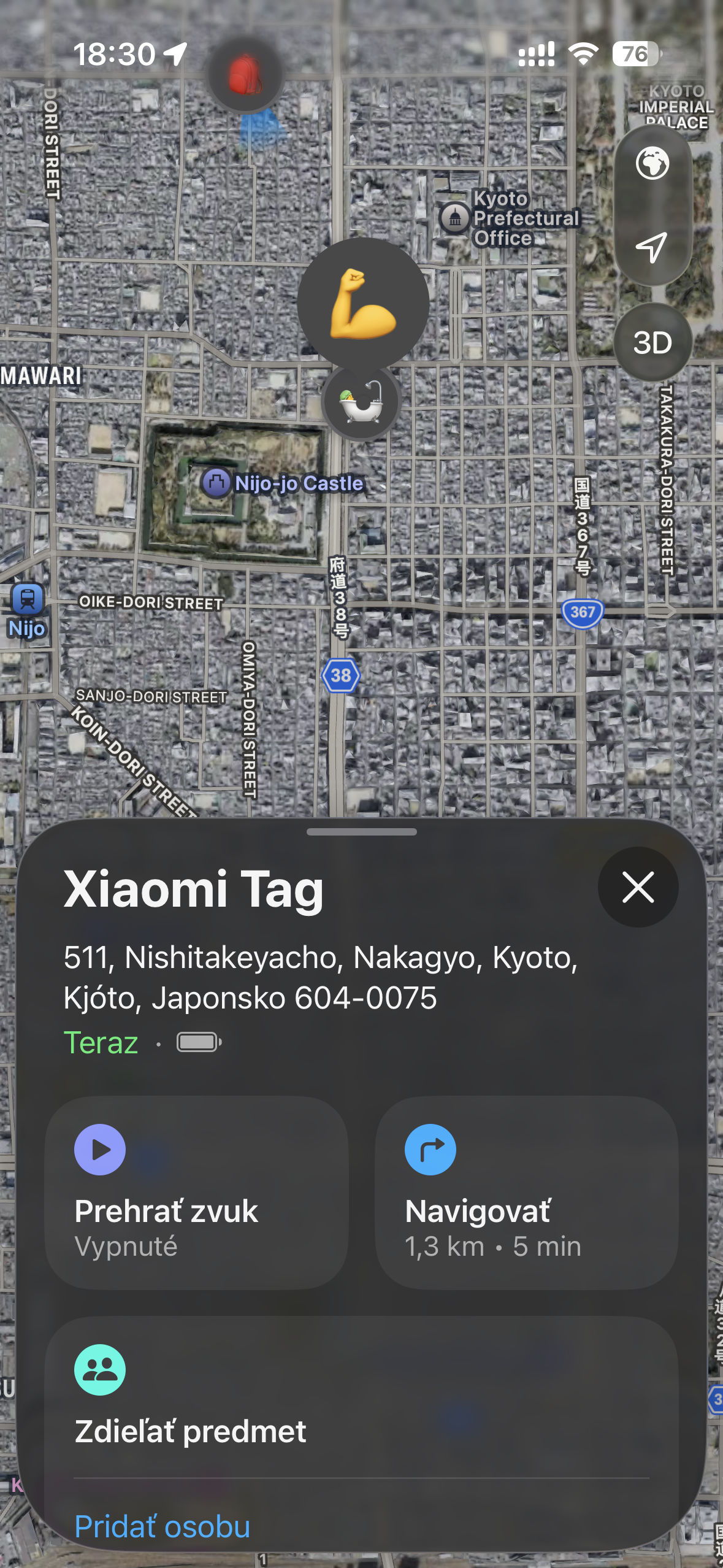
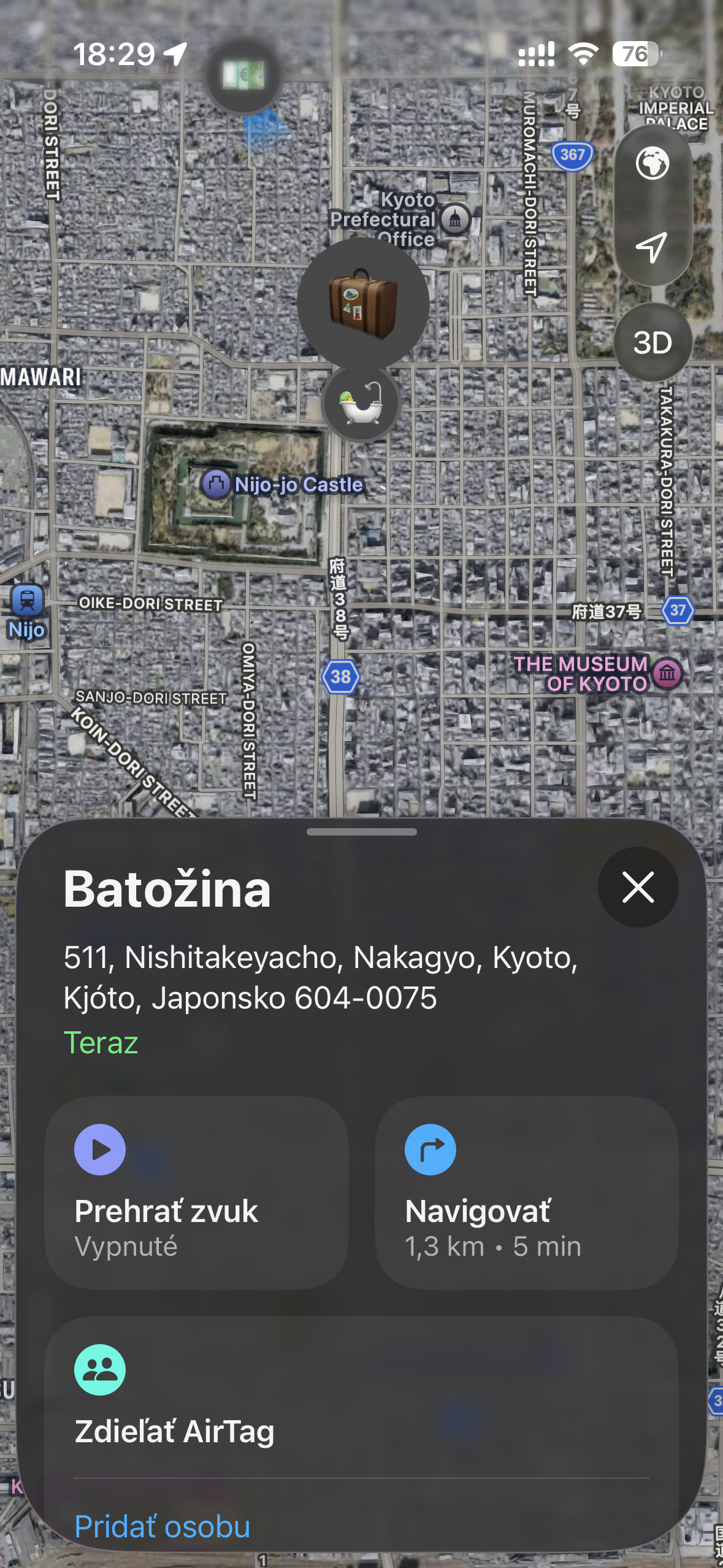
When tracking in a busy airport and in an urban environment, it proved that Xiaomi Tag communicates with Apple device networks completely trouble-free. We noticed situations where we opened the app and, while the AirTag showed a location from two hours ago, the Xiaomi Tag was displaying the latest position with impressive latency—just 24 minutes.
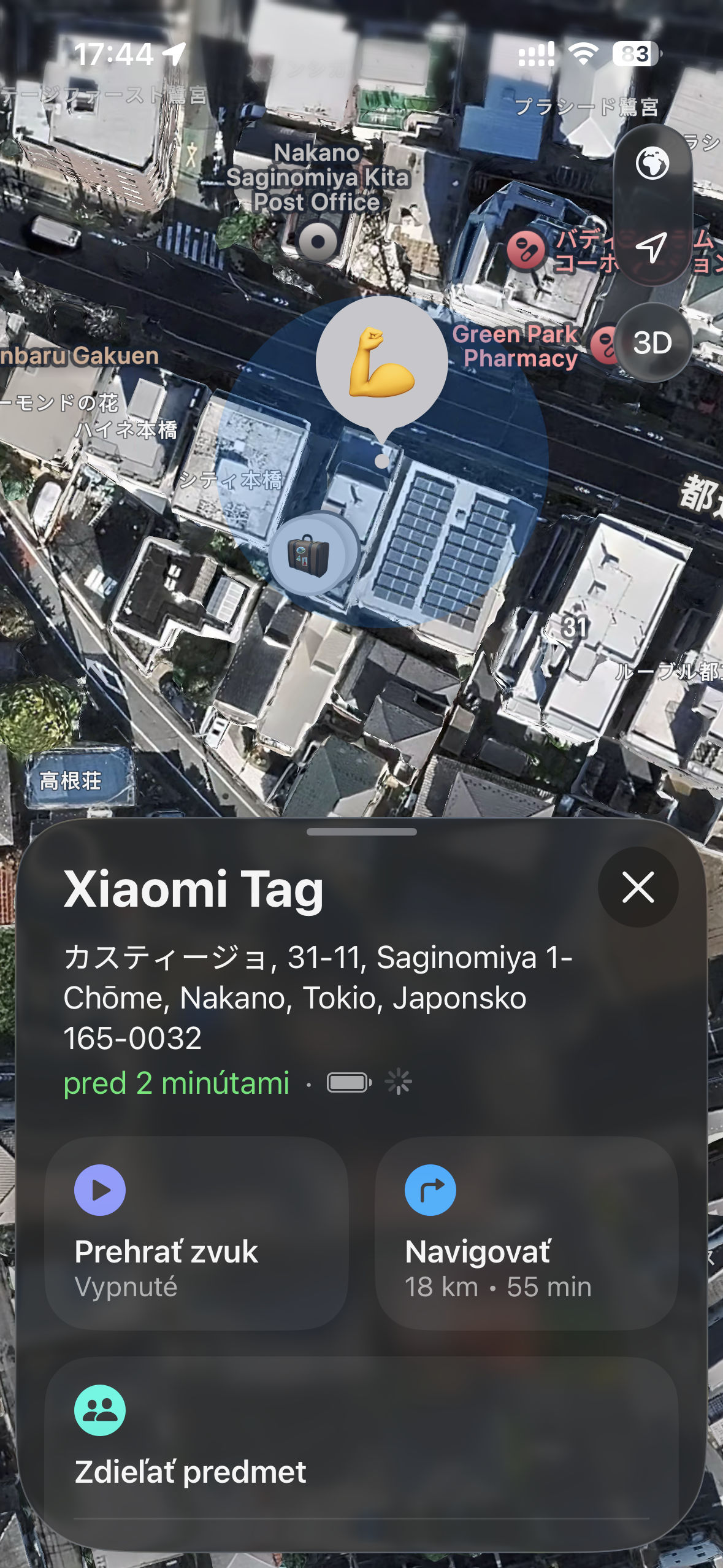
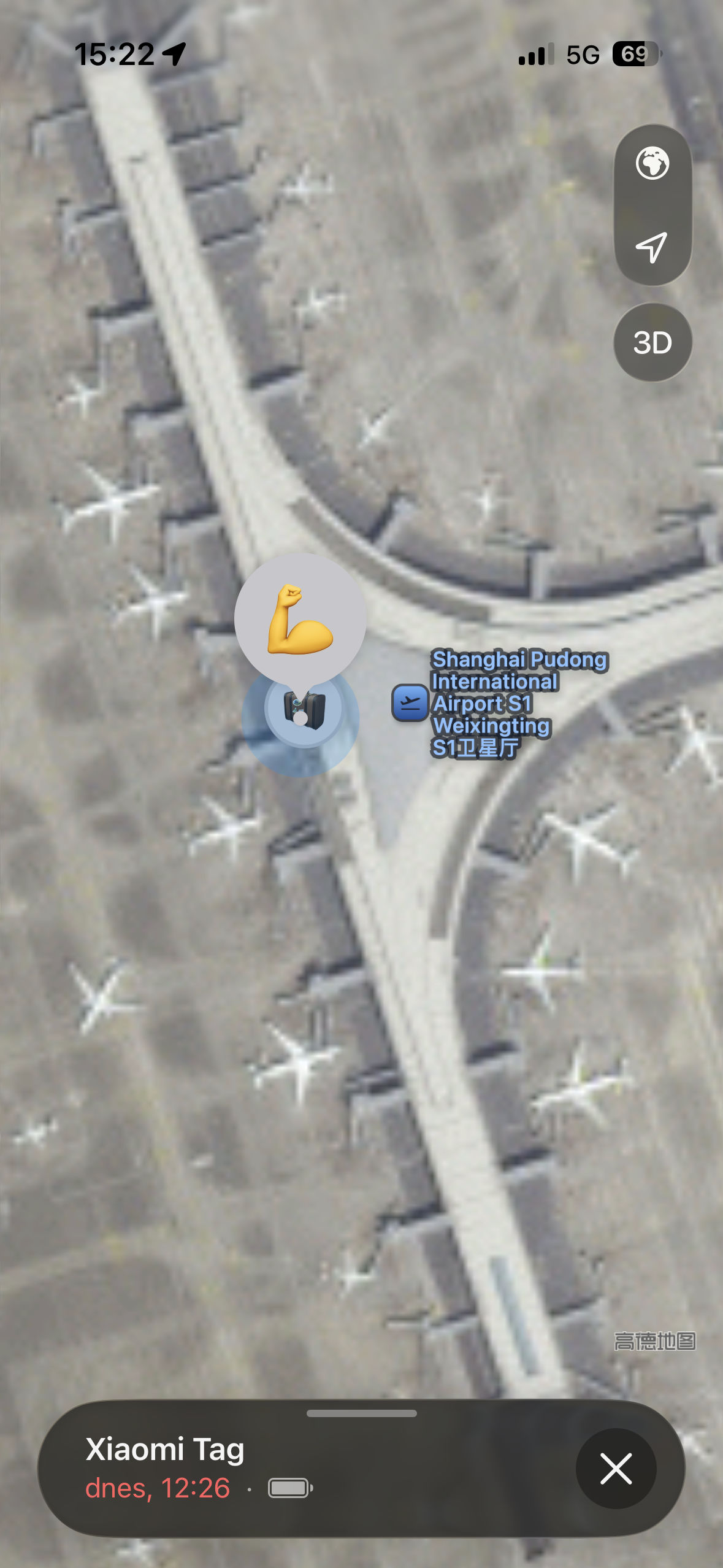
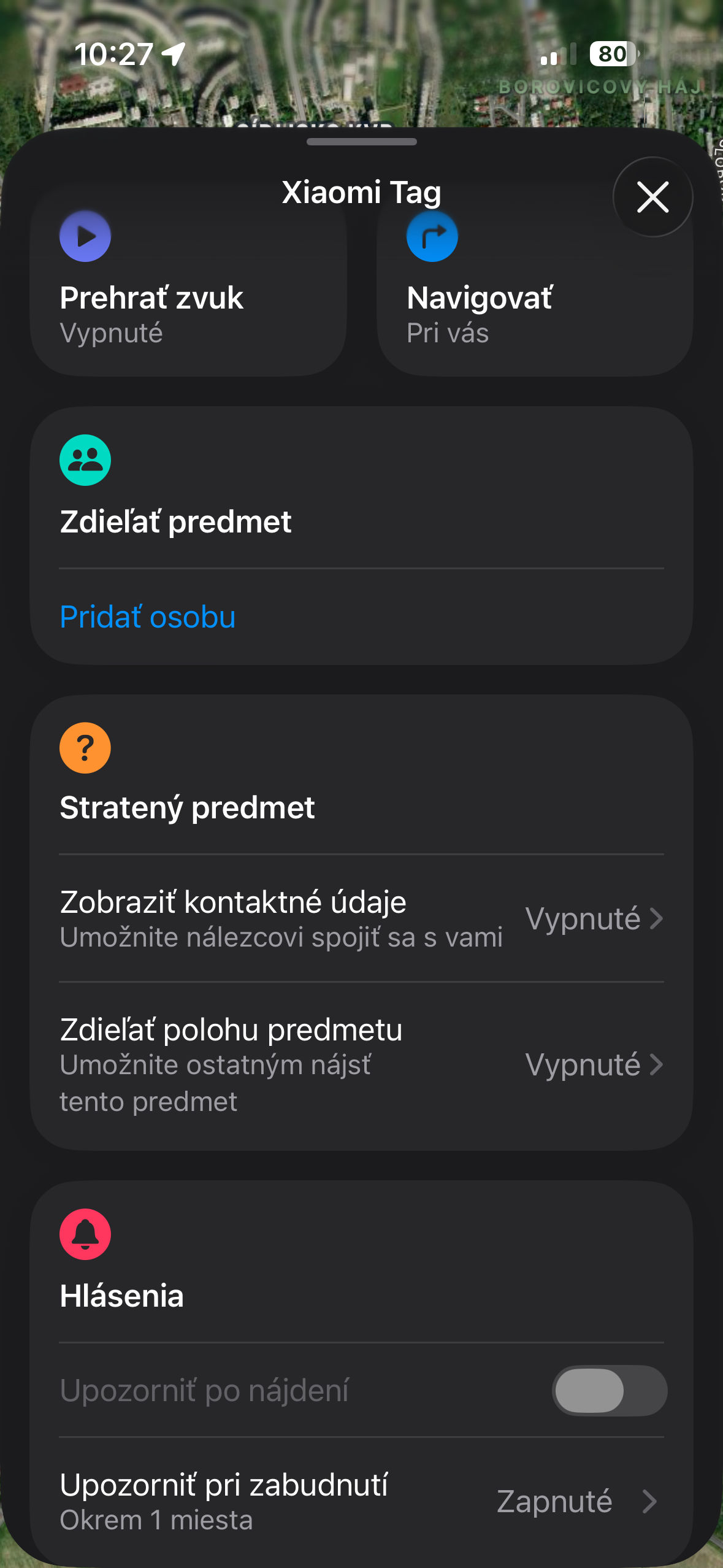
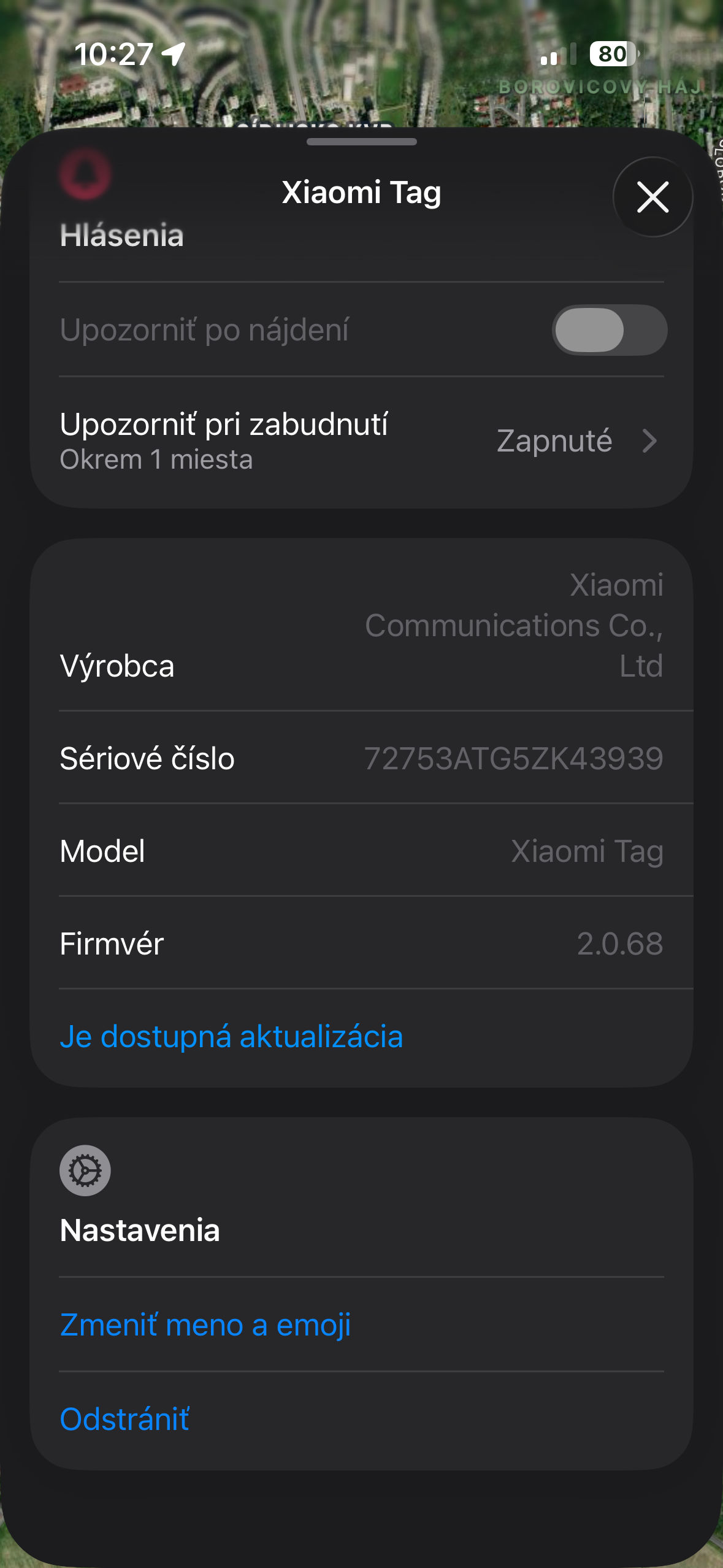
Even during longer trips, the update times for both devices differed by only a few minutes, and both tags could provide live location in real time. As for location accuracy on the map, Xiaomi Tag precisely mirrored the behavior of AirTag. In densely populated areas, the map system was able to render a very small accuracy circle, which is perfectly enough to find a lost item without any hassle. Since there’s no UWB chip, you won’t notice it at all when tracking your location remotely in everyday use—the differences blur, and Xiaomi Tag acts like a full-featured and extremely reliable member of the “Apple” ecosystem.
Xiaomi Tag on the Google Find My Device network
After the excellent results from the competition, we Xiaomi Tag reset and connected it to the Google Find My Device network. Setup happened almost instantly—the app (or the phone itself) detected the tracker immediately, and after a single click to connect, it was added to our Google account. In the app, we recommend choosing the option to search in all areas in your network settings, otherwise the system may limit updates to only highly frequented places. Further real-world testing revealed the typical location-network behavior from Google.
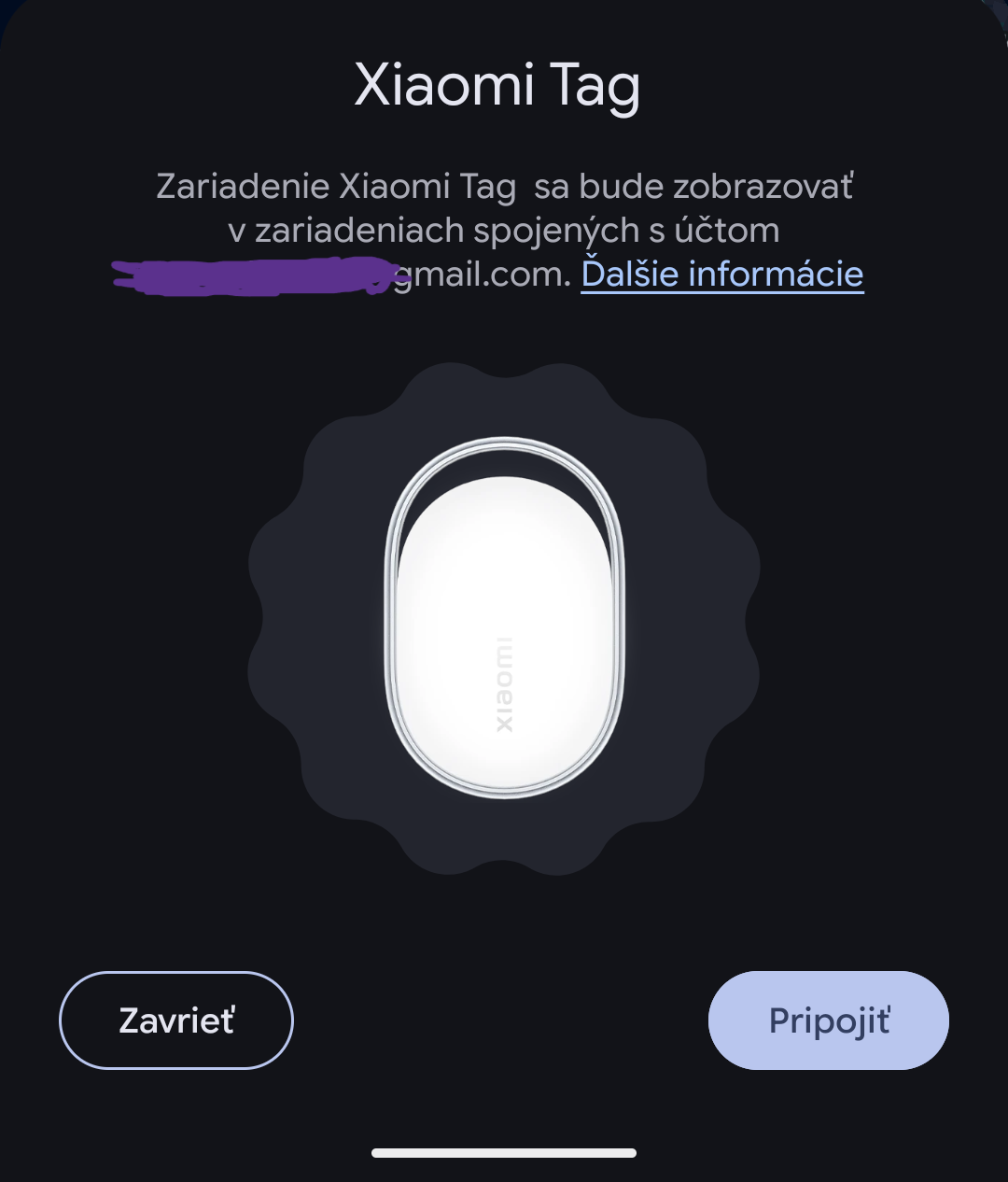
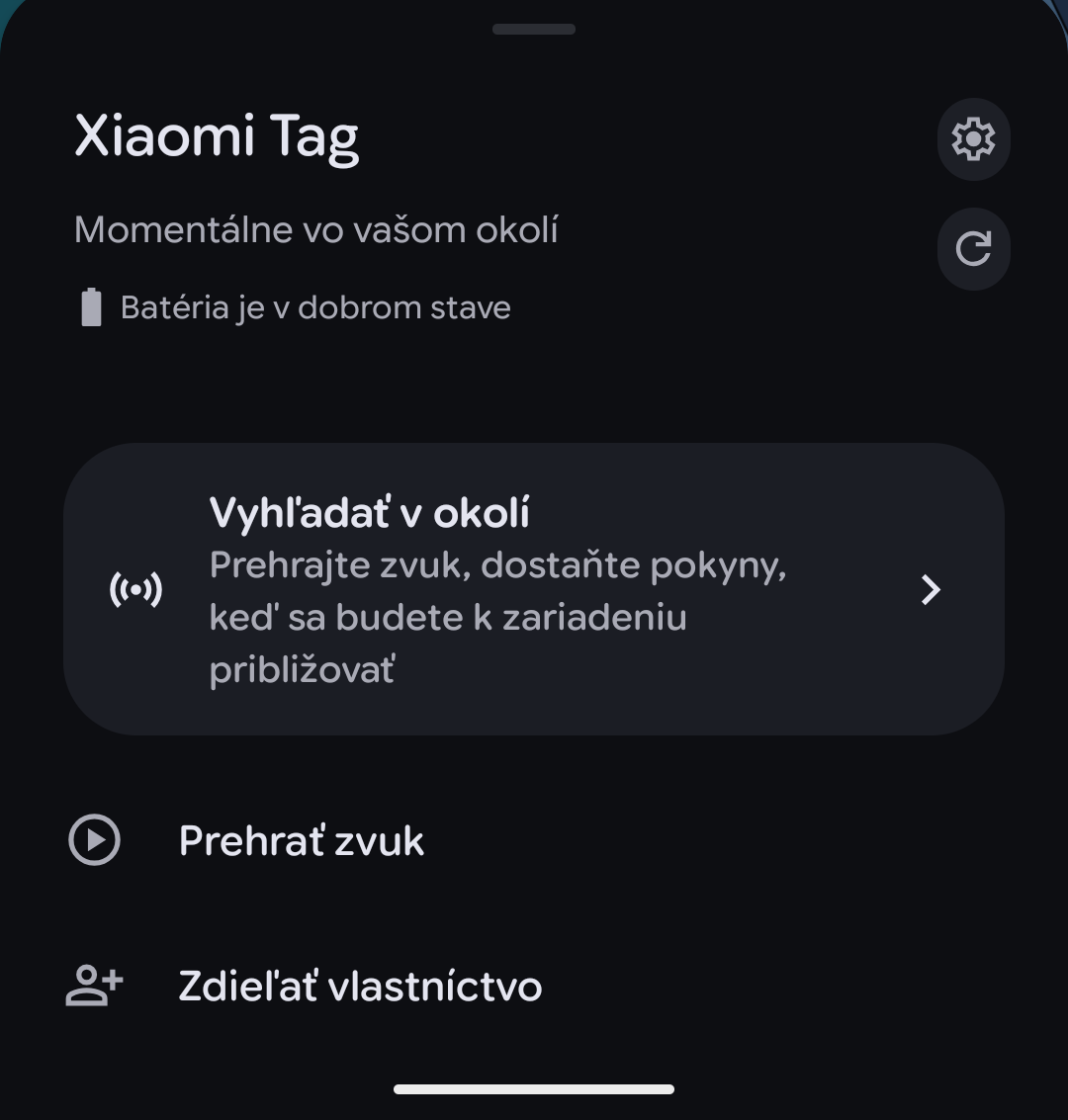
It has some very strong points, but it still suffers from the classic issues we also noticed during our tests of alternative tracking tags, such as MiLi MiTag Go. Sometimes, the detected location is simply completely off reality. It’ll only stress you out that you’ve lost an item somewhere, but in the next update you’ll find that everything is right where it should be. We assume this is a network error on Google’s side itself.
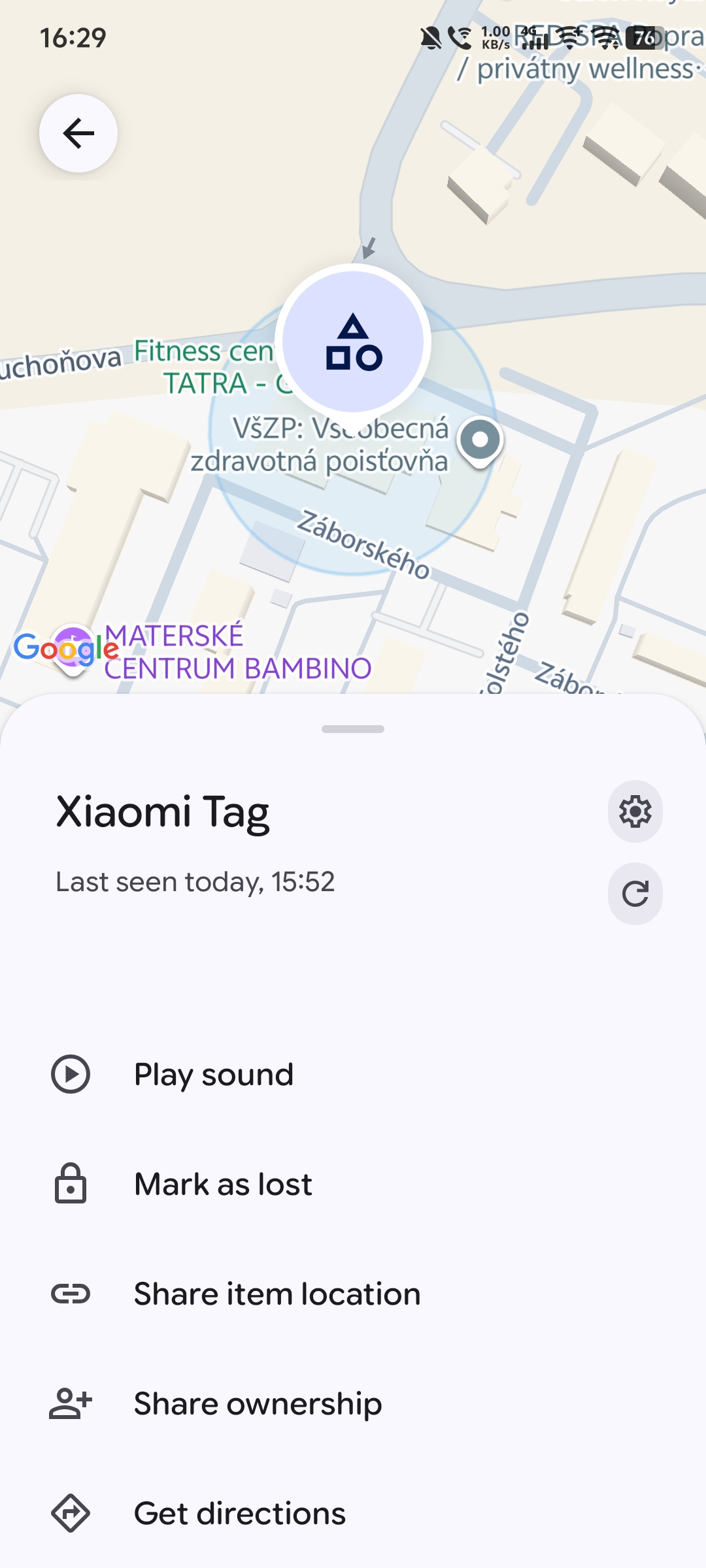

When the tag ended up in an area with enough people and devices in motion, updates were lightning fast. We recorded series of cases where the location refreshed almost immediately or within about 2 to 7 minutes. In moments like that, the device works brilliantly. However, we also ran into dead zones. During testing, we experienced a situation where the Xiaomi Tag location didn’t update for more than an hour and a half, even though we repeatedly checked the app.
The tag seemed to drop off the network for a while and then came back online only when it likely picked up a stronger signal from another nearby Android smartphone. This happened mainly while tracking the e-scooter tag’s location in an apartment building. Detecting the location inside a changing room of a busy fitness center was instant, with the last location being only a few minutes old. When moving from the gym while walking around the neighborhood, we could Xiaomi Tag track it literally in real time.
Accuracy in the Google network is also very dynamic. While one verification shows a small and precise circle above a specific building, just a few minutes later that inaccuracy area grows to cover several city streets. This phenomenon is closely tied to what exact location data a particular Android smartphone passing by had available when it sent the tag’s location to the network.
Summary tables of our measurements
Below, we share clear tables from our testing that map the times and responses in both ecosystems in detail. For the Apple network, we selected the most relevant simultaneous measurements for a direct comparison with AirTag, with location accuracy basically always high. For the Google network, we list tests with latency and estimated accuracy.
Xiaomi Tag in the Apple Find My network
| Date | Verification time | Xiaomi Tag – Latency | Apple AirTag – Latency |
|---|---|---|---|
| 11. 3. | 17:44 | before 3 min | before 3 min |
| 11. 3. | 18:06 | before 4 min | before 9 min |
| 13. 3. | 19:26 | before 4 h | before 19 min |
| 14. 3. | 09:05 | before 3 min | before 3 min |
| 14. 3. | 12:07 | before 24 min | before 2 h |
| 14. 3. | 12:58 | before 14 min | before 13 min |
| 14. 3. | 17:43 | before 9 min | before 9 min |
| 14. 3. | 18:29 | 0 min (Live) | 0 min (Live) |
| 17. 3. | 11:58 | before 8 min | before 9 min |
| 17. 3. | 14:59 | before 4 min | before 16 min |
| 19. 3. | 06:40 | before 13 min | before 10 min |
| 21. 3. | 15:20 | before 6 min | before 2 h |
Xiaomi Tag on the Google Find My Device network
| Date | Verification time | Latency | Estimated network accuracy |
|---|---|---|---|
| 22.3. | 10:28 | 0 min (Live) | Small area |
| 23.3. | 08:22 | 1 hours 29 min | Medium area |
| 23.3. | 14:14 | 16 min | Very large area |
| 23.3. | 14:42 | 44 min | Small area |
| 27.3. | 16:48 | 0 min (Live) | Large area |
| 27.3. | 20:37 | 6 min | Large area |
| 29.3. | 12:26 | 5 min | Medium area |
| 2.4. | 14:58 | 0 min (Live) | Small area |
| 3.4. | 14:33 | 19 min | Medium area |
| 3.4. | 14:42 | 28 min | Medium area |
| 3.4. | 15:03 | 49 min | Medium area |
| 3.4. | 15:18 | 1 hours 4 min | Medium area |
| 3.4. | 15:24 | 0 min (Live) | Large area |
| 3.4. | 15:34 | 7 min | Large area |
| 3.4. | 15:41 | 0 min (Live) | Medium area |
| 3.4. | 15:56 | 15 min | Large area |
| 3.4. | 16:29 | 37 min | Large area |
| 3.4. | 16:39 | 0 min (Live) | Medium area |
| 4.4. | 14:54 | 30 min | Huge area |
| 4.4. | 15:34 | 33 min | Medium area |
| 4.4. | 15:41 | 40 min | Medium area |
| 6.4. | 16:20 | 5 min | Medium area |
| 6.4. | 17:21 | 17 min | Large area |
Final verdict: Is it worth buying?
Xiaomi Tag is undoubtedly one of the best surprises of this year. Its ability to work across two of the biggest operating systems in the world makes it unbelievably versatile. If you’re an iPhone user, you get a fraction of the price of the AirTag while still getting a device that works just as reliably and quickly in the Apple Find My network.
For Android users, this is one of the best and most well-built choices for the new Google Find My Device network, even though you should keep in mind that Google's own network still needs time to optimize accuracy and eliminate occasional dropouts in dead zones.
Of course, the Apple network can also miss updates from time to time, and everything depends on the situation at that moment—when and what phone passes by the gadget. Overall, though, the Xiaomi Tag is an excellent product that easily backs up its price tag and gives your belongings reliable protection against getting lost.
To get more updates from the Xiaomi world, keep following our Xiaomi Planet website — join our Facebook group, where we build an active community and help each other out. Also subscribe to our Telegram, where we add the best offers and coupons from China every day.
Don’t miss the best coupons 📩
Subscribe and we’ll email you new coupons before they expire. We only send it once a month — no spam.