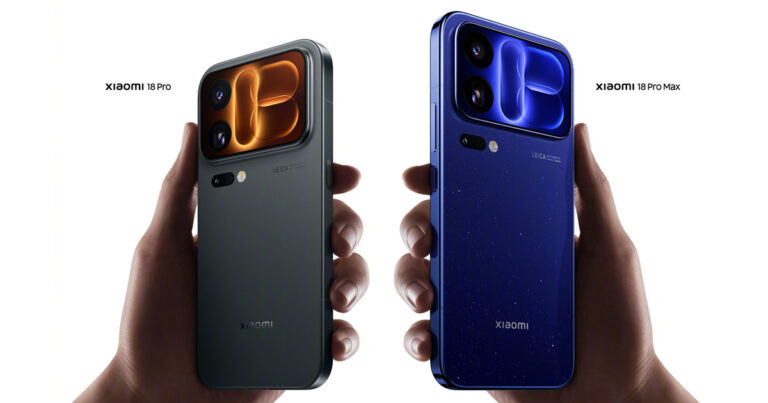

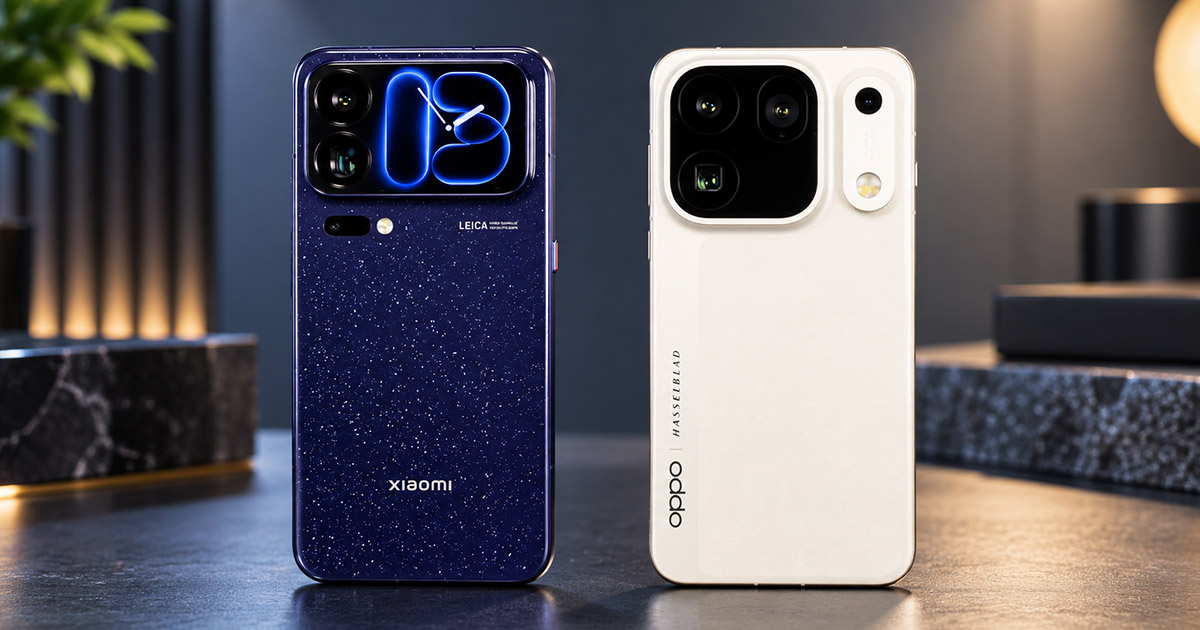
Xiaomi 18 Pro Max vs OPPO Find X10 Pro Max is the showdown that this year in China is getting the most attention. The phones launched in late September—if you get them delivered to Slovakia, they cost a bit over 1,000 euros, and they come with a 2nm chip as well as a battery over 8,000 mAh. Xiaomi bets on the Snapdragon 8 Elite Extreme Gen 6 and a rear display. OPPO, as the first phone in the world, has three 200 Mpx camera sensors.
There are plenty of specification comparisons online. What interested us was what the phones actually do when someone takes them out. That’s why we went through the first real-world tests from Chinese and international reviewers who had both units in hand at the same time. From the videos, we pulled specific shots; from Weibo and Sohu, we used full-resolution photos. You’ll find the parameter table at the very end—here are the results first.
Xiaomi 18 Pro Max vs OPPO Find X10 Pro Max: Real-World Test Results
| Xiaomi 18 Pro Max | OPPO Find X10 Pro Max | |
|---|---|---|
| All day outdoors / screen-on time | 7 h 58 min | 8 h 19 min |
| 45 minutes of gaming / battery drop | 12 % | 12 % (after 43 min) |
| PUBG 120 fps / average in 2. match | 118.5 fps | 101.5 fps |
| PUBG 120 fps / lowest value | 101 fps | 67 fps |
| Wuthering Waves 20 min / average | 57.8 fps | 53.4 fps |
| Wuthering Waves / max. temperature | 46.9 °C | 41.1 °C |
| War Thunder 20 min | around 100 fps / 2 game crashes | above 108 fps / without crashing |
| Geekbench 7 more cores at ~8000 points | 5.7 W | 4.1 W |
| Ultra-wide shot | 17 mm / narrower | 13 mm / wider and sharper |
| Color accuracy (Kingmi) | worst | best |
| Portraits | warmer and more contrasty | Lighter with natural skin tones |
| Video 4K 60 fps (Kingmi) | after a while, just 30 fps | held 60 fps |
| Night photos | lighter | darker and with more contrast |
Each line comes from a specific test that we also break down below with a link. Different reviewers used different tools, so compare the numbers only within the same line.
Where the data comes from and what to watch out for
The video from the Casual Reviews channel from September 30 has the most measured numbers. The author played War Thunder Mobile and Wuthering Waves on both phones for 20 minutes each at maximum detail, and recorded performance with the Scene app. The second source is the Kingmi Mobile channel with two videos: an all-day endurance and gaming test and a camera comparison including the vivo X500 Pro Max.
Kingmi Mobile repackages and dubs Chinese videos and doesn’t name the original author. In the third video from the same channel, which has 18 Pro Max in the title, we found a Xiaomi 18 Pro watermark on the photos. The smaller model has the same ultra-wide lens and a telephoto lens, but a different main sensor. Because of that, from this video we only use impressions about the ultra-wide shots. For all the shots below, we checked the watermark—it's really about the Pro Max.
Day camera: OPPO captures a wider and more accurate image
The biggest difference is in the ultra-wide shot. OPPO also uses a 200 Mpx sensor with a 13 mm focal length. Xiaomi uses a 50 Mpx sensor with a 17 mm focal length. You can see it right away in the shot in front of the shop: OPPO captures a little more buildings and pavement. The author of the second video had a Xiaomi 18 Pro, which uses the same ultra-wide lens. He described the lens on the OPPO as an absolute top-tier piece. According to him, there’s nothing to discuss here.
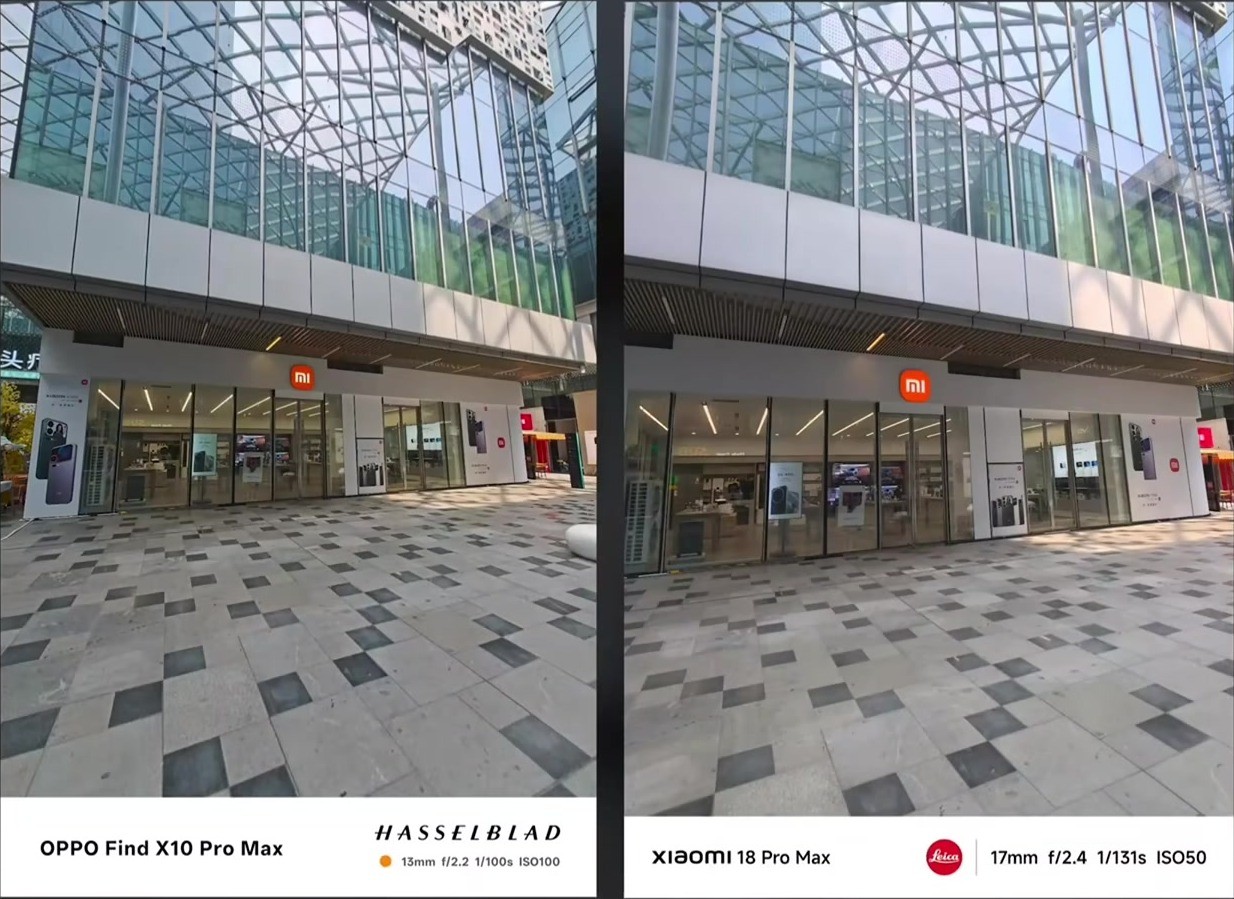
The differences in the main cameras are smaller. Both have a 200 Mpx sensor with a size of about 1/1,3 inches, and in terms of detail they’re very close. They differ mainly in colors. He used the Xiaomi-style Leica Authentic on the King, while the OPPO has the original Hasselblad camera, so the modes aim for the most accurate colors. Even so, according to him, Xiaomi delivered the least true-to-life colors of all three phones. The store’s yellow text was orange on Xiaomi, and at 3× zoom the Xiaomi logo looked more red than orange.
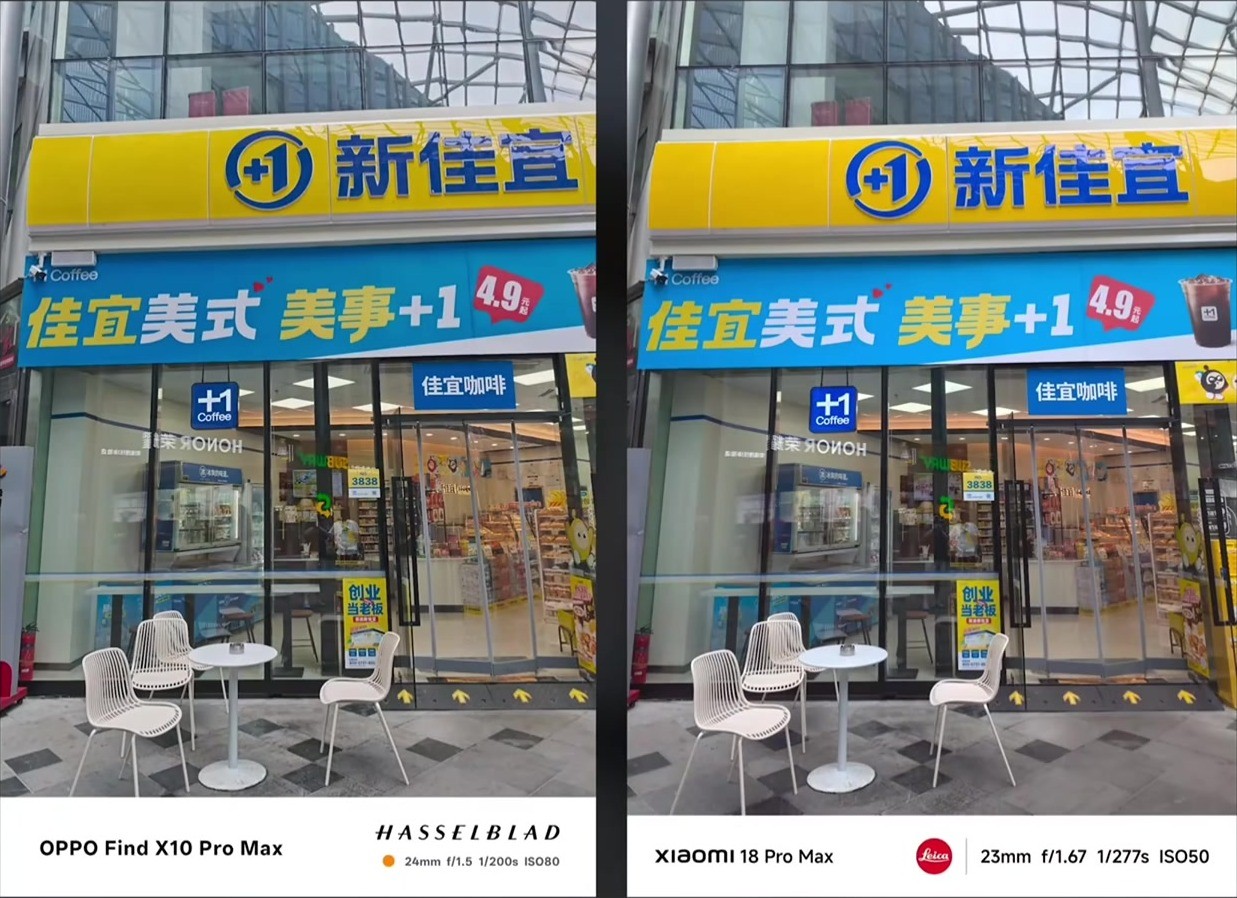
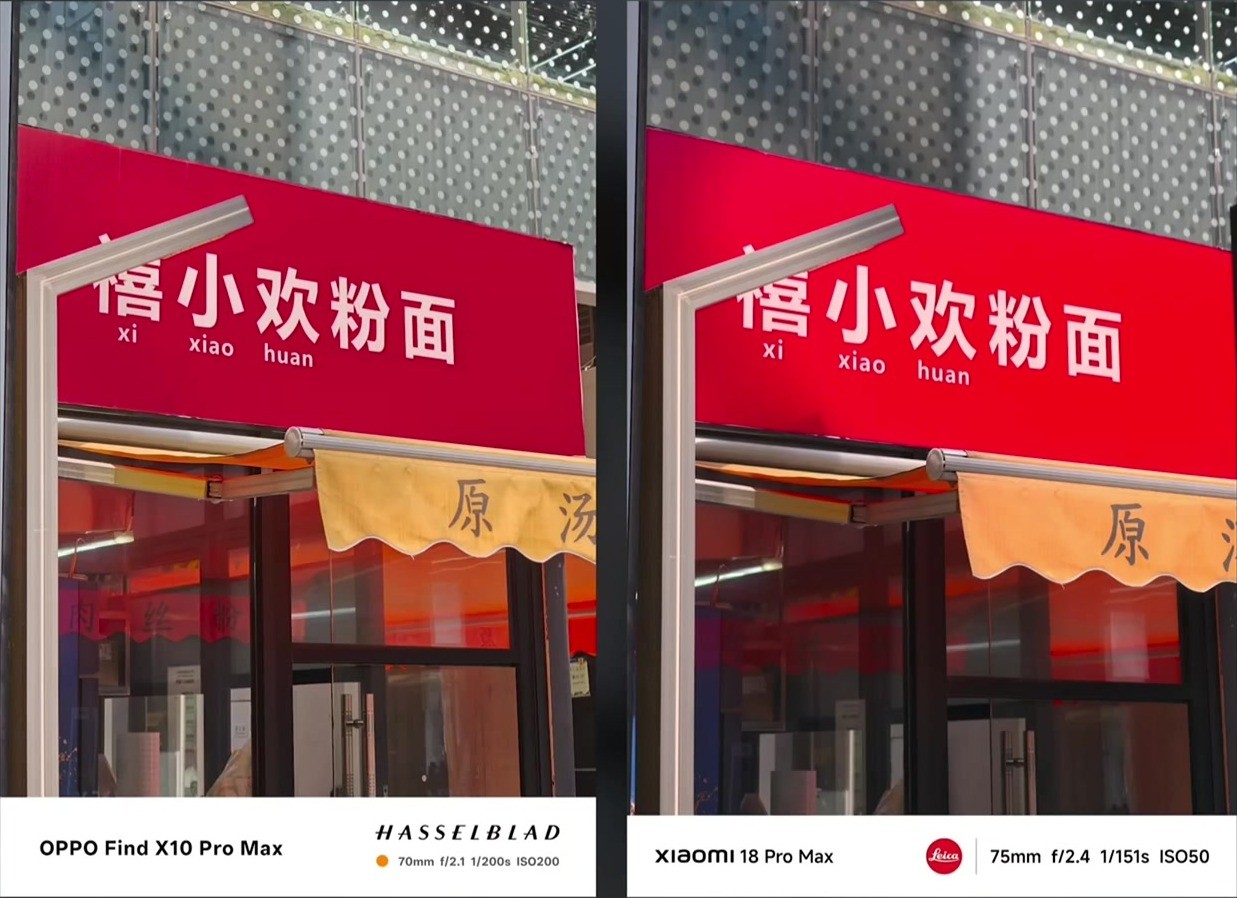
It turned out the same for the telephoto lens. OPPO has 70 mm and Xiaomi has 75 mm, both with a 200 Mpx sensor. The red restaurant text has a similar letterform on both, but Xiaomi renders it more clearly and more vividly. The yellow awning looks more orange on it. The shots are cut from the video, so don’t judge the subtle details. Still, colors and exposure are clearly visible. Winner in daylight: OPPO, mainly thanks to the ultra-wide lens.
Zoom and portraits: Two completely different styles
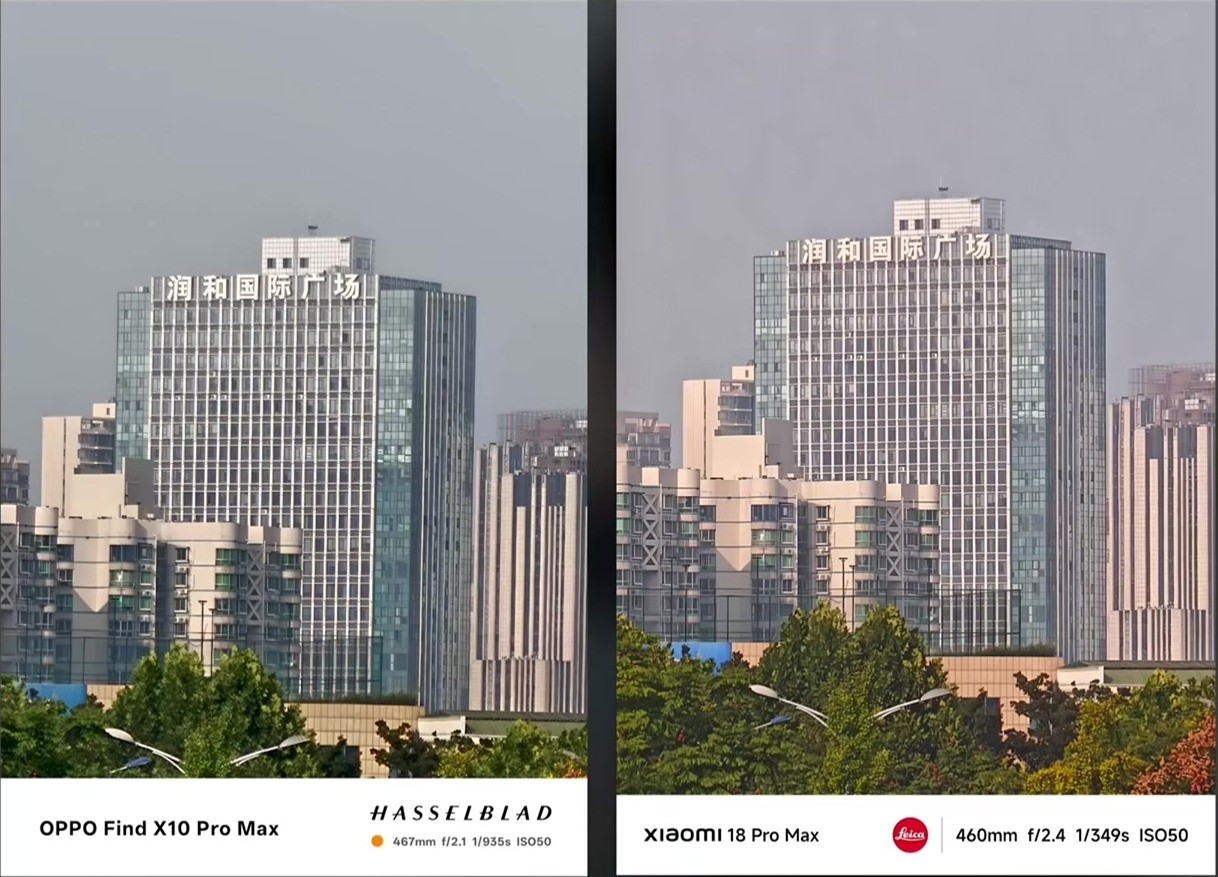
At 20× zoom—around 460 mm—Kingmi said OPPO had the better viewfinder. Xiaomi, at this zoom level, offered AI image enhancement. When he switched to 3,2× in the video, the Xiaomi image looked slightly blurry. With Xiaomi, filming while walking with zoom, he says, was the hardest.
We looked for portraits in full resolution. The best set was published on Weibo by the author of the account 一帆的小跟班, who shot the exact same model with three phones at 75 mm. He didn’t name a winner himself. On OPPO, he wrote that it captures the scene most faithfully, but that might not be something a normal person will like. In the photos, Xiaomi looks warmer, more contrasty, and with darker shadows. OPPO is brighter and flatter, with more neutral skin tones.
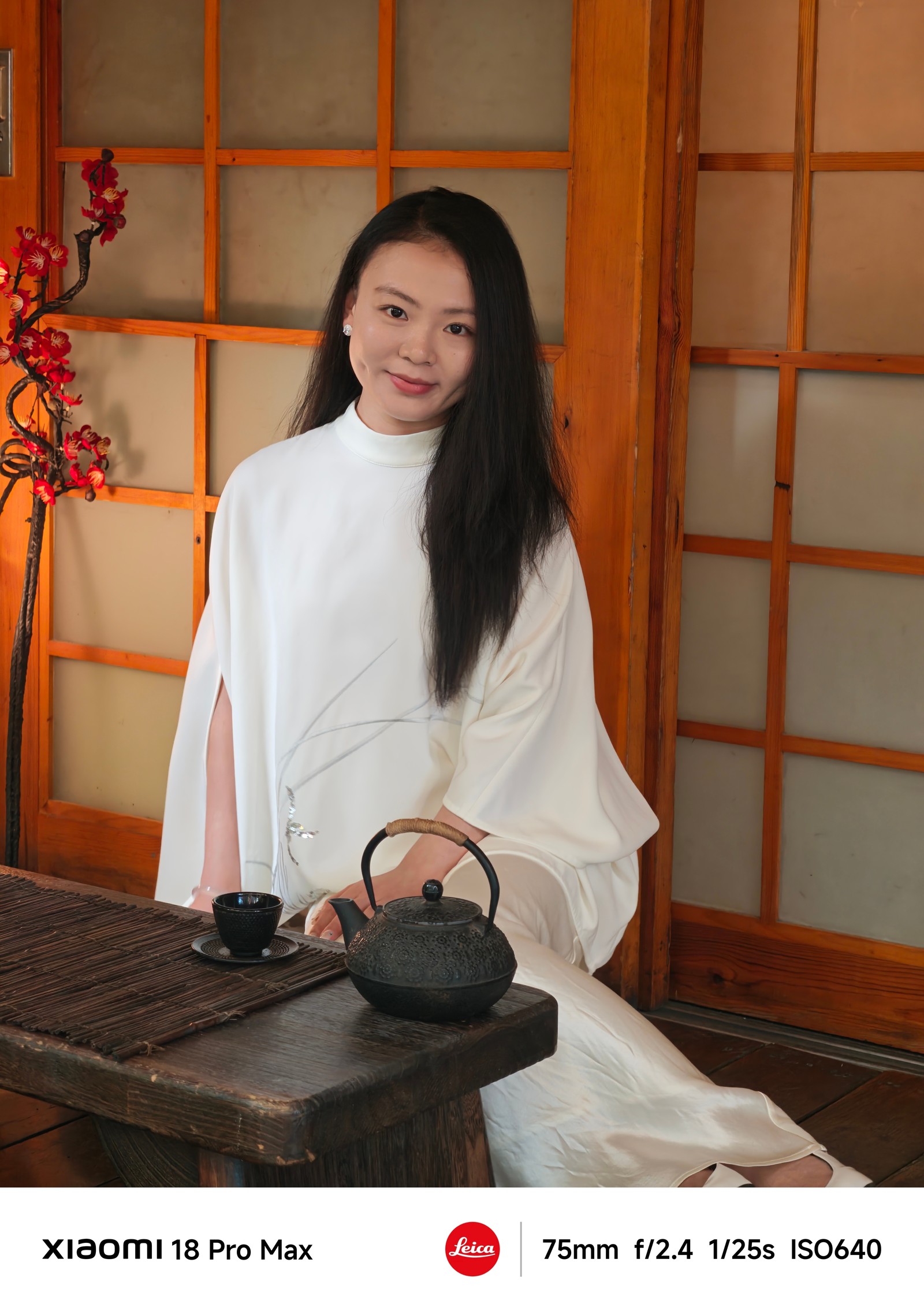

This also showed up in the portrait shots published by the Sohu portal. Xiaomi has a darker background and a more pronounced skin texture there, OPPO is brighter and softer. But watch out for the author. The photos are real, but we don’t trust his commentary. In recent weeks, the 游戏评馆 account has been praising almost exclusively OPPO’s camera. Kingmi saw the same: OPPO has the most noticeable blurred background and a pinker skin tone, while Xiaomi feels to him “too serious”.


Winner: depending on your taste. If you like a high-contrast look in a Leica style, you’ll be happier with Xiaomi. If you want a photo that looks like what you see with your own eyes, go for OPPO.
Night and video: Xiaomi is brighter, and the video didn’t turn out well for it
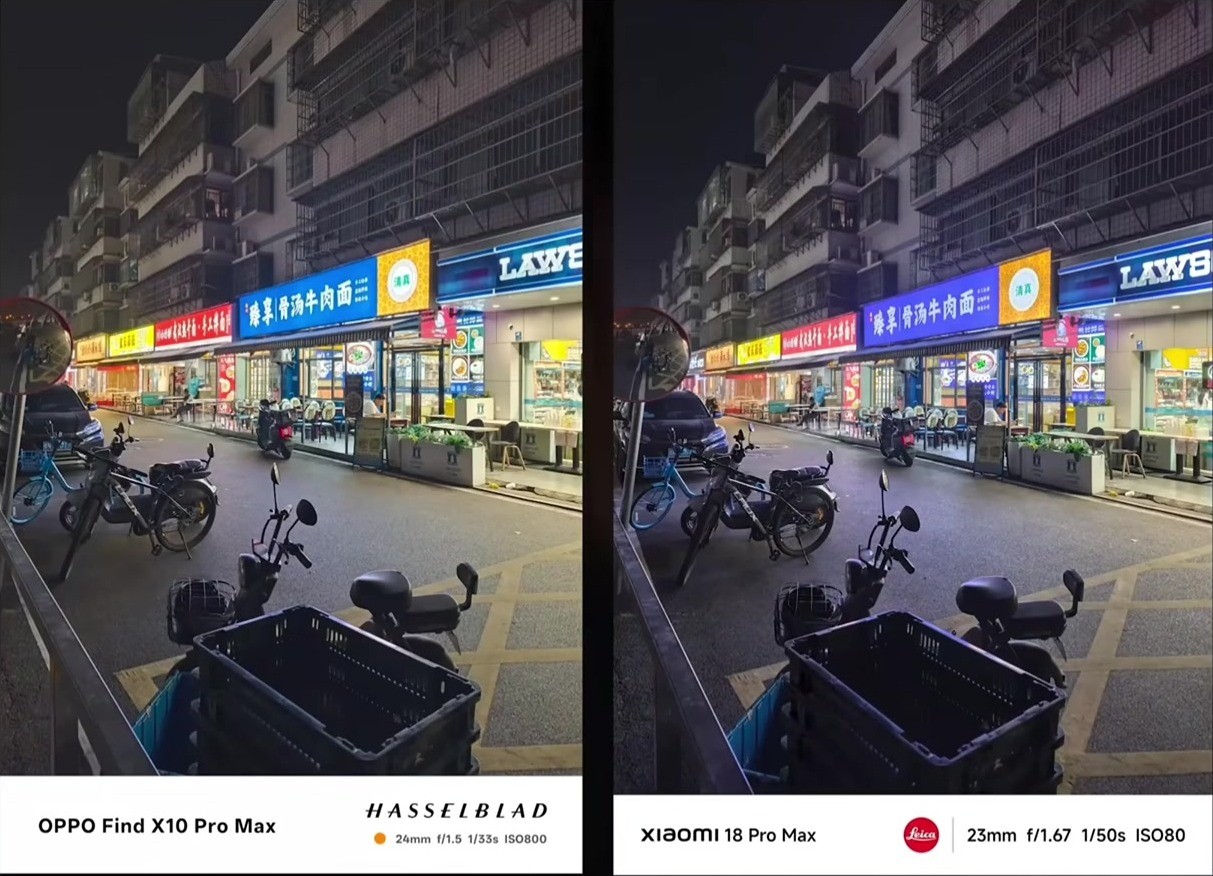
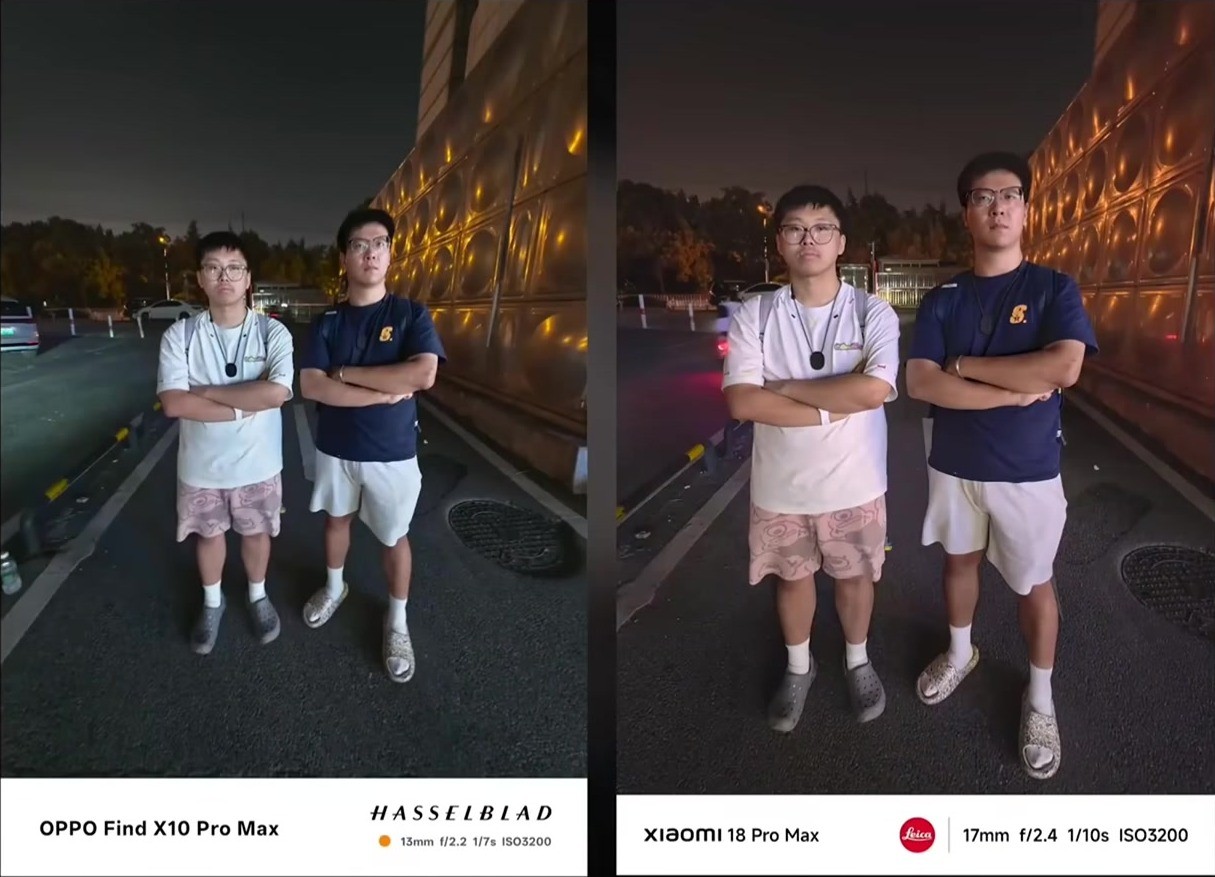
On the night street, Xiaomi produces a brighter shot with more visible shadows under the balconies. OPPO leaves the scene darker and with stronger contrast—closer to the real atmosphere. Neither one overexposed the bright billboards. Here, Xiaomi’s main sensor helps with LOFIC technology, which the smaller 18 Pro doesn’t have. More about it in a separate article.
With an ultra-wide shot at night, it looks similar. Both phones shot at ISO 3200, and Xiaomi also delivered a brighter image with better-visible faces. OPPO captured a wider scene, but darker. Fine details can’t be judged from the video footage, so we’ll wait for full photos to decide on night sharpness.
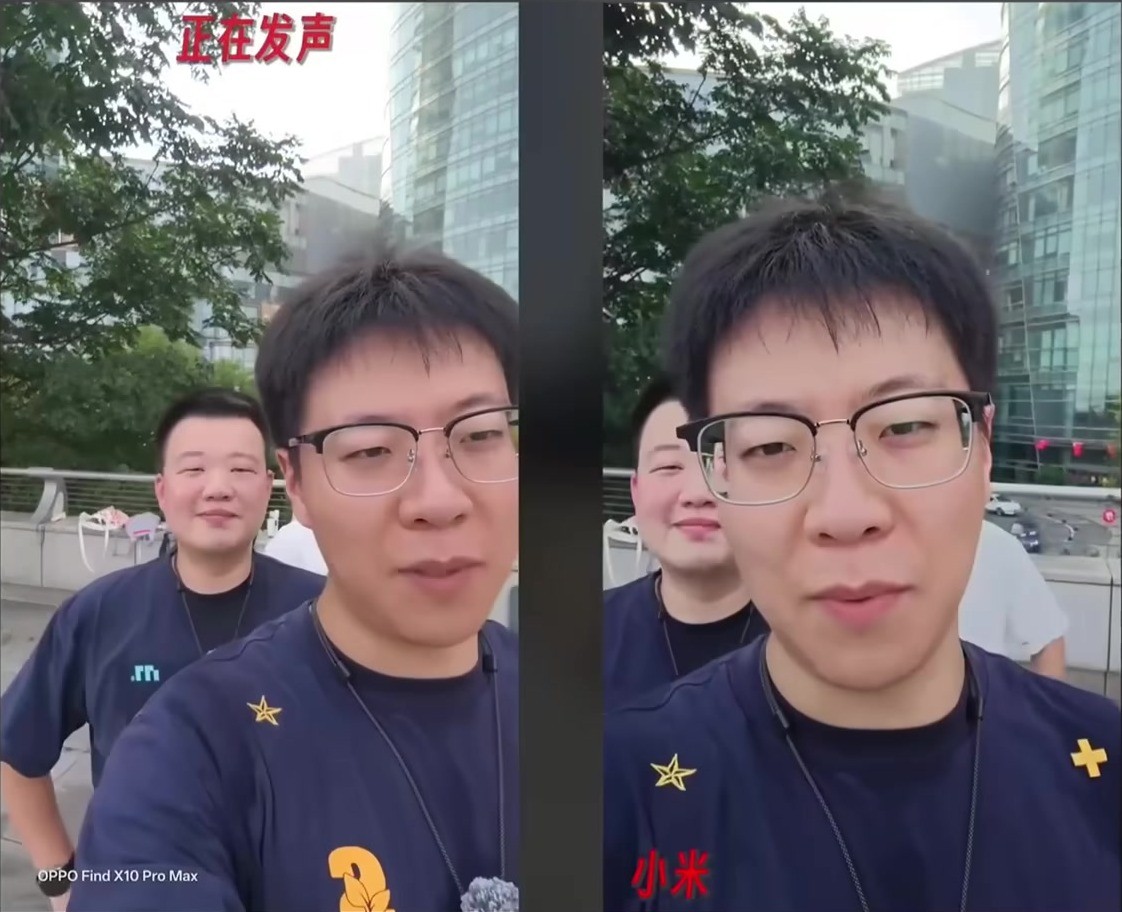
Xiaomi performed the worst in video. Reviewers recorded with all phones in 4K at 60 frames per second. After a few minutes, Xiaomi dropped to 30 fps—both while walking with the rear camera and in selfie video. During running, the image kept tearing, and they say the face on the front camera looked dark and washed out. OPPO held 60 fps and produced a pinker skin tone. OPPO also records in 8K with all three rear lenses. Night winner: Xiaomi. Video winner: OPPO.
You can watch the full camera comparison in the video:
Performance and games: The result depends on the game
Here the tests don’t match. In PUBG at 120 fps, Xiaomi clearly won. In the second, longer match, it held an average of 118,5 fps and never dropped below 101 fps. OPPO started to fluctuate as early as the fourth minute; by the end it fell to 60–70 fps and finished with an average of 101,5 fps. Xiaomi’s frame-rate fluctuation was 2,1 %, while OPPO’s was 14,4 %. In-game, you feel it as stuttering.
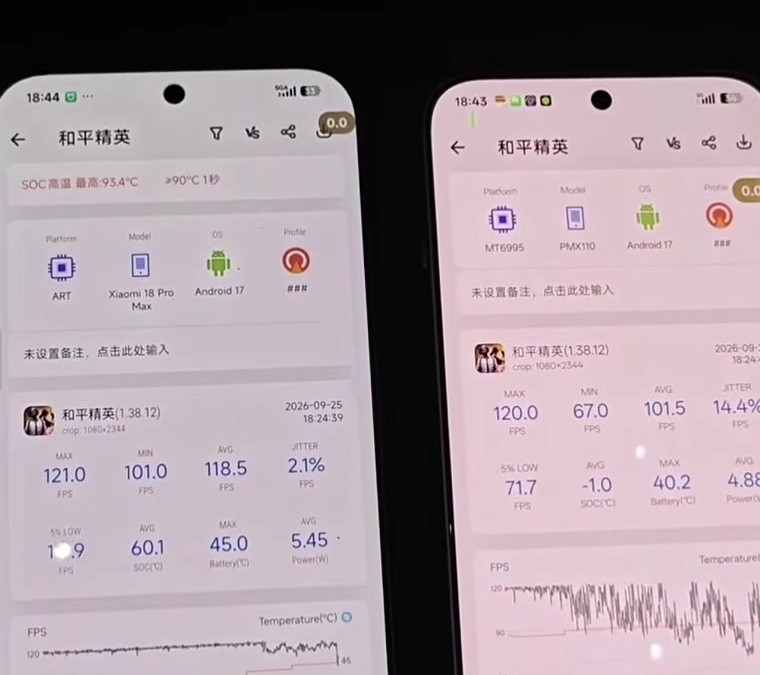
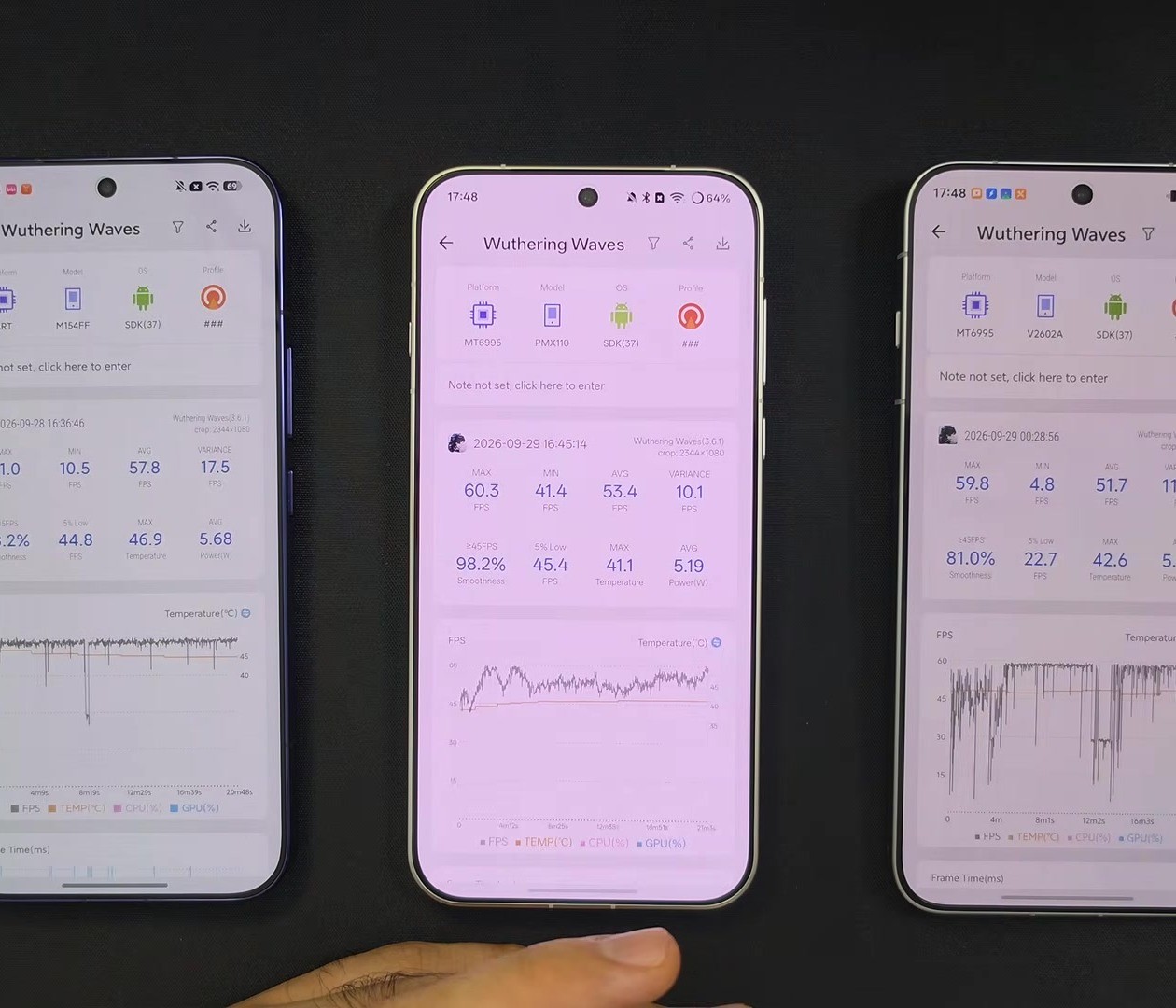
But Xiaomi also heated up more. The battery warmed to 45 °C, and the chip temperature briefly jumped to 93,4 °C. OPPO had the battery at 40,2 °C and lower power consumption—4,88 W versus 5,45 W. In Casual Reviews, it worked the other way around. In War Thunder, OPPO stayed at over 20 fps in-game for the full 108 minutes according to the in-game counter. Xiaomi averaged around 100 fps, warmed up to 45,2 °C, and the game dropped twice. In Wuthering Waves, Xiaomi had the higher average, 57,8 vs 53,4 fps. However, its lowest value dropped to 10,5 fps, and Xiaomi heated up to 46,9 °C. OPPO had the least 41,4 fps and only 41,1 °C.
This matches chip measurements published by Geekerwan, according to the portal SMZDM. With the same result of around 8,000 points in Geekbench 7, Dimensity 9600 Pro had power draw of about 4.1 W, while Snapdragon 8 Elite Extreme Gen 6 was about 5.7 W. In Casual Reviews, Snapdragon came out on top in single-core, while Dimensity did better in multi-core. According to both sources, Dimensity is more power-efficient. Winner: Xiaomi in games with optimization for Snapdragon, OPPO for stability and temperatures.
Battery: Lower capacity, yet longer battery life
Xiaomi has 8 500 mAh, OPPO 8 000 mAh. Kingmi spent the whole day outside with both phones: navigation, taking photos, 5G tests. A half-hour video call and games too. OPPO lasted 8 hours and 19 minutes of on-screen time, Xiaomi 7 hours and 58 minutes. In the same test, the iPhone 18 Pro Max finished after 6 hours and 55 minutes.
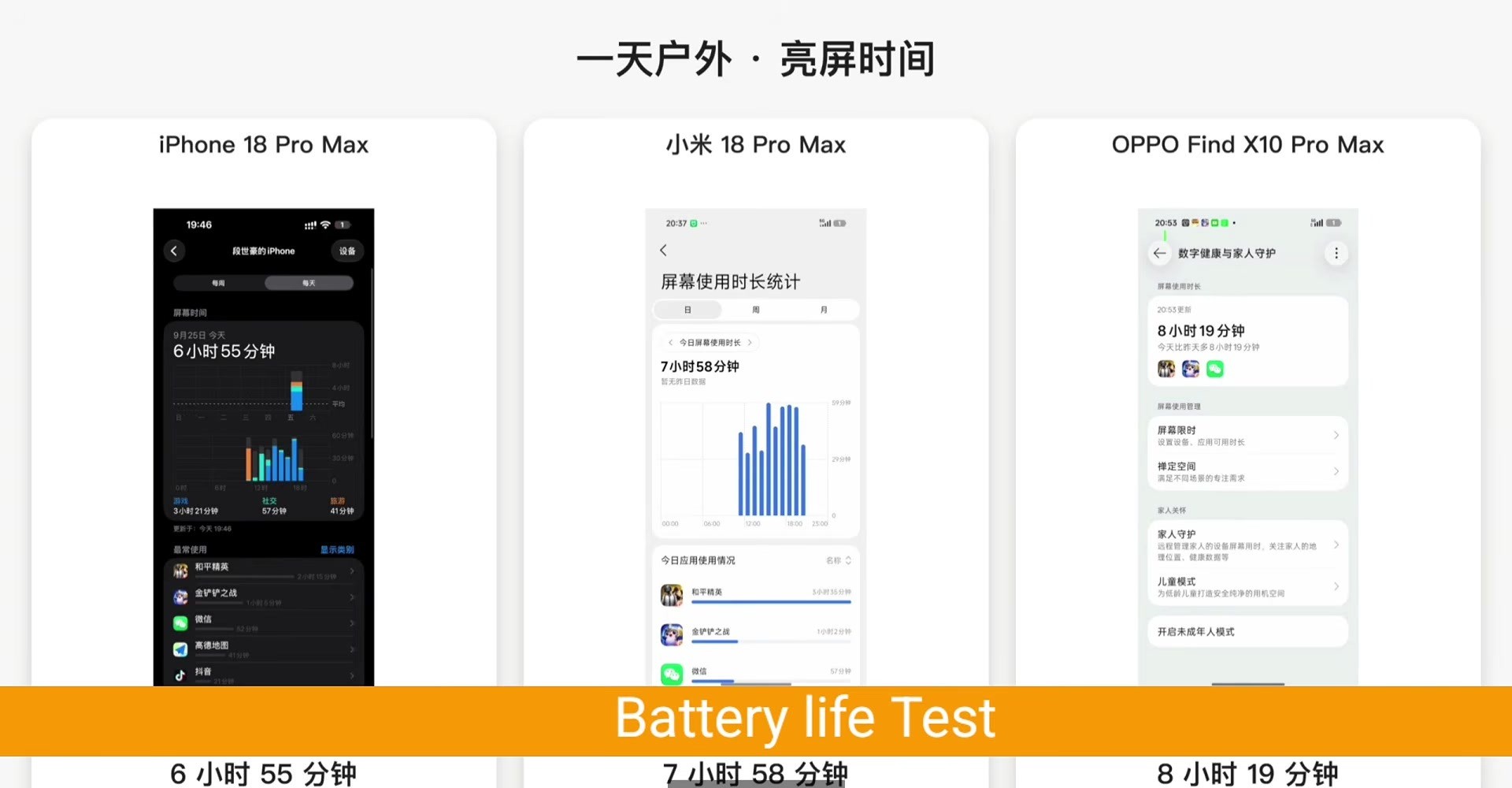
A 21-minute difference isn’t huge, and in other tests the phones basically tied. After a half-hour video call, both were at 85%. In the Casual Reviews test, both lost 12% battery in about 45 minutes of gaming. Xiaomi charges faster too—100W versus 80W. Wireless charging is 50W on both. Winner: a narrow win for OPPO, mainly thanks to the more power-efficient chip.
Display: Xiaomi looks darker
On paper, Xiaomi has 4 000 nits and OPPO has 2 000 nits. But those numbers can’t really be compared: Xiaomi reports peak brightness for a small area, while OPPO’s brightness is across the whole area. In both Kingmi tests, reviewers repeatedly said that with full brightness and a white background, the Xiaomi display looks visibly darker than the competition. That’s why outdoor photos were worse—you couldn’t see what you had in the frame as well. After longer gaming, though, it flipped: OPPO throttled—its brightness dropped—while Xiaomi looked brighter.
The reason could be the new privacy protection built directly into the panel. Half of the Xiaomi 18 Pro Max pixels only light up forward, so when you view it from an angle, the image darkens. We covered this in detail in our article about the Xiaomi 18 Pro display. OPPO, on the other hand, has a higher 144 Hz refresh rate in selected games. Xiaomi balances that with a second 2.9-inch display on the back, which OPPO doesn’t have. Winner: OPPO for readability, Xiaomi for the rear display.
Price and availability
Both phones are currently only available in Chinese versions, but you can also buy them with delivery to Slovakia. On Gshopper, Xiaomi 18 Pro Max (12 + 256 GB) costs under €1,100 and OPPO Find X10 Pro Max under €1,050. Customs duty and VAT are already included. OPPO is cheaper across all memory versions—the difference is €50 to €125 depending on the configuration. Prices apply when paying via bank transfer; with a card you’ll pay about 4.5% more. The Chinese versions have limitations, mainly the lack of Slovak. You can find what works on a Chinese Xiaomi in our comparison of Xiaomi 18 Pro and 18 Pro Max.
Both will come to Europe, but with a smaller battery. OPPO has its European premiere planned for October 21. According to a leak, the Find X10 Pro Max will cost €1,799 for the 12 + 512 GB version and will get a 7,150 mAh battery. The Chinese OPPO version from Gshopper is therefore more than €600 cheaper than the European one—even with the bigger battery. We wrote about it on China Planet. The global Xiaomi 18 Pro Max is confirmed, and according to the firmware it will have a 7,050 mAh battery. Xiaomi hasn’t announced the price or date yet. Details are in our article about global batteries.
Final verdict: Which one should you choose?
OPPO Find X10 Pro Max is for you if you shoot photos. It has a noticeably better ultra-wide lens, more accurate colors, and more reliable video. In tests, it heated up less, lasted a few minutes longer, and ran more consistently in two out of three games. It can record 8K using all three rear cameras.
Xiaomi 18 Pro Max is for you if you play a lot and want a fast phone. In PUBG it held 120 fps where OPPO dropped below 70. It charges faster, has a rear display, and night photos are brighter. If you like high-contrast photos in the Leica style, you’ll like them more than OPPO’s more neutral look. Just keep in mind higher temperatures during gaming and a darker display in sunlight.
Which of the two would you choose?
If we picked just based on the first tests today, we’d go for OPPO. Xiaomi won in PUBG, charging, and night photos. OPPO wins on the ultra-wide shot, colors, video, color temperatures, and battery life. However, these tests are still from brand-new units, and Xiaomi’s firmware typically gets fine-tuned during the first few weeks. With Xiaomi 17 Pro Max, the battery optimization arrived a month after launch. When we get Geekerwan and DXOMARK measurements, we’ll update the article.
Xiaomi 18 Pro Max vs OPPO Find X10 Pro Max: Detailed spec comparison
| Xiaomi 18 Pro Max | OPPO Find X10 Pro Max | |
|---|---|---|
| Chip | Snapdragon 8 Elite Extreme Gen 6 / 2 nm | Dimensity 9600 Pro / 2 nm |
| Display | 6.9 inches / 2624 × 1208 / up to 120 Hz | 6.78 inches / 2772 × 1272 / up to 120 Hz (144 Hz in games) |
| Brightness by the manufacturer | 4000 nits / peak | 2000 nits / full screen |
| Back display | 2.9 inches / 976 × 596 | - |
| Main camera | 200 Mpx 1/1.28 inches / f/1.67 / 23 mm / LOFIC | 200 Mpx 1/1.3 inches / f/1.5 / 24 mm |
| Ultra-wide angle | 50 MPx / f/2.4 / 102° | 200 Mpx 1/1.56 inches / f/2.2 / 124° |
| Telephoto | 200 Mpx 1/1.56 inches / f/2.4 / 75 mm | 200 Mpx 1/1.56 inches / f/2.1 / 70 mm |
| Front camera | 50 MP | 50 MP / f/2.0 |
| 8K video | yes / 30 fps | on all three / 30 fps |
| Battery (Chinese version) | 8500 mAh | 8000 mAh |
| Battery (global version) | 7050 mAh (depending on firmware) | 7150 mAh (depending on a leak) |
| Charging | 100 W / wireless 50 W | 80 W / wireless 50 W |
| Durability | IP66 / IP68 / IP69 | IP66 / IP68 / IP69 |
| Dimensions | 163.39 × 77.6 × 8.39 mm | 161.32 × 76.57 × 8.4 mm |
| Weight | 235 to 240 g | 233 to 235 g |
| System | HyperOS 4 / Android 17 | ColorOS 17 / Android 17 |
| Price with delivery to Slovakia from | from 1 100 € | from 1 050 € |
To get more updates from the world of Xiaomi, keep following our Xiaomi Planet website. Join our Facebook group, where we build an active community and help each other out. Subscribe to our Telegram as well, where we add the best deals and coupons from China every day.
Don’t miss the best coupons 📩
Subscribe and we’ll email you new coupons before they expire. We only send it once a month — no spam.