
It was April 6, 2010, when seven talented men led by Lei Jun agreed to found the company and the Xiaomi brand. Today, it’s a technology conglomerate with more than 15,000 employees and the world’s fourth-largest smartphone manufacturer.
But let’s go step by step and get to know the brand’s most important milestones behind its progress and success.
6.4.2010
Founder Lei Jun and co-founders:
Lin Bin (Vice President of the Google China Engineering Institute),
Zhou Guangping (Chief Executive Officer of Motorola’s research and development center in Beijing),
Liu De (Head of Industrial Design Department at the Beijing University of Technology),
Li Wanqiang (General Manager of Kingsoft Dictionary),
Wong Kong-Kat (Chief Development Manager) and
Hong Feng (Senior Product Manager for Google China)
they founded in Chinese Beijing the company and brand Xiaomi.

The eighth man in the photo is Chuan Wang (bottom right in a black T-shirt), who joined the company only in 2012, but is considered a co-founder.
From the very beginning, the project requires a larger investment, and funding is helped by companies like Temasek Holdings, IDG Capital, Qiming Venture Partners, and Qualcomm.
16.8.2010
Xiaomi officially launches its very first product, the first version of the MIUI software layer – MI User Interface (MI User Interface / pronunciation: “Mí-jú-áj” ). The first version of the MIUI ROM was based on Android 2.2.x Froyo.
The software was originally developed only in Chinese, together with the Chinese startup Xiaomi Tech.

Both in look and controls, MIUI resembles iOS, and Xiaomi added several of its own apps to the basic framework, including Notes, Backups, Music, and Gallery.
Soon, communities of independent developers and fans started forming—porting software translations into unofficial versions. Some communities are still active today, and one of them is the Slovak and Czech community on miuios.cz, without which the Slovak or Czech language on Xiaomi smartphones might not have existed at all.
16.7.2011
The market welcomes the first smartphone Xiaomi Mi 1. It’s powered by a dual-core 1.5 GHz processor Qualcomm Snapdragon S3 with an Adreno 220 graphics chip and 1 GB RAM. The capacitive TFT touchscreen has a 4-inch display and a resolution of 480 x 854 pixels.

The rear camera has a resolution of 8 MPx, and the front one of 2 MPx. The battery capacity is 1930 mAh, and the device also includes a microUSB port and a 3,5 mm audio jack. Xiaomi Mi 1 runs on Android 2.3 GingerBread with the MIUI 2.3 interface overlay.
https://www.youtube.com/watch?v=FjkNaqFS0gw&feature=youtu.be
The launch price was 1999 yuan, which is 256 € / 6 514 CZK after conversion. Within the first 34 hours, the brand gets more than 300,000 pre-orders and immediately with its very first smartphone they caused a huge frenzy. Later, the improved Xiaomi Mi 1S model with a better processor also arrived.
August / August 2012
Xiaomi officially introduces the new smartphone Xiaomi Mi 2. It now features a quad-core 1.5 GHz Snapdragon S4 Pro processor, 2 GB RAM, and 16 or 32 GB storage. The display has grown to 4.3 inches and offers a resolution of 720 x 1280 pixels.

The smartphone comes with MIUI 4, Android 4.1 JellyBean, and it started selling for 1999 yuan (256 € / 6 514 CZK). In a year, more than 10 million units of Xiaomi Mi 2 were sold.


After that came the Mi 2S models with a better 13 MPx rear camera, and a lighter Mi 2A version with a 4.5-inch display and 1 GB RAM. We still have the Mi 2S model in our “mini” Xiaomi museum, and it’s fully functional.
July / July 2013: New Redmi series
A new Redmi smartphone series is coming and with it, the first Redmi 1 phone, which was launched in China also under the name Hongmi. This is a more affordable smartphone made at a Xiaomi factory, intended for a wide audience of users both inside and outside China.

It delivers smartphone features at the price of a regular phone without smart functions. It has a 4,7-inch display with a resolution of 720 x 1280 pixels and Gorilla Glass 2 protection, a quad-core 1,5 GHz Mediatek processor, 1GB of RAM, and 4 GB of storage. The rear camera had a resolution of 8 MPx and the battery capacity was 2 000 mAh.


The operating system was Android 4.2 Jelly Bean with the MIUI 5 custom layer. It was sold exclusively through electronic sales to keep the price low. It hovered around €100 / 2 544 CZK.
September / September 2013: First smart TV
Lei Jun – CEO of Xiaomi—announced the company’s plans to produce smart TVs. Xiaomi’s production was handed over to Sony Wistron Corporation in Taiwan, which was to supply 47-inch 3D TVs with the Android OS.

The company is also launching a new smartphone called Xiaomi Mi 3. It comes with a 5-inch display with a resolution of 1080 x 1920 pixels, a 2.3 GHz quad-core Snapdragon 800 processor, 2 GB of RAM, and storage options of 16 and 64 GB.
The rear camera from Sony has a 13 MPx resolution, and the smartphone also supports WCDMA 3G networks. The battery capacity is 3050 mAh. In the first three minutes after launch, more than 200,000 units of the Mi 3 were sold.

This month was a turning point for Xiaomi in many respects, as the company also announced the opening of its first service center in Beijing. By October 2013, Xiaomi was the fifth most used smartphone brand in China. In 2013, the company sold a total of 18.7 million smartphone units.
2014: The first Redmi Note, Mi Band, and Mi 4
In the beginning of the year, Xiaomi announced the expansion to foreign markets. Singapore becomes its first international hub through which new products and activities in the region will be rolled out.
After Singapore came Malaysia, the Philippines, and India. This year, the company also plans to expand its operations to Indonesia, Thailand, Russia, Turkey, Brazil, and Mexico.
On February 21, 2014, the brand officially enters the market in Singapore with its first smartphone. It was the Xiaomi Mi 3, and the entire batch sold out within two minutes after the sales launch.
However, not all of Xiaomi’s steps were successful. Managers definitely won’t be happy to remember July / August 2014, when they shut down the Xiaomi Store in Australia and ended the official sales of products on this continent. The real reasons are still only a matter of speculation.
On March 17, 2014, Lei Jun, Xiaomi’s CEO, announces a new Redmi Note smartphone—kickstarting a new, still-successful smartphone series. Back then, these large devices were still commonly called phablets.

The phone features a 5,5-inch display with a resolution of 720 x 1280 pixels. It’s powered by an octa-core MediaTek chipset, with options offering 1 GB or 2 GB of RAM and 8 GB of storage. On the back: 13 megapixels, in front: 5 megapixels, plus a removable 3 100 / 3 200 mAh battery.
The retail price was around €120 / 3 059 CZK, which was unbeatable for a smartphone of these dimensions.
In March / březen 2014, another breakthrough device arrives too: the first Xiaomi Mi Pad tablet. It has a 7.9-inch display with a resolution of 1536 x 2048. It delivers extreme performance thanks to the new gaming processor Nvidia Tegra K1. It comes with 2 GB RAM and either 16 or even 64 GB of storage.

The battery capacity is up to 6 700 mAh. It has a front 5 MPx and a rear 8 MPx camera, plus the MIUI 7 software overlay. The price of 240 € / 6 118 CZK wasn’t the lowest, but for that time the device was truly well-equipped in quality build—and some people are still using it well even today.
In April 2014, Xiaomi bought the internet domain mi.com for a record $3.6 million. It was the most expensive domain purchase transaction in China. The new domain replaced the old xiaomi.com and became the company’s official domain.

In July, the Mi smartphone series also continued with another successful model, Xiaomi Mi 4. This model became one of the most popular from Xiaomi. It came with a 5″ FullHD display, Snapdragon 801, 2 / 3 GB RAM, up to 64 GB of storage, a 13 MPx camera with 4K video, a 3080 mAh battery, and a price of around 230 € / 5900 kč. Considering it was a flagship, that was a truly incredible price.
On July 22, the first wearable device from Xiaomi is also introduced, among other things, at the press conference. It is the Mi Band 1, a wristband with sensors, a vibration motor, Bluetooth, a sufficiently powerful battery, and LED lights.

It just lacked a display. After pairing with the MiFit app on your phone, it could notify you of incoming alerts and calls through vibration and flashing, unlock your smartphone, count steps, monitor sleep, and in the Mi Band Pulse version it also measured heart rate. With one charge, it lasted up to a month.

In November / listopadu, the company announced a significant investment of one billion dollars into building television content. In 2014, Xiaomi sold more than 60 million smartphones.
2015: Start of the Mi Note series
This year begins in full swing. In January / lednu alone, another smartphone from the Redmi series is unveiled—the Redmi 2.

In the same month, the brand also announces a new premium line of smartphones, the Xiaomi Mi Note. The new phone has a large 5.7-inch display with a resolution of 1080 x 1920 pixels. At the same time, it kept a thickness of just 7 mm and a weight of only 161 g.


The top class is also confirmed by a flagship quad-core Snapdragon processor 801 with performance 2,5 GHz, 3 GB RAM, and a 3 000 mAh battery with fast charging. An interesting feature of this smartphone was the version with a bamboo back cover, which made it very different from typical smartphones.
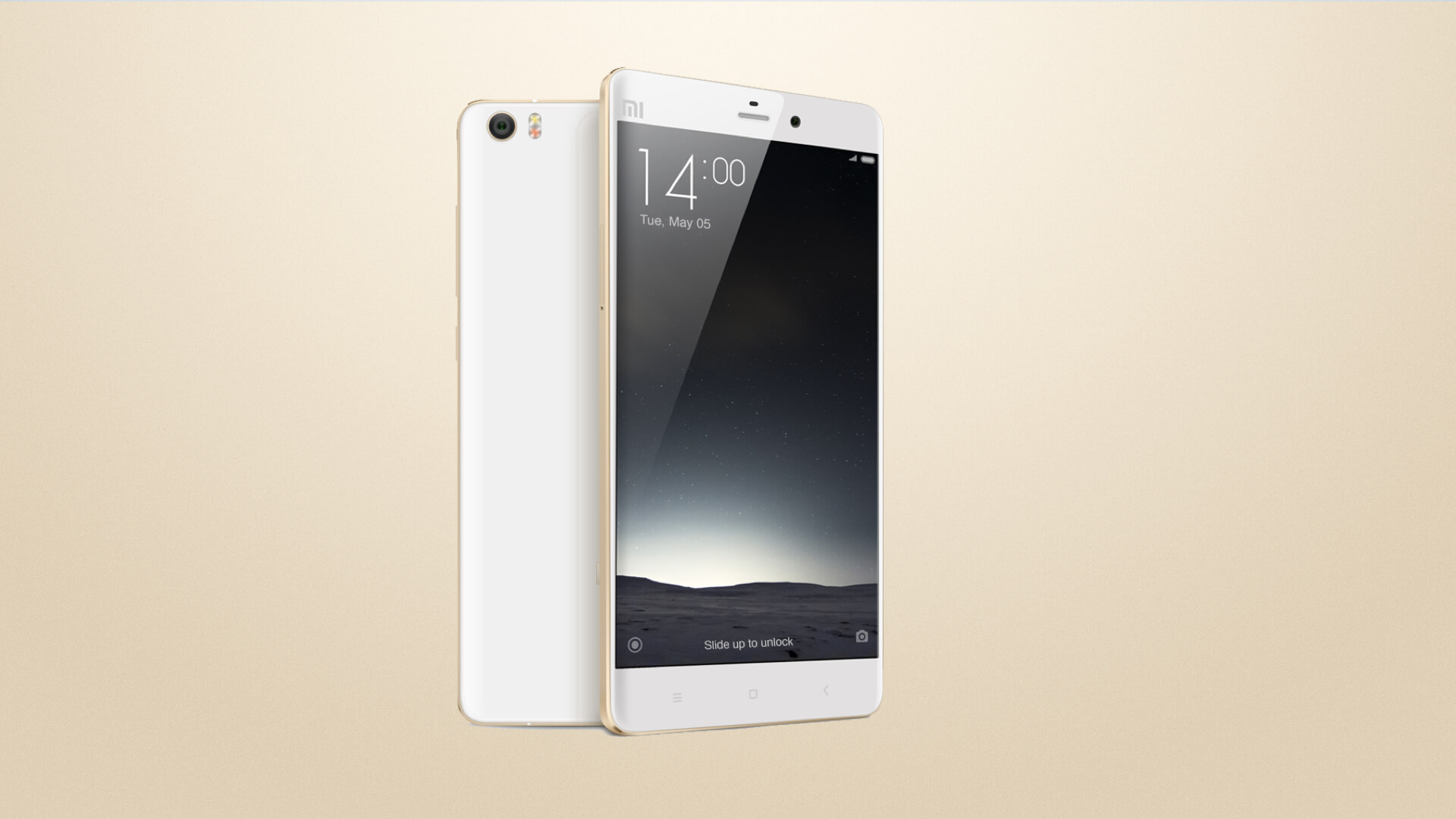
A Xiaomi Mi Note Pro version was also unveiled. It featured Snapdragon 810, a display with a resolution of 1440 x 2560 pixels (2K), and 4 GB RAM.
The series later continued with models like Mi Note 2, Mi Note 3, and the current Mi Note 10.


On June 30, 2015, Xiaomi announced its expansion into Brazil. At a local factory, they began producing Redmi 2 smartphones. This is the first time the company has made a smartphone outside of China.
In August / late July, the successor to the successful phablet Redmi Note 2 is coming, and even in November / October another version Redmi Note 3. is presented. Both smartphones delivered almost the same specs with only minor design differences.


Both had a 5.5-inch display and a MediaTek processor—Helio 10X MT6795. However, the Redmi Note 3 brought one breakthrough piece of the specs: a fingerprint sensor on the back. It was also the first Redmi Note series smartphone with a metal back cover.
Later, a Redmi Note 3 Pro version was released with a Snapdragon 650 processor, which was also sold in a global version. It was one of Xiaomi’s first global smartphones.
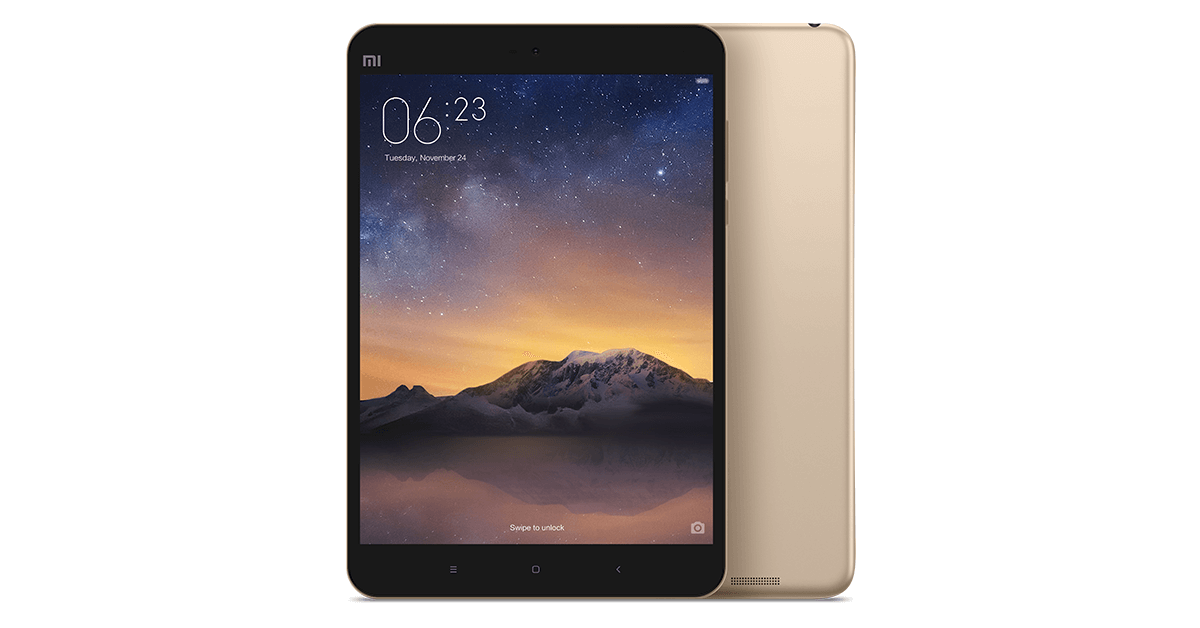
This year, the company also managed to introduce a new tablet. It happened in November / October, and the Mi Pad 2 was unveiled. It didn’t bring many improvements. Compared to the first model, it removed almost 40 g in weight, and instead of an Nvidia Tegra K1 it brought an Intel Atom X5-Z8500. The battery came with a lower capacity of 6,190 mAh and charging rated at 10 W.
2016: Revolutionary Mi MIX arrives and a new Mijia brand
This year was characterized by some exceptional smartphone models, as well as a new Mi Max series. When we mentioned the launch of production in Brazil in the previous year, production was stopped in the second half of year 2016. Apparently, this step didn’t meet the company leadership’s expectations.
Right in January, the Redmi 3 and Redmi Note 3 models were unveiled with a Snapdragon 650 processor. At the time, smartphones ran on Android 5.1 Lollipop and MIUI 7.
On February 24 / February, the new flagship model Xiaomi Mi 5 arrives. The flagship brings premium specs and new features. Xiaomi Mi 5 turned out exceptionally well in terms of design, and one of its versions featured a ceramic back panel.

The base version weighed just 129 g. It came with a top-tier Snapdragon 820 processor, along with a version with 3 and 4 GB RAM. The display measured 5,15 inches, and what’s interesting is that beneath it there was a physical multifunction button with an integrated fingerprint reader.
In the same year, more variations of the Xiaomi Mi 5S and Mi 5S Plus were also introduced, featuring a different design and a more powerful processor.

The new Xiaomi Mi Max smartphone series was launched in May / květen. It was a mid-range device focused on size. The first model came with a display as large as 6.44 inches, along with a correspondingly strong battery with a capacity of 4,850 mAh. The weight of this “King Kong” among smartphones was only 203 g.

This year, Xiaomi also introduced the first Mi Band fitness tracker with a monochrome OLED display. It is the Mi Band 2 model, and it is coming to market in June. Users can thus read smartphone notifications directly on the smart band display, or check their heart rate.
In July 2016, Xiaomi first hired Chinese artists for its advertising campaign — Liu Shishi, Wu Xiubo, and Liu Haoran — who became the faces of the Redmi series in China. At the time, the company was already churning out one smartphone model after another.
In 2016, for example, Redmi 3s was released, along with the Prime version, Redmi 3 Pro, Redmi 3X, Redmi Note 4, Redmi 4, as well as the Xiaomi Mi Note 2 and many more.

Let’s mention them all, starting with Xiaomi Redmi Pro, which was the first Xiaomi smartphone to bring a dual rear camera. It consisted of two sensors: a 13 MPx Sony IMX258 and a 5 MPx depth sensor. On top of that, the smartphone was also interesting for its Helio X20 processors in the standard version and X25 in the exclusive version, as well as a fingerprint sensor built into the front multifunction button.
There is no doubt that Xiaomi had a successful year in 2016. This is evidenced by its expansion into other global markets as well. In August 2016, Xiaomi entered Bangladesh. An even bigger success came in September. Thanks to a partnership with ABC Data, the Xiaomi brand officially enters the European Union.
Towards the end of the year, another premium device arrives that marks a milestone and launches a new premium series of Xiaomi smartphones. The first Xiaomi Mi Mix bezel-less smartphone has arrived. The smartphone features a huge 6.4-inch display with such thin bezels that it almost has none.

The widest part of the body around the display is the so-called lower “chin”, where the innovative front 5 MPx “selfie” camera is integrated. Xiaomi Mi Mix is equipped with a premium Snapdragon 821 processor and comes in versions with 4 and 6 GB RAM, plus 128 and 256 GB of storage.
The back panel is made of ceramic, and underneath it is a large battery with a capacity of 4400 mAh and support for fast charging with a power of 18 W.
Besides smartphones, Xiaomi is also announcing its own new Mijia brand, which we all know well today. Back then, the manufacturer was releasing more and more smart home devices that it needed to somehow bring together.

That’s exactly why it created the Mijia smart products brand. The portfolio includes products like smart vacuum cleaners, cameras, rice cookers, sneakers, but also pens or notebooks.
2017: Mi 6 and continuation of the Mi MIX series
With the new year come new opportunities, and by the end of February the brand announces its official entry into the Pakistani market. In May it also expands its Mi Store network in the region. One opens in Bangalore, India, and another in Bangladesh.
Meanwhile, precisely on April 19 / dubna, the company introduces a new flagship model, the Xiaomi Mi 6. The newcomer offers a new octa-core 10nm Snapdragon 835 processor and a dual 12 MPx rear camera. The battery capacity has increased to 3,350 mAh.
The base version has 4 GB of RAM and 64 GB of storage. The display size and the fingerprint sensor in the multifunction physical button have remained unchanged.

Along with the new flagship, a new tablet is also unveiled—Xiaomi Mi Pad 3. It keeps the classic shape with a 7.9-inch display. It’s powered by a six-core MediaTek MT8176 processor, supported by 4 GB RAM and 64 GB storage. The battery is a great 6,600 mAh.

A 211-gram mid-range smartphone with a 6.44-inch display is introduced at the end of May / května, and it’s the Mi Max 2.
On August 26, the manufacturer unveils a new version of the MIUI 9 software overlay. It launches it together with the new groundbreaking Xiaomi Mi 5X smartphone. At first glance, it is a standard smartphone from that period.

It has a 5,5-inch IPS LCD with a resolution of 1080 x 1920. The mid-range model is also represented by a Snapdragon 625, 4 GB of RAM, 64 GB of storage, and two rear 12 MPx cameras. So what makes it so special and groundbreaking?
A key milestone came a few days later, on September 5. Xiaomi introduces the rebranded Xiaomi Mi 5X smartphone model, sealing its cooperation with Google. The first Android One from Xiaomi arrives – the Xiaomi Mi A1 model.

It’s the same smartphone with the same specs as the Mi 5X, except for the MIUI overlay. This kicks off a new Android One smartphone series with a clean, unmodified Android OS—in this case, Android 7.1.2 Nougat.
The new bezel-less Xiaomi Mi Mix 2 is unveiled in the same month as the Mi A1. Once again, it brings a luxurious design, characteristic of the Mi Mix series, along with premium specs. However, the biggest disappointment is the battery, which offers only 6 3 mAh capacity relative to an almost 400-inch display and high performance. Still, the rear 12 MPx Sony IMX 386 camera is a welcome feature, with a quad-lens optical stabilization system.

The end of 2017 belongs to the expansion of the Mi Store retail network, with which the company is entering the European Union. The first Mi Store opens in October in Athens, Greece. Later in November, Xiaomi enters Spain, where it launches the Mi A1 and Mi Mix 2 smartphones.
As befits the successful wrap-up of the business year, another great piece of news comes from India. The Xiaomi brand has overtaken Samsung and become the biggest smartphone seller in India. During this period, it sold 9,2 million units of smartphones on that market.
2018: Mi 8, new Mi MIX 3 and Mi Band 3
This year, Xiaomi rolled out so many breakthrough models and different device variations that we started to get lost in them. The Mi Mix 2S, Xiaomi Black Shark, Xiaomi Mi 8, Mi Pad 4, the cult-favorite Pocophone F1, and Mi Mix 3 were all introduced. Successors were also announced for the Redmi models, and Xiaomi Mi A2 and Mi 6X were unveiled as well.

Let’s briefly go over what each model brought to users in year 2018:
- Mi Mix 2S – unveiled in March / březnu, dual rear camera, bezel-less luxury design, new Snapdragon 845, wireless charging
- Black Shark – unveiled in April / dubnu – officially Xiaomi’s first gaming smartphone, Snapdragon 845, 12 MPx and 20 MPx rear camera with 2x optical zoom, 20 MPx front camera, 4 000 mAh battery, fast charging 18 W
- Mi 8 – unveiled in May / květnu – flagship – Xiaomi’s first smartphone with an AMOLED display featuring a notch, 6.24-inch size, 1080 x 2248 pixels resolution, Snapdragon 845, two 12 MPx rear cameras with 4-axis optical stabilization and 2x zoom, 20 MPx front camera in the display notch
- Mi 8 SE – a compact, downsized version of Mi 8 with mid-range specs – the global version was not released
- Mi Pad 4 – introduced in June, with a changed aspect ratio compared to its predecessors, an 8-inch display, Snapdragon 660, 6,000 mAh battery, 13 MP rear camera
- Mi A2 (Mi 6X) – introduced in July, the second Android One smartphone version with stock Android (Mi 6X with MIUI), it also came in a lighter version, Mi A2 Lite
- Pocophone F1 – unveiled in August /srpnu – originally meant for India, but later amazed the whole world, the cheapest smartphone with flagship-level specs, featuring a Snapdragon 845, dual cameras, and a 4000 mAh battery
- Mi MIX 3 – introduced in October, it brings a slider design that hides the front camera, a 6.39-inch AMOLED display, dual 12 MP rear camera with 4-axis optical image stabilization, wireless charging
That was a pretty solid load of smartphones in a single year, and most of them were high-end models. Of course, the company did not forget about development in the meantime either, and already on February 20. the company opened its first Mi Store in the Philippines.

In March / březnu, at the annual Chinese legislative meeting in Beijing, Xiaomi CEO Lei Jun announced that he is considering entering the US smartphone market. At the time, Xiaomi was already selling various products in the US, such as power banks and Bluetooth speakers.
In cooperation with mobile operator Three, Xiaomi launches smartphone sales in May / květnu in the UK, Ireland, Austria, Denmark, and Sweden. In the same month, it opens its first Mi Store in Paris.
Back in May, Xiaomi first offered its shares on the Hong Kong Stock Exchange with the goal of raising 10 billion dollars in its IPO. This month was particularly successful for Xiaomi, too, because in the same period it also started selling smart home components via Amazon in the USA.

On July 18 / July, the third Xiaomi Mi Band is set to arrive. It comes with a revised design and rounder shapes. The physical button has been replaced with a capacitive one, but the band still keeps its monochrome OLED display. The data display is a bit brighter than on the predecessor, and an NFC version has also been introduced.
In 2018, 278 million units of Redmi-branded phones were sold worldwide.
Xiaomi reported revenue of 26.13 billion US dollars for the full year, which represents a significant year-over-year increase of 41.3%. Even more impressive is the company’s profit for this period, which grew by 59.5% year-on-year to $1.27 billion.
2019: Redmi’s separate brand as well as the breakthrough Mi MIX Alpha
Step by step, we worked our way up to the present. The year 2019 is coming to an end soon, and it was just as successful for Xiaomi. If you followed our pages throughout the year, you’ve got a perfect overview of what happened with Xiaomi during this period.
Already in January, the Redmi series split off from the group and became an independent subsidiary brand, Redmi. The launch of the new standalone brand was sealed with the new smartphone Redmi Note 7. It’s still (and always has been) a great smartphone for an affordable price, as the sales figures also show. From January / ledna to April / dubna, it managed to sell more than 4 million units of Redmi Note 7.

The real success of the new Redmi brand comes on May 28 / května, when the flagship killer Redmi K20 Pro and Redmi K20. are presented. The smartphones bring an awesome spec, a pop-up front camera, AMOLED displays, and much more at unbeatable prices—leaving users with huge applause.
In December / prosinci, Redmi presents the first of the successors to these successful models: Redmi K30.

Xiaomi is still doing its own thing, and on February 20, it presents this year’s flagship, Xiaomi Mi 9. Along with it, the smaller compact version, Xiaomi Mi 9 SE, was also introduced, and it made its way to global markets as well. The Mi 9 also came in a more premium version, Explorer Edition.
Throughout the year, both Xiaomi and Redmi introduced a lot of smartphones and their rebranded versions, but also other products. Let’s mention just a few standout ones:
- Mi Mix Aplha – a functional smartphone with the spirit of a concept, because it’s so expensive and so fragile that it won’t reach the average user. Still, it’s revolutionary and brings a curved display that wraps around the entire body, along with a 108 MPx camera.
- Mi Watch – Xiaomi’s first truly smart watch, bringing WearOS with a MIUI for watch layer
- Xiaomi CC9 Pro / Xiaomi Mi Note 10 – the first smartphone with a five-camera array and a primary 108 MPx camera
- Mi Band 4 – the next successor to the popular bands, featuring a color OLED display and NFC
Xiaomi and Redmi will also release several new models of laptops this year, as well as smart TVs, and Xiaomi has also successfully launched a portfolio of monitors.
Xiaomi YouPin or “crazy products”
In May 2019, Xiaomi opened its first physical store for the Youpin platform, which has been operating as an online portal for some time already. Xiaomi Youpin is a great project that provides support for its products from many small manufacturers—more precisely, startups.
In simple terms, through this portal Xiaomi supports high-quality and affordable products from various other manufacturers, which then become well known and reach the market. This way, manufacturers can gain popularity, but above all, financial resources to produce new products.

These are mostly quality products from the smart home portfolio, a healthy lifestyle, and also various other areas. Xiaomi Youpin is an e-commerce platform built on Xiaomi’s eco-chain.
Xiaomi YouPin is an independent operating subsidiary. Basically, the company does not control the companies included in the chain, but it places emphasis on corporate culture, product placement, and design. Xiaomi’s eco-chain is an important part of Xiaomi’s strategy “smartphone + AIoT.”
During the year 2018, Youpin’s revenue increased 2,6-fold compared to the year 2017, and traffic increased by %2017 compared to the year 200. Xiaomi Youpin’s total income accounts for 4,1% of the total gross profit from the Xiaomi Group’s online stores.
There’s no doubt the brand is doing well, and the financial results confirm it. The company’s total combined net profit for the first three quarters of this year amounts to 9.2 billion yuan (1.2 billion € / 30.6 billion CZK), which is more than the total net profit for last year.
At the end of the year, the company opens its latest factory for more than 2,000 employees. The new headquarters will become the second AI center, through which plans include setting up a new center for technological innovation and conducting future scientific research.
2020: What are the next plans?
What’s in store for us in the new year? The construction of a new 5G factory has been announced, which with the help of automated production lines and the ability to transmit large volumes of data will be able to manufacture up to 60 smartphones per minute.
The company’s CEO, Lei Jun, is summarizing and announcing that 2020 will be the year of 5G mobile networks, and the brand is preparing several 5G smartphones. A new flagship is also expected: Xiaomi Mi 10 with a new Snapdragon 865 processor, plus Redmi K30 Pro and many other new releases.
Of course, we believe Xiaomi won’t disappoint, and just like in other years, they will surprise us many times again in the new year 2020.
Nickname “the Chinese Apple” and a margin of only 5 %
Even though it’s not an important aspect in Xiaomi’s brand history, during the company’s existence the nickname “the Chinese Apple” stuck, which you may have heard somewhere by now. The manufacturer is, in fact, very fond of being inspired by Apple—and still is, which it never really hides.
Not only the design of its products, but also the style of its physical stores is something Xiaomi borrowed from the American giant. Chinese manufacturer executives do not deny similarities between some products—they say they want to “do the same thing,” but at much more affordable prices.

And Xiaomi is doing well thanks to a promise made directly by its CEO, Lei Jun, who in 2018 said that their product margins will never exceed the 5% mark. That’s exactly why, thanks to affordability, Xiaomi products have become incredibly popular over the past 9 years.
If you’ve made it this far, then you’re seriously interested in the Xiaomi brand—and you can “declare” yourself a real fan. We hope you enjoyed the article and we’d be very happy if you shared it. We worked on it for dozens of hours, and it really took a lot out of us.
We’re also really glad you’re reading XiaomiPlanet.sk. We’re trying to build the most active Xiaomi community and keep you updated on everything the Chinese manufacturer is doing.
If you don’t want to miss any new release, follow us on Facebook (give it a like) and you can also sign up for our newsletter.
Don’t miss the best coupons 📩
Subscribe and we’ll email you new coupons before they expire. We only send it once a month — no spam.